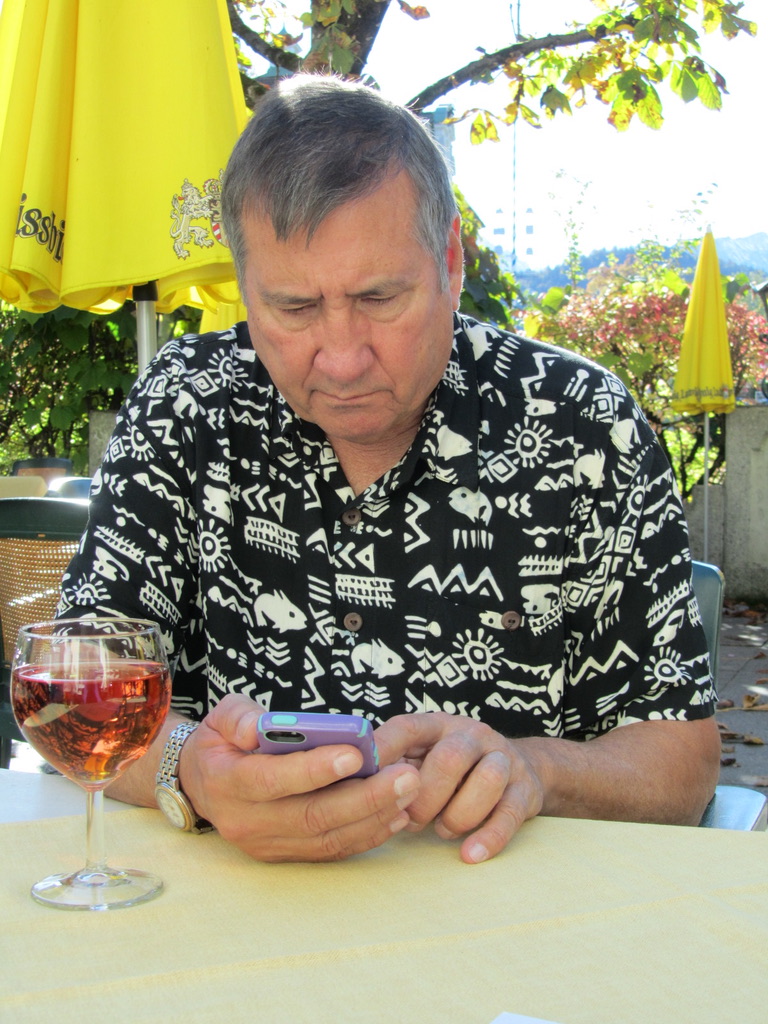
Zell-Am-Harmersbach-October 19, 2013

After a sumptuous breakfast at Villa Aborea and chatting with Michael and Viktoria Dey, we headed out to our rental in the Black Forest. The stitching in Mike’s good walking shoes had failed and Michael Dey suggested we check a discount shoe store a few blocks away for another pair of Ecco shoes – but he cautioned Shoe and Mike to make us wait in the car. He also encouraged us all to come back for the Christmas Market.
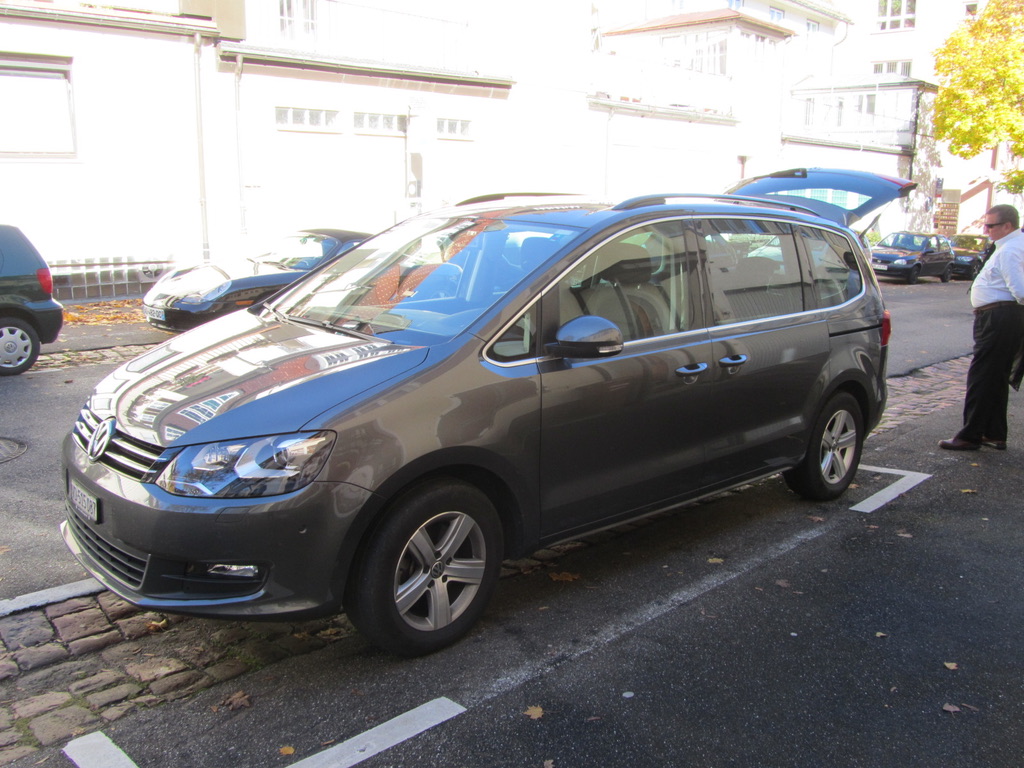
Our Volkswagen car in Germany

We stopped by the discount shoe store and, within 15 minutes, Mike had a new pair of black Eccos. The morning started out with a great deal of fog, Viktoria explained since Augsburg is between two rivers, it may not burn off until noon.

We set out in Saturday traffic with Shoe
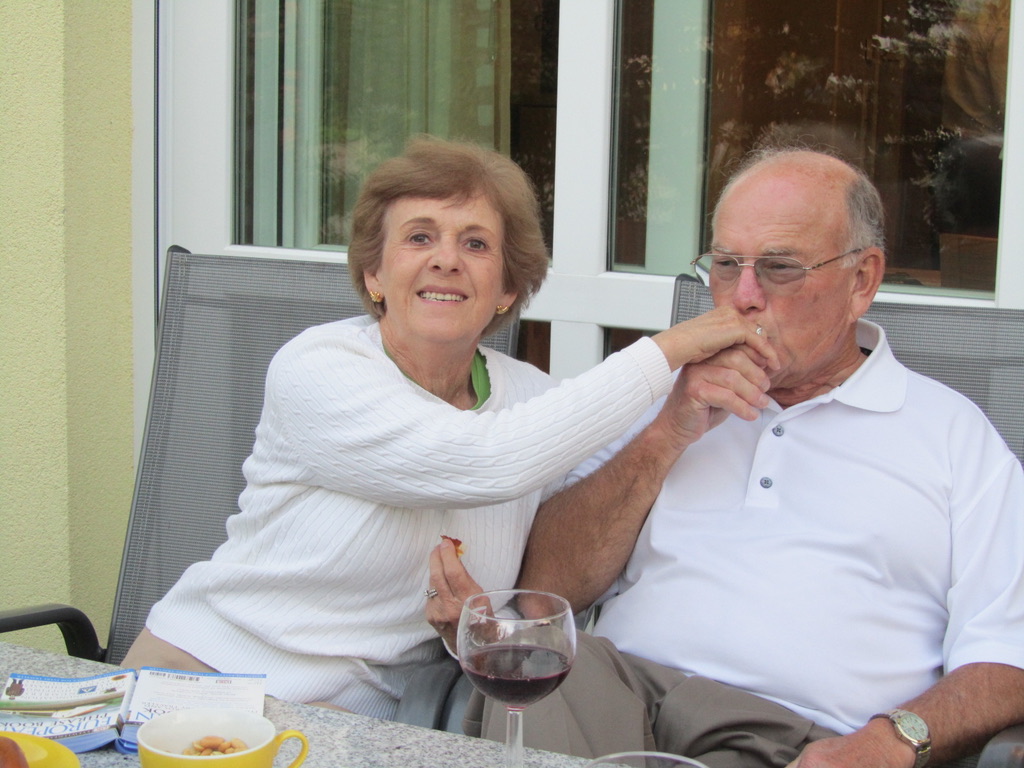
Shoe and Carl happy to be in Zell am Hammerbach

behind the wheel  in the direction of Stuttgart to turn off and take the back roads west toward Zell am Harmersbach, where we had rented a house. Around 11:30, either the fog lifted or we had driven through it! We stopped in Freudenstadt for lunch, found a parking spot, and strolled the town until we found a sidewalk cafe where we could sit in the sun. We decided on a beer (each not to share) and a local Schwabische regional specialty Maultaschen,
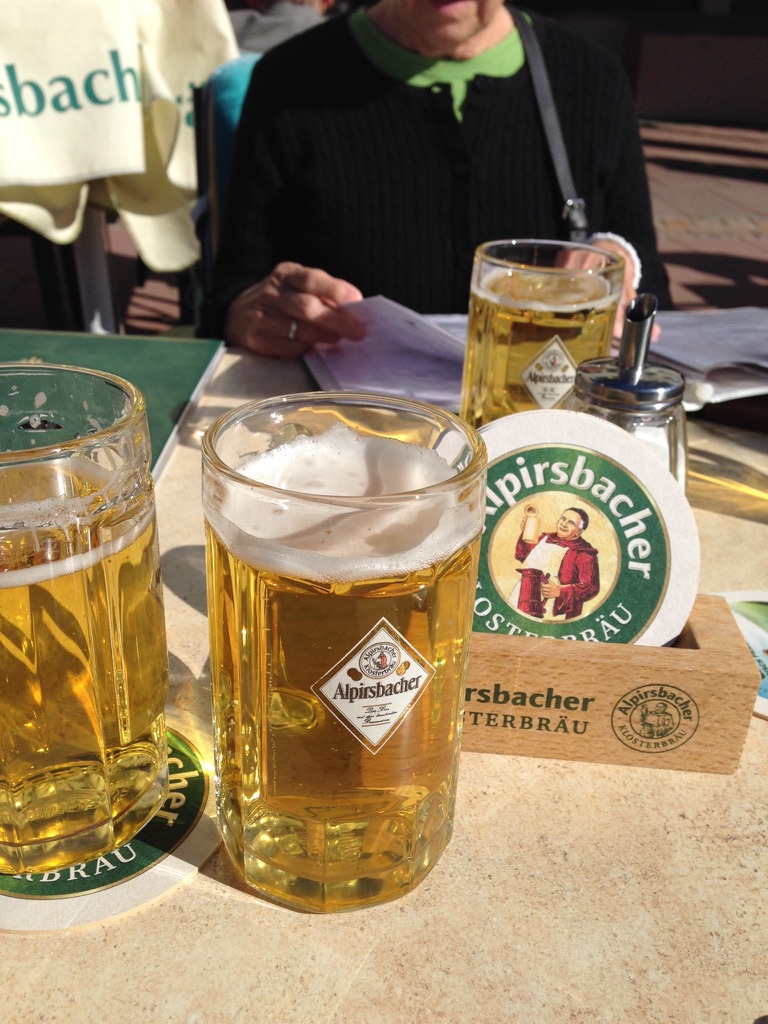
Freudenstadt for lunch

a large ravioli filled with pork and spinach in either a clear broth, on sauerkraut, or on grilled onions. After eating what we could, we walked the town square, saw a flea market in progress and, then, we continued on our journey.
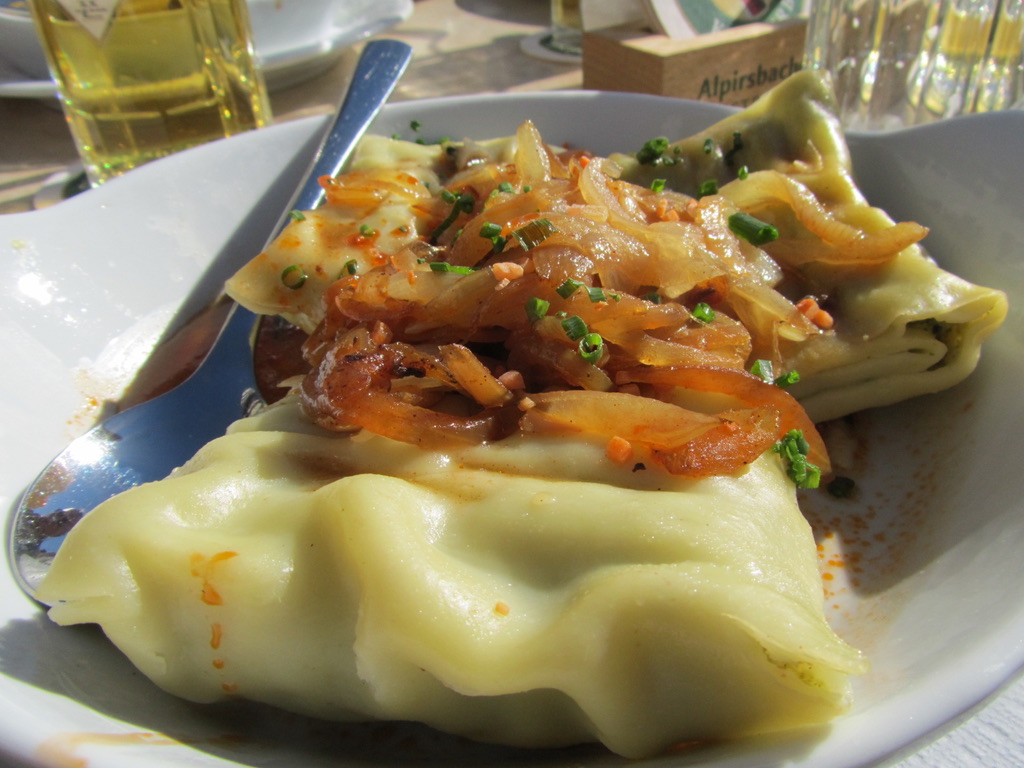
A local Schwabische regional specialty Maultaschen, a large ravioli filled with pork and spinach in either a clear broth, on sauerkraut, or on grilled onions.

From Freudenstadt, we ended up taking a beautiful road that took us through meadows and valleys, through pine-covered hills, to our destination. The road was narrow, full of switchbacks, hairpin turns, and motorcycles out for a Saturday ride through the Kinzig Valley (the heart of the Black Forest, where the speed limit dropped only for small logging and farming villages.) It was nerve-wracking for both Shoe and Mike in the front seats, but Carol and I just looked out the side windows and avoided looking out the front windshield.

Around 4 PM, we found our rental and moved in. First stop was the grocery store, to provision the kitchen. Then a glass of wine on the terrace, followed by one of Mike’s dinners.
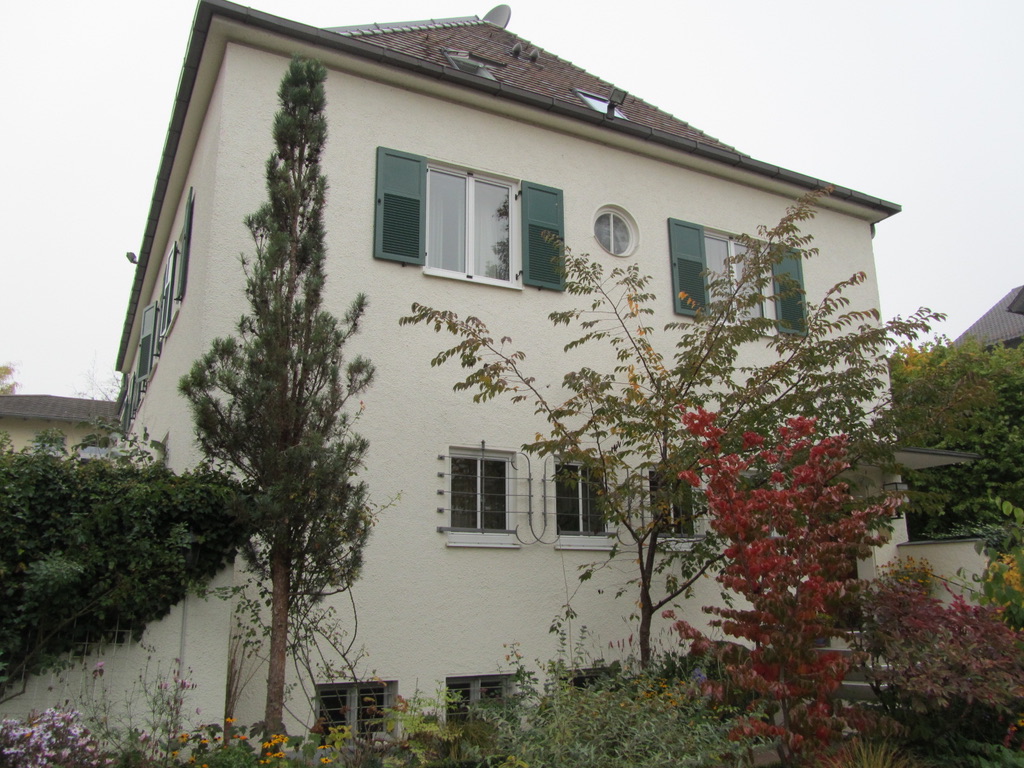
House in the Black Forest


Posted in Black Forest, Christmas Market, Freudenstadt, Zell am Harmersbach | Tagged , , , , | Leave a comment

The Castles of Hohenschwangau, Germany October 18, 2013

The Hotel Muller had arranged tickets for us at the Castle Neuschwanstein in mid morning and then in early afternoon a tour at Castle Hohenschwangau. It was a beautiful bright blue sky day when checked out of the hotel and took the horse drawn carriage up to within a 15-minute walk to Neuschwanstein, the fabulous inspiration for Walt Disney’s castle.

Schloss Neuschwanstein

While I normally subscribe to the more is better mantra, I have to admit that the eye candy here was simply over the top from the wall paintings, the architectural interest, the views through the castle windows, the intricate wood carvings, the decorative paintings, the objects d’arts, the lustrous fabrics and the lavish trims. Unfortunately, photos were prohibited. All I can say is that King Ludwig II of Bavaria had exquisite taste. Unfortunately he died “under mysterious circumstances” before the castle was completely finished. Perched high on a cliff side, the castle is somewhat difficult to reach and we were glad we were able to negotiate the steep climb.

Our guide spent time, explaining the history of the castle, the Wagner-inspired Romanticism, and a bit about Ludwig himself. All in all, it was hard to believe that Neuschwanstein was actually a summer or hunting cottage. Cottage is nowhere near an adequate description.

By the time made our way down the steep carriage way from Neuschwanstein to the area dotted with hotels, rest

Schloss Hohenschwangau

aurants, and souvenir shops, it was time to make our way up the hill to Hohenschwangau, the castle/summer cottage built by Ludwig’s parents ( Maxillian and Maria) on the ruins of a fortress for our designated tour. We climbed the path from the Biergarten by the Hotel Muller to meet up with our guide.


Again, this summer/hunting cottage is a dismissive term for this beautiful place. The views out the windows were spectacular on this “Indian Summer Day.” The tour was rather quick-paced and allowed little time to soak in the beauty of each individual element in its entirety. Our guide was witty, his command of English excellent, even cracking jokes and colloquisms. Mike and I especially liked the cobalt blue ceilings with gold stars affixed to its surface. When Mike mentioned it would be a fun thing to add to the dining room ceiling, all I could think of was gold leafing little stars for weeks on end! After making our way down the hill, we headed back to our car to continue on our journey to Augsburg.

Our road trip to Augsburg took us out of the Alps to rolling countryside similar to Pennsylvania. We saw farmers cutting hay, cows grazing by the road, and fine horses in their fields. We navigated through small villages and towns and found ourselves in a huge traffic jam. We headed toward Augsburg center to get our bearings. Central Augsburg is in the throes of major construction of public tram service and every turn we made encountered barricades. We found a parking space, walked much of the central shopping district, then headed to our hotel the Villa Aborea, and it’s spacious, comfortable rooms. We found a Bavarian restaurant nearby, the name was Berghof,  and, since we skipped lunch, ate an early dinner in the charming, busy, local establishment.

The hotel was built as a private home in 1935, the current owners, a Veronika and Michael Dey, added an addition to house guests. The rooms are spacious, clean, and bright. The lot is situated just outside Augsburg on a tram route into city center. The yard is expansive with beautiful gardens, tended by Veronika’s father, who was the head landscaper at the Botanical Gardens until he retired. He is now 81.

Tomorrow we are off to our rental house in the Black Forest and Internet access may be unavailable – just a heads up, in case we go “dark”!
Posted in Augsburg, Hohenschwangau, Neuschwanstein, Schloss Hohenschwangau | Tagged , , , , | Leave a comment

On the road back to Germany, Fussen, Austria, Honenschwangau

We left Vaduz, slipped into Austria, our 7th. country, for a bit, and headed for the town of Fussen in Germany on the banks of the River Lech. The Via Claudia Augusta went right through the middle of town. In fact in the late 1950’s they discovered actual Roman ruins. The Via Claudia Augusta connected Altino (present day Venice) to the River Danube with a military road than ran through Fussen and Augsburg.  Near the end of the third century a camp was built on the hill where the High Palace sits today.

Fussen, under bright blue skies

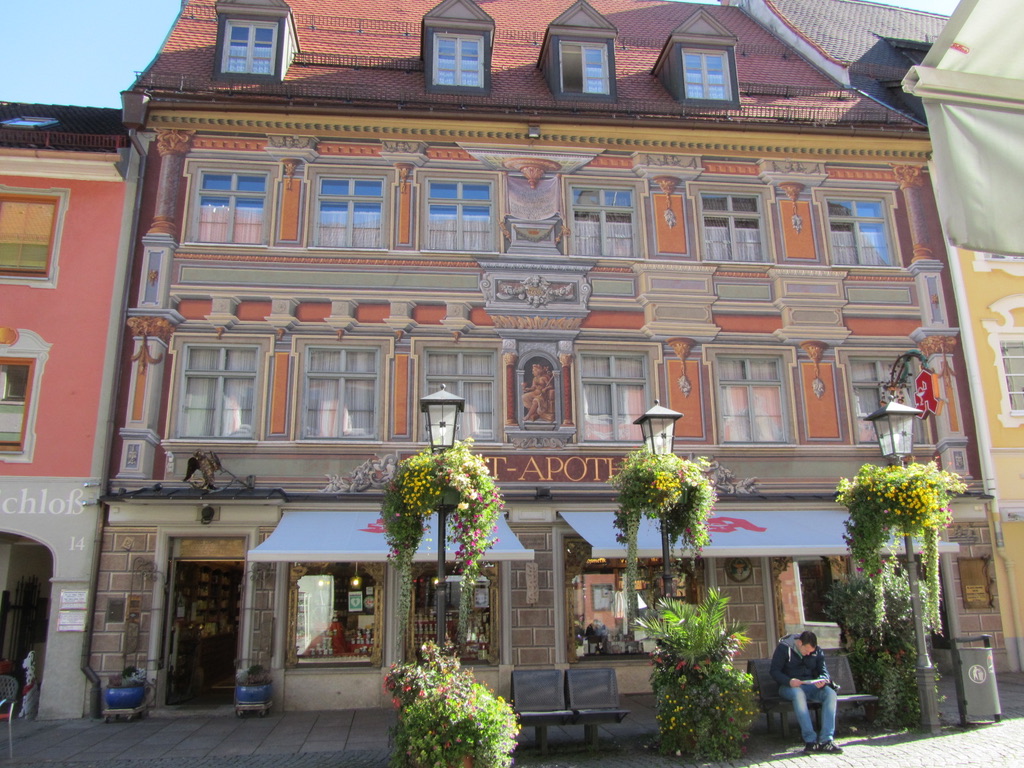
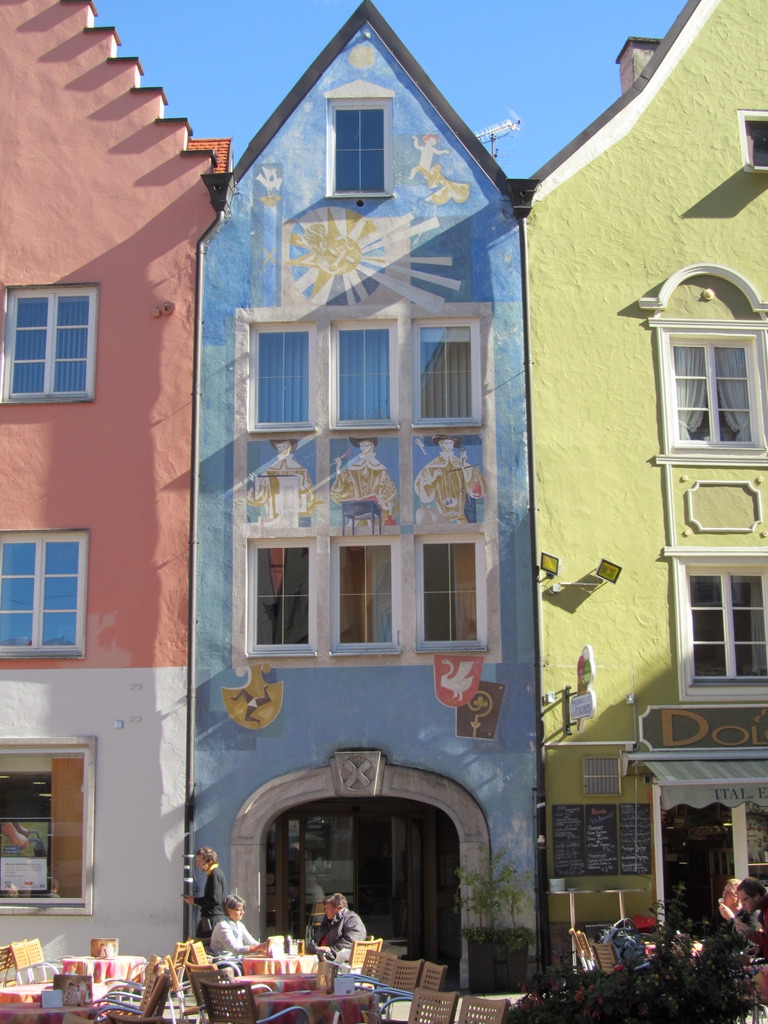
We walked the Reichenstrasse, the main shopping street, where historic patricians’ houses were built side by side along the identical path of the original Via Claudia Augusta. It certainly looked like a pedestrian way, barely wide enough for cars, but a few autos made their way through the crowds. Many of the structures were highly decoratively painted to give their flat surfaces more style. At the end of the street, the town fountain was a statue of St Magnus, the patron saint of the town.

The apothecary shop on the main street


I loved this mix of colors of these side by side houses

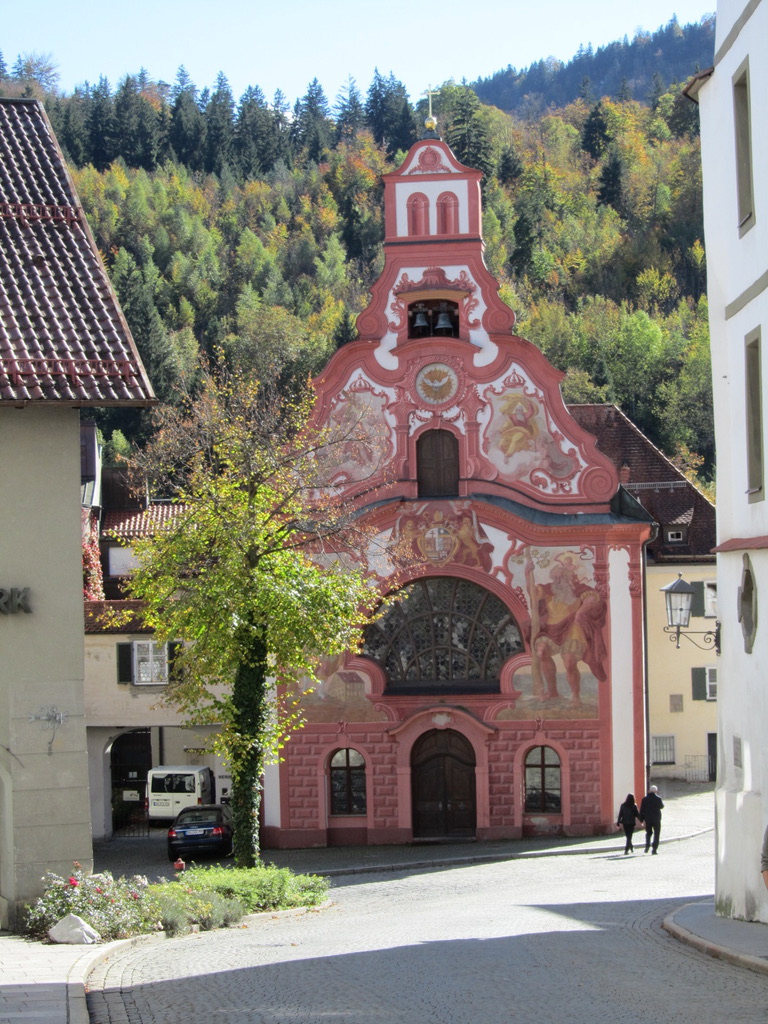
We visited the courtyard of the High Palace, the former residence of the Augsburg bishops/princes. The facades facing the courtyard are highly decorated with illusionist paintings giving the “palace” far more architectural interest than it had. The structure now houses a gallery.

aux painting on the High Palace in Fussen

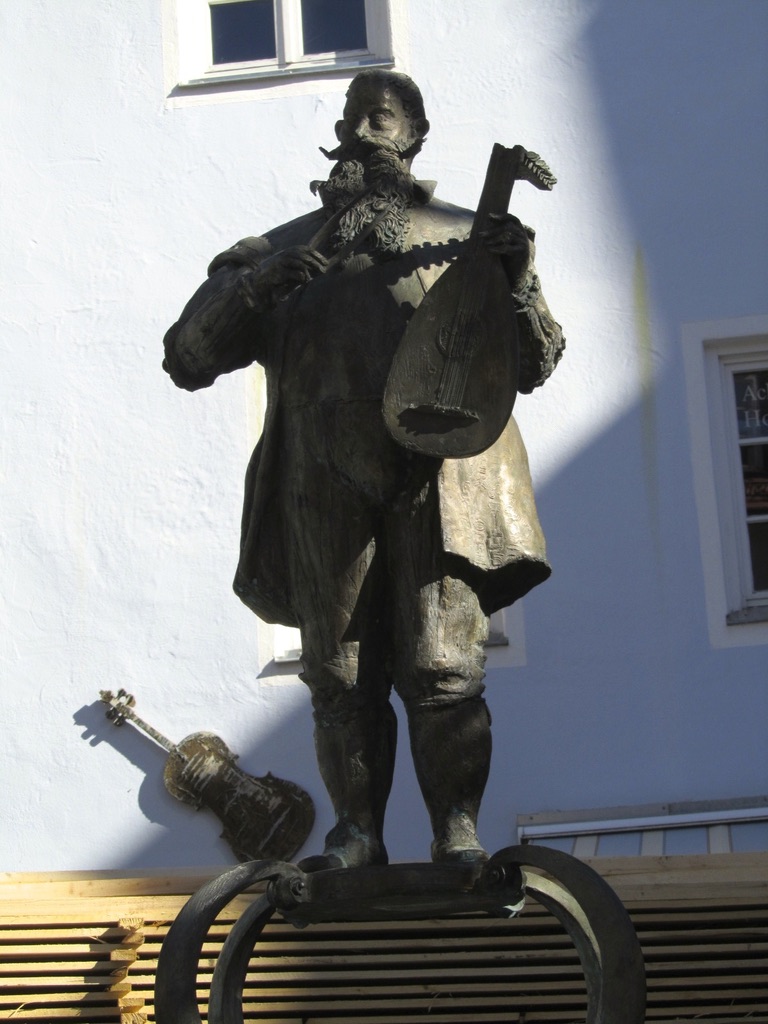
The entrance to St Mang Monestery and Church, which dates back to the 9th century, was under construction and messy to access so we skipped it. We took a diversion by the “brotmarkt” the bread market, though to be the origin of the medieval town. Took a photo of the lute-makers fountain honoring Fussen as the cradle of lute-making in Europe.

The Lutemaker in Fussen, the center of lute-making in Europe

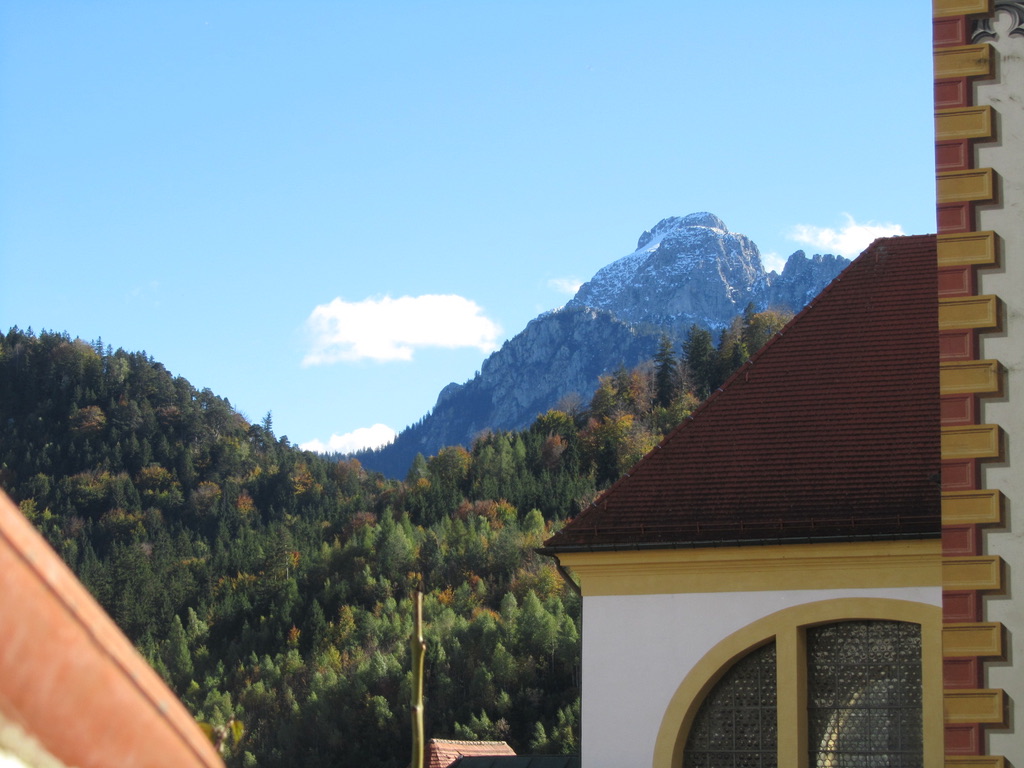
We left Fussen, heading to the Hotel Muller in Hohenschwangau, our next destination. Our very comfortable room had a view out the window of the Hohenschwangau Castle we’ll visit tomorrow afternoon. In the morning, we’ll visit the Neuschwanstein Castle, the famous original after which Walt Disney fashioned his castle. In the bright sunshine, we had a glass of rose in the beer garden. We walked down to the Alpsee, a lake with water so clear, we saw a pike chasing a school of small fish. We looked in a few souvenir shops, tried on fashionable German hats – bought none when we realized we’d look foolish at home wearing one!

our first glimpse of the Neuschwanstein Castle


The view from our room of the Hohenshwangau Castle


The crystal clear Alps’


My Honey, doing what my Honey does…..


Posted in Austria, Fussen, Germany, Historic Sites and Monuments, Hohenschwangau | Tagged , , , , | Leave a comment

On the road back to Germany, Fâssen, Austria, Honenschwangue

We left Vaduz, slipped into Austria our 7th. country for a bit, and headed for the town of Fussen in Germany on the banks of the River Lech. The Via Claudia Augusta went right through the middle of town. In fact in the late 1950’s they discovered actual Roman ruins. The Via Claudia Augusta connected Altino (present day Venice) to the River Danube with a military road than ran through Fussen and Augsburg. Near the end of the third century a camp was built on the hill where the High Palace sits today. We walked the Reichenstrasse, the main shopping street, where historic patricians’ houses were built side by side along the identical path of the original Via Claudia Augusta. It certainly looked like a pedestrian way, barely wide enough for cars, but a few autos made their way through the crowds. Many of the structures were highly decoratively painted to give their flat surfaces more style. At the end of the street, the town fountain was a statue of St Magnus, the patron saint of the town. We visited the courtyard of the High Palace, the former residence of the Augsburg bishops/princes. The facades facing the courtyard are highly decorated with illusionist paintings giving the “palace” far more architectural interest than it had. The structure now houses a gallery. The entrance to St Mang Monestery and Church, which dates back to the 9th century, was under construction and messy to access so we skipped it. We took a diversion by the “brotmarkt” the bread market, though to be the origin of the medieval town. Took a photo of the lute-makers fountain honoring Fussen as the cradle of lute-making in Europe. We left Fussen, heading to the Hotel Muller in Hohenschwangau, our next destination. Our very comfortable room had a view out the window of the Hohenschwangau Castle we’ll visit tomorrow afternoon. In the morning, we’ll visit the Neuschwanstein Castle, the famous original after which Walt Disney fashioned his castle. In the bright sunshine, we had a glass of rose in the beer garden. We walked down to the Alpsee, a lake with water so clear, we saw a pike chasing a school of small fish. We looked in a few souvenir shops, tried on fashionable German hats – bought none when we realized we’d look foolish at home wearing one!

Posted in Uncategorized | Leave a comment

Vaduz Liechtenstein October 16 2013

We were on the road from Lucerne, Switzerland, by 9:30 AM. We tried to avoid the motor ways and expressways to reach our intended destination: Vaduz Liechtenstein, the capitol of that tiny country of only 61 square miles. High on a cliff overlooking town is the residence of the Royal Family. Unfortunately, we weren’t invited for tea or dinner to catch the view!

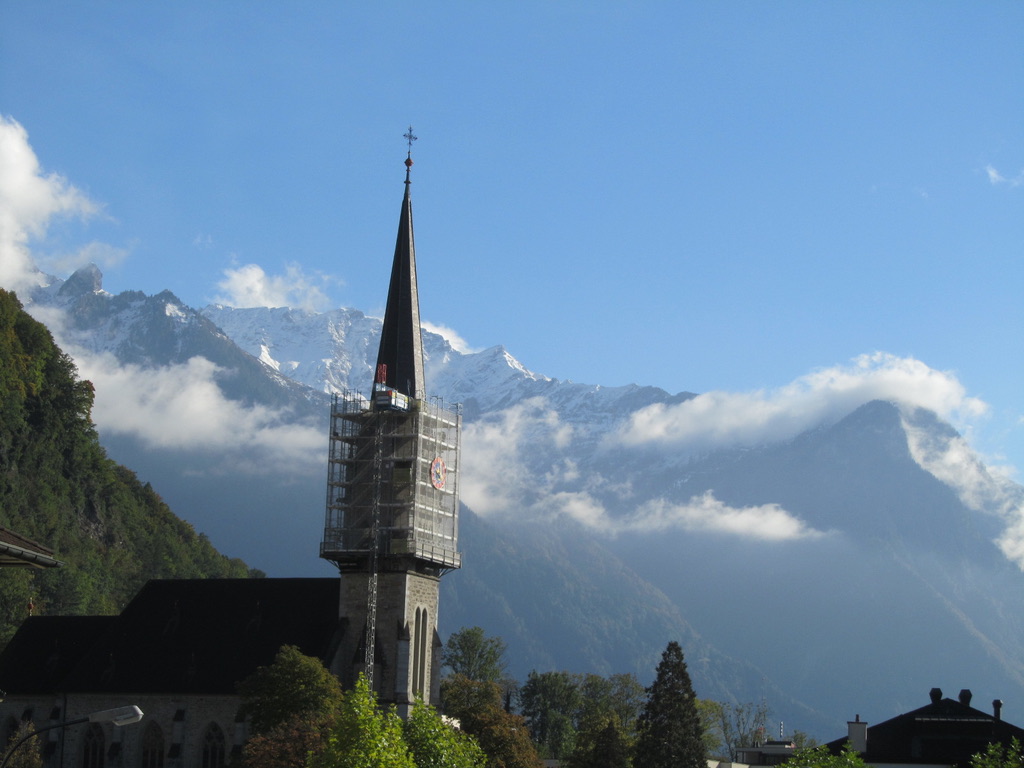
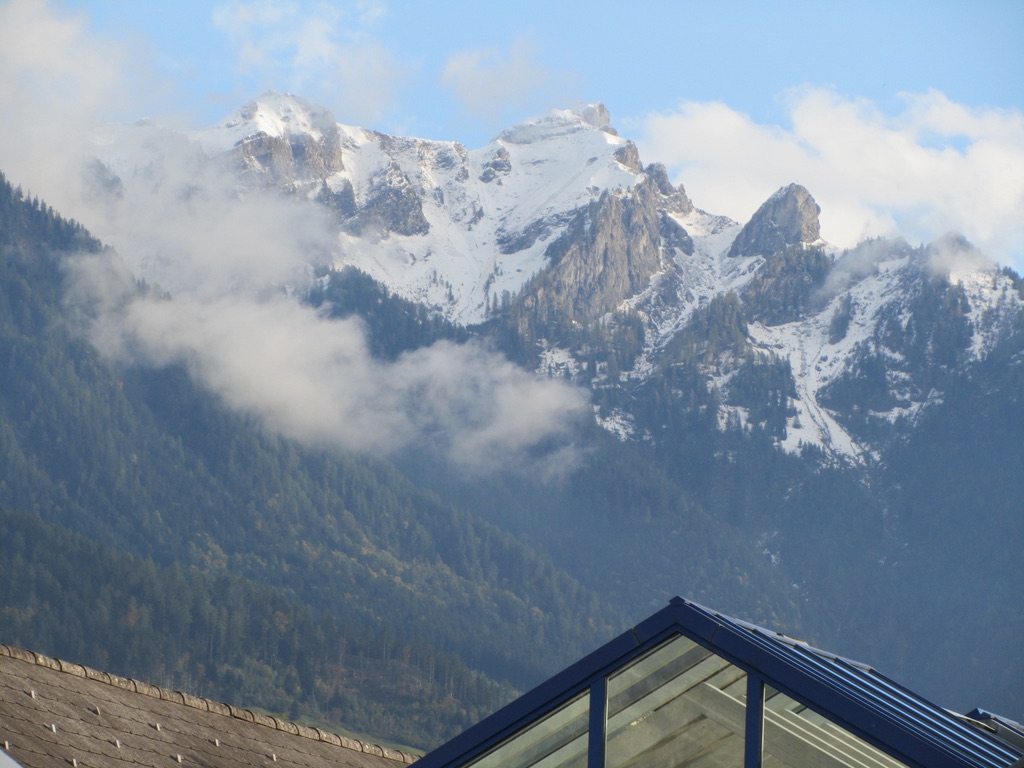
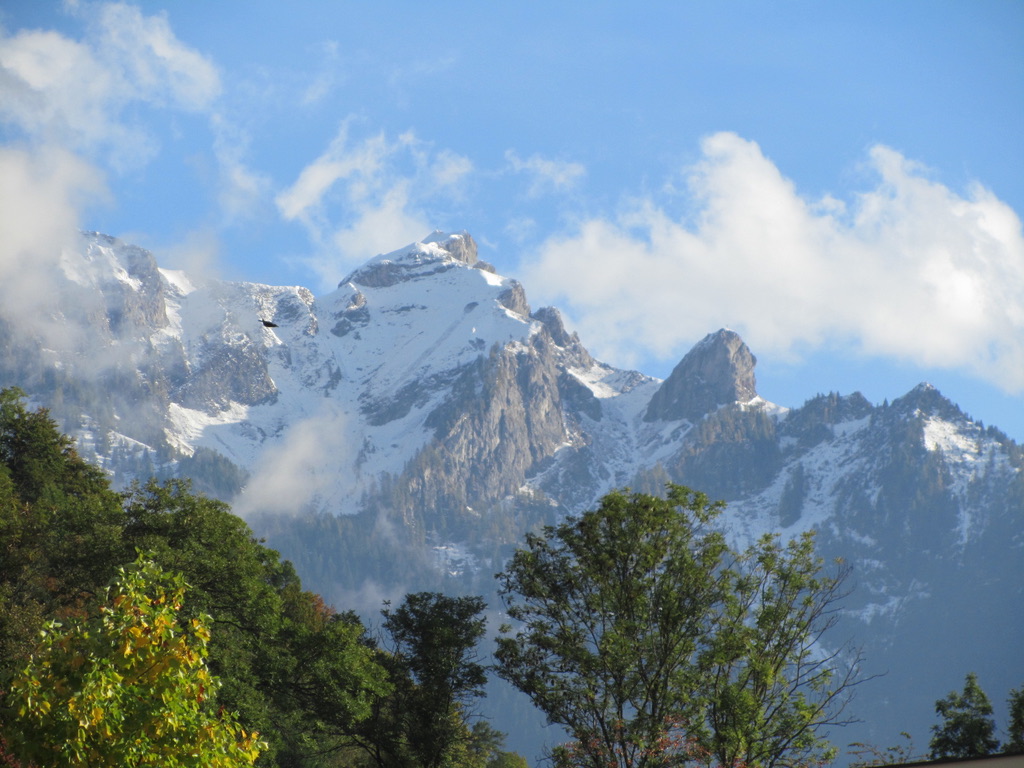
Our ride across a small two lane road took us through stunning countryside, filled with both traditional chalets and architecture and more modern structures as well. The verdant, green fields were filled with cows, many munching grass adjacent to the roadway. Cows, here, wear bells and the tinkling of the bells was clearly audible inside the car. We passed a few, very few vineyards on the lower south-facing slopes. The water in the lakes was clear, clean, and the blue-green of the Caribbean Sea. Our little car was surrounded on all sides by peaks stretching up into blue skies and the clouds.

Fabulous scenery and well worth the ride up and back the switchbacks!

We have finally uploaded the side shows so that you may go back to the post and see the raw unedited photos. (10/16/2013)

Posted in Lucerne Switzerland, Vaduz Lichtenstein | Tagged | Leave a comment

The Rhine and Mosel River – Photos courtesy of Julian Griffin

The following Slide show is courtesy of Julian Griffin. There are about 1,034 photos and to watch the whole show will take about an hour and a half (1.31.38 to be exact) so sit back and enjoy the Rhine and Mosel Rivers through the lens of Julian.

A special tanks to Julian for sharing.

Posted in Amsterdam, Bernkastel, Bernkastel-Kues, Boppard, Breisach, Cochem, Colombiers, Ediger-Eller, France, Germany, Hesse, Historic Sites and Monuments, Kayserberg, Koblenz, Moselle River, Museums, Rhine River, Riquewihr, River Cruise | 1 Comment

Rhine River cruise comes to the end but adventures continue to Lucerne, Switzerland

Lucerne Switzerland October 15 2013

We arrived in Basel and docked around midnight.
The disembarkation procedure was very well organized, except folks on early flights had to leave the ship at 4am. So, there were lots of doors slamming and luggage bumping. All of us had to be out of our stateroom by 8:30 am, so that the cleaning staff could thoroughly clean the cabins for guests arriving today. In B&B speak, so they could flip the rooms.
Before we packed our bags, we were all given color coded tags to place on our bags so the staff could have them available for either the bus or taxi or whatever. We had arranged for a taxi to get us to the Europe car rental in downtown Basel. When they called us for our taxi, they made us verify our bags were on board and off we went to the next part of our adventure, and a little less structure.

We must be in Switzerland

We must be in Switzerland

By ten, we were driving through the Swiss countryside and up ahead we saw snow on the alps! Weather today was mild with only several periods of cloudiness. Once we arrive in Lucerne, a city much like Geneva, built on the shores of a lake – this time Lake Lucerne. We found the tourist office and a very efficient agent found us a hotel (Weinhof Hotel Restaurant, Weystrasse 12, Lucerne, Switzerland) Weinhofjust inside the old town but with a car park – and gave us free tickets to their transportation system. Our room is clean, very utilitarian. We dumped our bags and strolled the town.

We caught this photo between two buildings and over a parked car in Lucerne

We caught this photo between two buildings and over a parked car in Lucerne

We wandered the streets and squares and found a lunch spot. Unfortunately, the proprietor was not inclined to let us sit outside and led us through the bar with its smoking patrons to a room in the back. The only problem was the room was stifling – the gas fireplace was on high. Food, however, was good; but we left as soon as we could to cool off.

We checked out the windows of the shops we passed, especially the chocolate shops. We found historic frescopainted buildings bordering the squares on the right bank of the Reuss River. Love the name of the city council’s meeting place – the Rathaus! It was built in the early 1600’s. We crossed two of Lucerne’s covered bridges, the Spreuerbruke (built in 1408 as part of the city’s fortifications; by 1635 the paintings “Dance of Death” were added) and the Kapell-Bruke (Chapel Bridge). The Chapel Bridge was built in the first half of 1300’s; its paintings were added in the 17th century illustrating local and Swiss history, as well as biographies of Lucerne’s patron saints, Leodegar and Mauritius. The Chapel Bridge was covered with window boxes full of beautiful flowers, even this late in the year.

The Chapel Bridge is connected to the Wasserturm or water tower. The octagonal tower is 111.5 feet high and was built in 1300. It has been used as archives, treasury, prison, and torture chamber.

We took a good luck at the Nadelwehr or Needle Dam, which was built between 1859 and 1860 in the style developed by Poiree. Even today, the Level of Lake Lucerne is regulated by hand by placing or removing the so-called needles or wooden posts.

Water Rushing by the Needle Dam, still used to control level of water in Lake Lucerne

Water Rushing by the Needle Dam, still used to control level of water in Lake Lucerne

We continued our stroll on the shores of Lake Lucerne and discovered the Hof Church, the main cathedral for the city and named after St Leodegar. A Benedictine monastery was founded here in the 8th century. A fire destroyed the church in 1633, and it was rebuilt in 1645. It is considered the most important Renaissance church building in Switzerland with its noteworthy facade, Mary’s altar with a relief panel from 1500, and the souls altar.

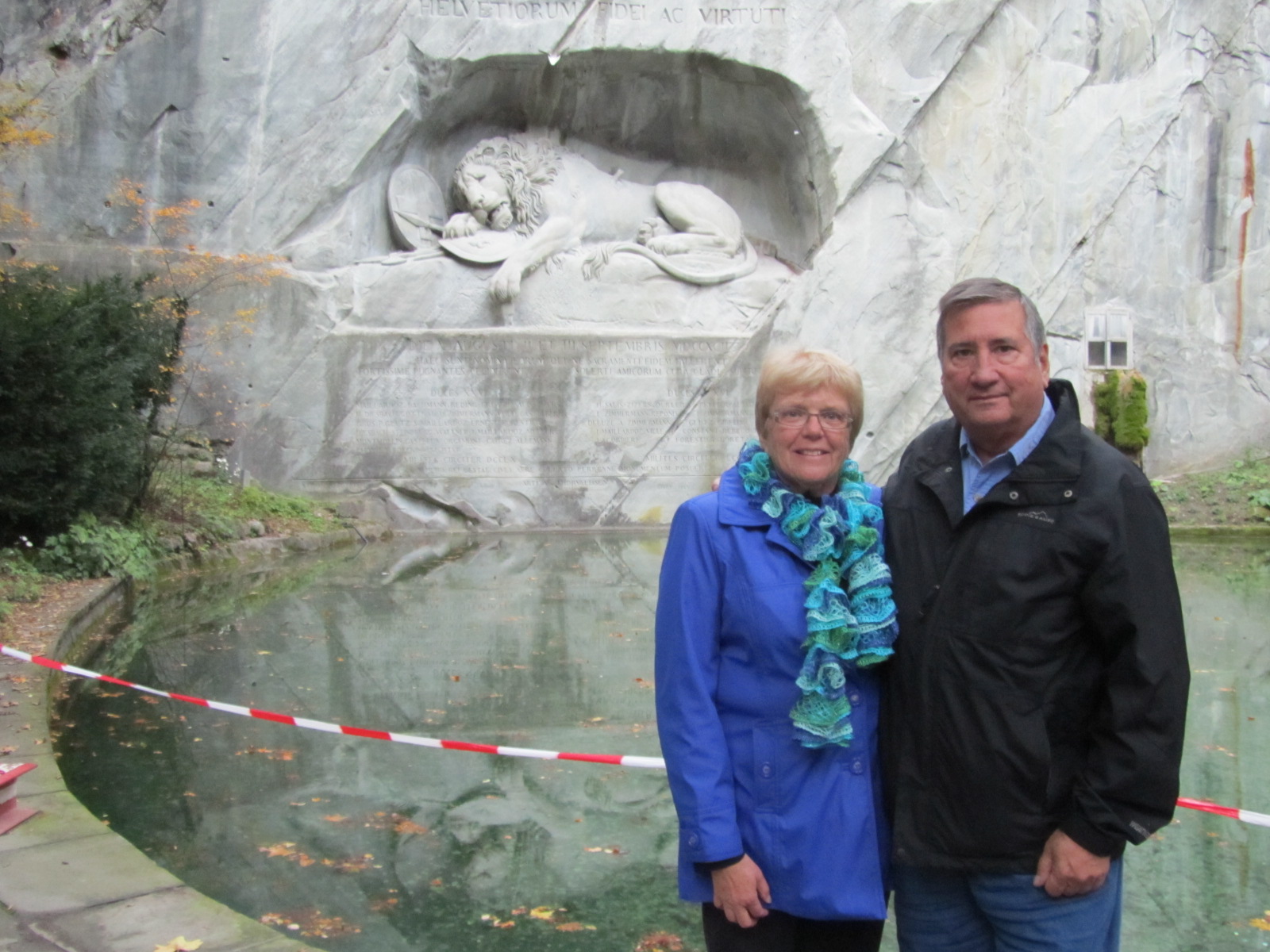
Mike and Pat at the Dying Lion Monument, dedicated to Swiss men who died heroically at Tuileries in 1792

Mike and Pat at the Dying Lion Monument, dedicated to Swiss men who died heroically at Tuileries in 1792

We searched out the Lion Monument, “The Dying Lion of Lucerne,” hewn out of natural rock to honor the heroic deaths of the Swiss mercenaries at the Tuileries in 1792. Mark Twain described it as the saddest and most moving piece of rock in the world.

The Lion without us

The Lion without us

Part of the rampart walls built in 1386 are fairly intact with 9 towers. 3 towers are open to the public and one contains the oldest city clock, built by Han Luter in 1535. This clock is honored by permitting it to strike the hour one minute before all the other city clocks.

Posted in Basel Switzerland, Lucerne Switzerland | Tagged , , , , , , | Leave a comment

Breisach, Germany and Alsatian Wine Villages in France: Kayserberg and Riquewihr

We docked at 5:45AM, at Breisach, Germany. When dawn broke, it was another grey, overcast morning with periods of light rain. Undeterred we headed off on our tour of Alsatian villages.

Kayserberg is on the eastern edge of the French wine route and was the home of Albert Schweitzer. Kayserberg suffered heavy damage in WWII, and some sensitive reconstruction has restored the town’s character. At one point the brightly colored houses had significance: blue for those who were Catholic, green for those who followed Luther, other colors would signify occupations. Those traditions do not hold fast today. The town was filled with shops and wine degustation rooms. Many were closed, after all it was Monday morning! Some were open, a baker had prepared fresh macaroons not to be confused with macaron.  After a short time in town, we headed up the route des vins that stretches along the foothills of the Vosages Mountains (which had snow last week). Verdant vineyards stretched out under the cloudy skies, occasionally dotted with workers harvesting grapes. The mist or fog on the Vosages lent an ethereal atmosphere – like it was preparing for Halloween. Here, unlike what we saw previously in Germany, the vineyards did climb up steep terrain, rather more like rolling slopes.

We found ourselves in Riquewihr, a small picturesque town whose layout is the same as it was in the Middle Ages. Here we found cobblestone streets, pretty homes and shops, interesting iron commercial signs, and window boxes bursting with color. Our wandering was cut short to return to the River Queen. Some in our group were heading on to an optional excursion of the Black Forest this afternoon. We elected to pass, since we lave rented a house beginning Saturday for a week in the Black Forest and figured we would be able to discover it more completely.

This afternoon we wandered into Breisach to explore that little village.  For our afternoon awl we had mild weather and occasional sunshine, something that had been lacking, of course overcast skies make for good photography, or so were told.

Posted in Wardrobe, Web Resources, WWII cemetery in Luxembourg | Tagged , , , | Leave a comment

Strasbourg France October 13, 2013

After cruising overnight, we docked in Strasbourg around 6 AM, just a little ahead of schedule. When dawn arrived, there was a hint of promise that the sun would be out today. Near the River Queen, our glass-top canal boat picked us up to take us a cruise through Strasbourg’s canals with our guide, Giselle, filling us in on the local scene.

Like so many other towns and cities on the Rhine, Strasbourg was a Roman military fort, even though it is actually two miles from the river. In the 5th century, Atilla the Hun and his army took the city from the Romans. Then, in the 1670’s, Louis XIV annexed the area as part of France. In 1871, after the Franco-Prussian War, it became part of Germany again. It reverted back to France after WWI. In 1941, Germany took control again. In 1945, after an American bombing, LeClerc liberated the city and, today, it is still part of France. All of these transfers back and forth lend Strasbourg a dual personality: French + German. The European Parliament meets here one week a month, and it is also the home of the Council of Europe, and the international Human Rights Institute.

Our route in the glass-topped water taxi took us from the industrial area where the River Queen docked, through a residential area where the banks were lined with fisherman, past the modern office buildings that make up the European Parliament along the Ill River. Soon we passed under the Pont J.F. Kennedy, with the US Consulate at one end of the bridge, and St Paul’s Church at the tip of an island.

Just to our starboard was the historic town center, the island that makes up original Strasbourg, with its original half-timbered houses, its subsequent building structures, it’s many bridges, and two locks. We passed La Petite France, a picturesque neighborhood of cobblestone streets, half-timbered houses, flower filled window boxes, and even an old mill or two. Despite its current quaint look, La Petite France has a somewhat sordid history. While in German control in the 15th century, a horrible disease struck that guaranteed death; the Germans called it the French Disease. It was actually syphillis. So they built a hospital, separated by water from the rest of Strasbourg, for those doomed to die and called it La Petite France.

While the French National Anthem is titled La Marseillaise, implying it was written in Marseille, it was actually written here in Strasbourg by Claude-Joseph Rouget in 1792. It was adopted as the national anthem of the Republic of France in 1795 by the French National Convention. Its name comes from the fact that it was first sung by volunteers from Marseille.

We passed the Ponts-Couverts, covered bridges linked by medieval watchtowers. We were trapped in our second lock for quite some time! Though the lock was automatic, the gates behind us would not close, so the lock could operate. The First Mate contacted the lockkeeper from the manual lock who ran across the island to help. He found a wine bottle preventing the gates from closing. Only in France!

Strasbourg is home to universities, one of which has a restaurant for students, who may purchase a four course meal for 3 euros. Of course, we were not invited. It is also home to the Institute of Administrative Arts, from which Francois Hollande graduated, and is the premier school for public administration – open only to the most advanced students.

Our water taxi dropped us off, here in City center, and we made our way to Notre Dame Cathedral, a medieval masterpiece, built between 1176 and 1439. Notre Dame’s spire stands 469 feet tall – and today against a blue sky. The stained glass windows of the cathedral were saved from the ravages of war by storing them in salt mines. The cathedral also houses a fabulous astronomical clock that strikes every quarter hour with figures moving at the top. We visited the cathedral’s interior after lunch, since Mass was taking place when we arrived. We strolled the old town, visited a harvest festival in the Place Commerciale, where we were intrigued by a cheese melting device. We also peeked at a stand with baked goods, including a Kouglehopf.

Kougelhoph Pastry

Kougelhoph Pastry

Taking Paul Heinz’ advice we found Le Tire-Bouchon, a bistro where we stopped for a lunch of onion tart, foie gras, and a pichet of Alsatian Pinot Noir.

After lunch, we strolled around the perimeter of the main island, opposite the way we had come by water taxi, snapping photos and made our way back to the pickup point for our rid

e back to the River Queen. Tonight’s agenda includes French chansons, our daily talk with the cruise manager, a farewell cocktail, and our farewell gala dinner. 7:30PM is castoff time and sailing for Breisach, Germany.

During the entertainment Shoe was selected to perform:

Posted in Strasbourg | Tagged , , , , , , | Leave a comment

Speyer, Germany October 2013

Another grey cold day in Germany, though a bright clearing in the clouds held promise for a better day to come. We docked shortly after 8:00 am in Speyer. Once upon a time, Speyer was a Celtic settlement, re-settled by Romans, destroyed by the Huns, and rebuilt. In the Middle Ages, it was prosperous and influential. WWII did not heavily damage Speyer; major damage occurred at the hands of the French in the late 1600’s. The French occupied the city until 1815.

The cathedral in Speyer was begun in 1030 AD at the behest of Emperor Conrad II who wanted to create the largest church in the western world. The Cathedral, or it’s crypt, is the burial site for rulers in the area including the Salians, Hohenstaufens, and the Hapsburgs. Conrad did not survive to see the Cathedral’s completion, his son took on the work of overseeing the job, but he did not live to see it finished either. It was completed under the direction of his wife – giving rise to “what men start, women are left to finish.”  The original cathedral is in the simple Romanesque style, but the facade facing west (the town square) is more baroque. It is laid out in the form of a Latin cross, with a simple but soaring interior. Recently, the Catholic Church invested in a new 5,000+ pipe organ with a price tag of 1.8 million euros. The new bishop of this area is only 52 years old and he is an afficiando of modern art. The grounds and park owned by the Church are dotted with modern art sculptures.

Just outside the cathedral is the domnapf, a massive outdoor bowl that can hold over 400 gallons. In earlier times, adults were baptized in this baptismal font and had to be fully immersed three times. Times evolved, babies are baptized and this large vessel was no longer needed for baptisms. Now, when new bishops are assigned, they fill the bowl with wine (1,500 liters) for the townspeople to toast the new bishop’s health. Two years ago villagers who wished to participate we’re charged 3 euros for a glass to dip into the bowl – but they got to keep the glass.

We went on to another church, now Catholic, that was originally Lutheran. It was nothing like any other church we have found. Along the choir railings, there are paintings side-by-side portraying a passage from the New Testament and a similar one from the Old Testament. Too dark to photo, though! There was a strong Lutheran community here and in 1529, the law-making assembly sought to negotiate a compromise with the Lutheran princes that would permit them to practice their “new” religion following the teachings of Martin Luther in their own territories if they would agree not to force their subjects to become Lutheran. The princes protested, refused the offer – hence the term Protestants. During the French occupation, the pews were torn out and the building used to stable the horses. Of note about the pews: pews in front have a seat facing the altar and one facing the back of the church. Were they used when the church was crowded? Were the ones facing backwards for children or babies? No, the pulpit was halfway down the church on the right side. So, in order that parishioners could face the pastor, when he ascended the pulpit, they would switch seats. Creative.

Around 1090, the Bishop of Speyer established a Jewish Settlement, to establish a basis for trade, commerce, and, of course, lending. As all over Europe, the Jews were suspected of poisoning the water and causing the Black Death. They were massacred in retaliation. Today, only remnants of the synagogues, including the women’s prayer hall, remain. Visible is a recess in the eastern wall, where the Torah shrine would have been. Above that recess is a small round window – the Eye of God. But, the vaulted baths have been preserved and were on our visit.

This Jewish ritual bath was built around 1120 and is the oldest of its kind north of the alps. The mikvah (roughly translated from Hebrew to mean a collecting place for water) or ritual bath is the place where ritual cleansing after periods of impurity (usually consisting of prayer with three immersions) with “living” water, for example river, spring, or rain waters. The immersion pool of the Speyer mikvah is 30 feet below today’s street level, near the ruins of the synagogue. It draws it’s water from a spring, as well as from rain. To enter the building, you descend a set of stone stairs, where the rise and tread are uneven by design – because only God is perfect. The antechamber has Romanesque elements like pillars and windows, and appears to be built by the same craftsmen who built the Cathedral – after all until Napoleon’s time Jews were prohibited from joining the guilds and would not have been permitted to practice those skills. Opposite a small changing room a staircase descends to the immersion pool. This remarkable piece of history was preserved because subsequently it was used as storage for the municipal weaponry.

Despite the cold damp weather, we walked the pedestrian area, checking out the shops. We found a wonderful chocolate shop – with all things chocolate, but we were good and did not indulge.

Tonight: Chef’s signature dinner!

Posted in Cathedral, Jewish Quarter, Old Town Gate, Speyer | Tagged , , , , , | Leave a comment