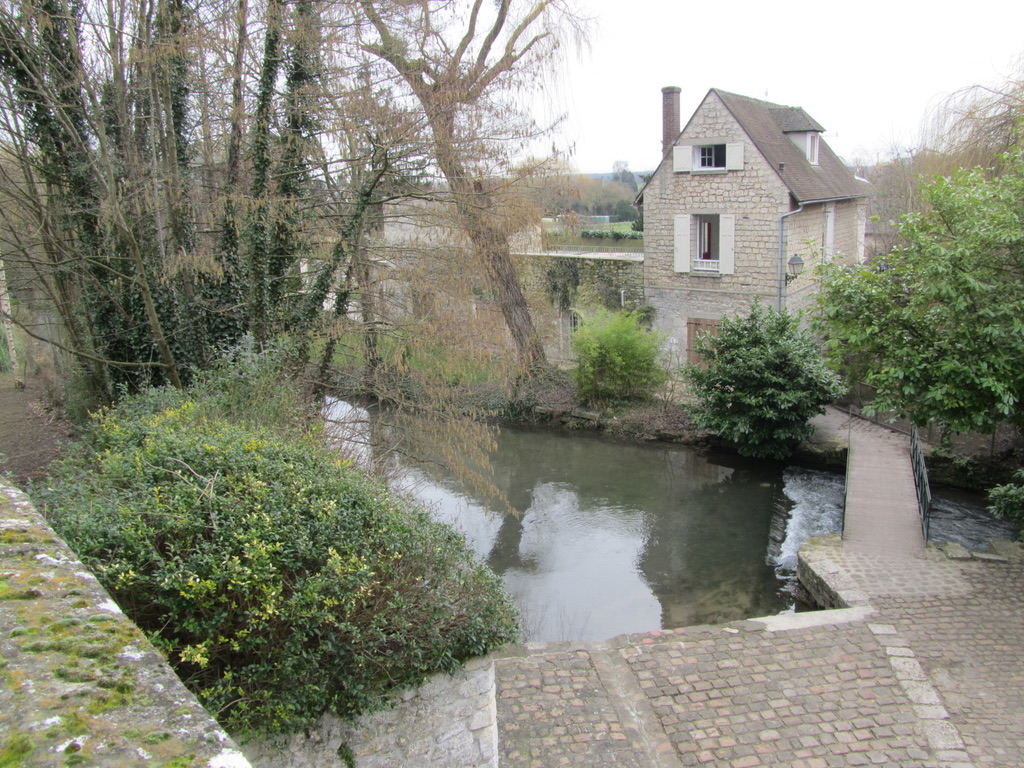
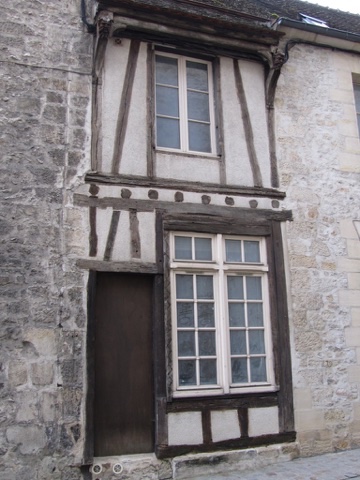
Paris 2014, Day 19 (Organ Concert)

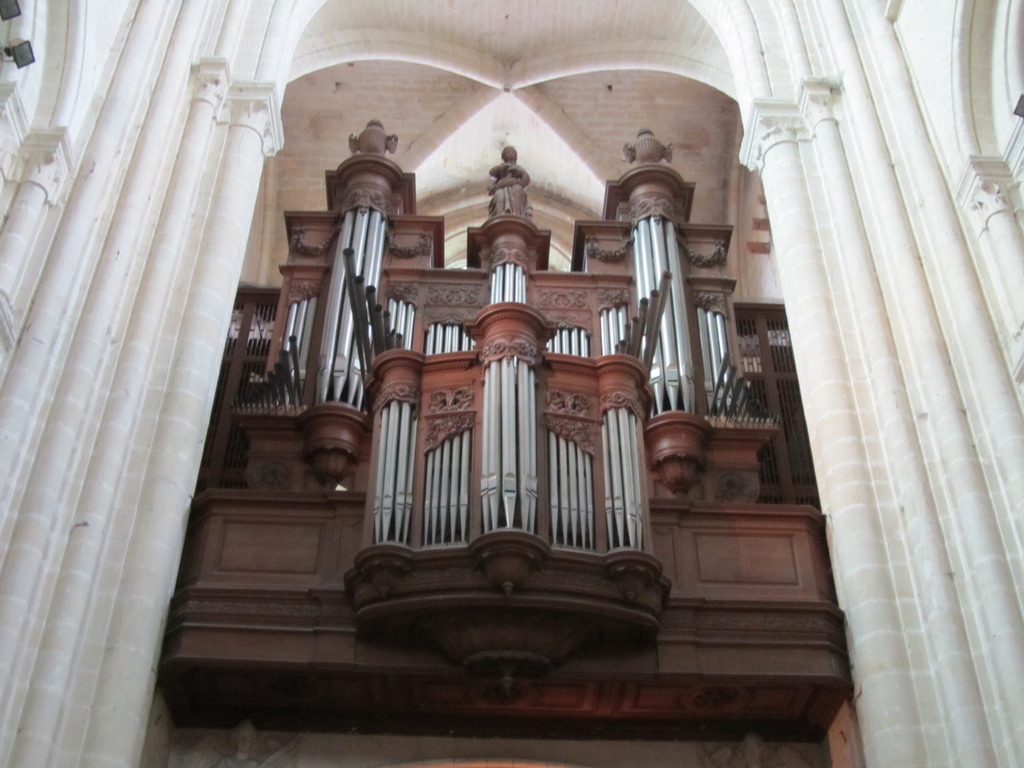
Sunday is always a day of rest.  Only item on the agenda is to go to an Organ Concert at Saint Germain Des Pres church at 3:00.  Maybe a walk through the Blvd Grenelle market. There is an exhibit at the Musée Marmottan Monet which is located at 2, rue Louis Boilly in the 16th arrondissement of Paris. It features a collection of over three hundred Impressionist and Post-Impressionist works by Claude Monet (with the largest collection of his works in the world), Berthe Morisot, Edgar Degas, douard Manet, Alfred Sisley,Camille Pissarro, Paul Gauguin,Paul Signac and Pierre-Auguste Renoir.  There is also a temporary exhibit of 80 Monet’s held in private collection there as well at this time through the 6th of July 2014.  Sunday are often crowded so we will see if it today or another day.

Note: check in with our friend Bruce, a fellow Space-A traveler who was over here shining in Austria, he got back to Germany on Friday and we think jumped a flight to the US but were no sure of his connection so were waiting to hear about his trio, hopefully in the next day or so.  We think he went to NJ and then were not sure.

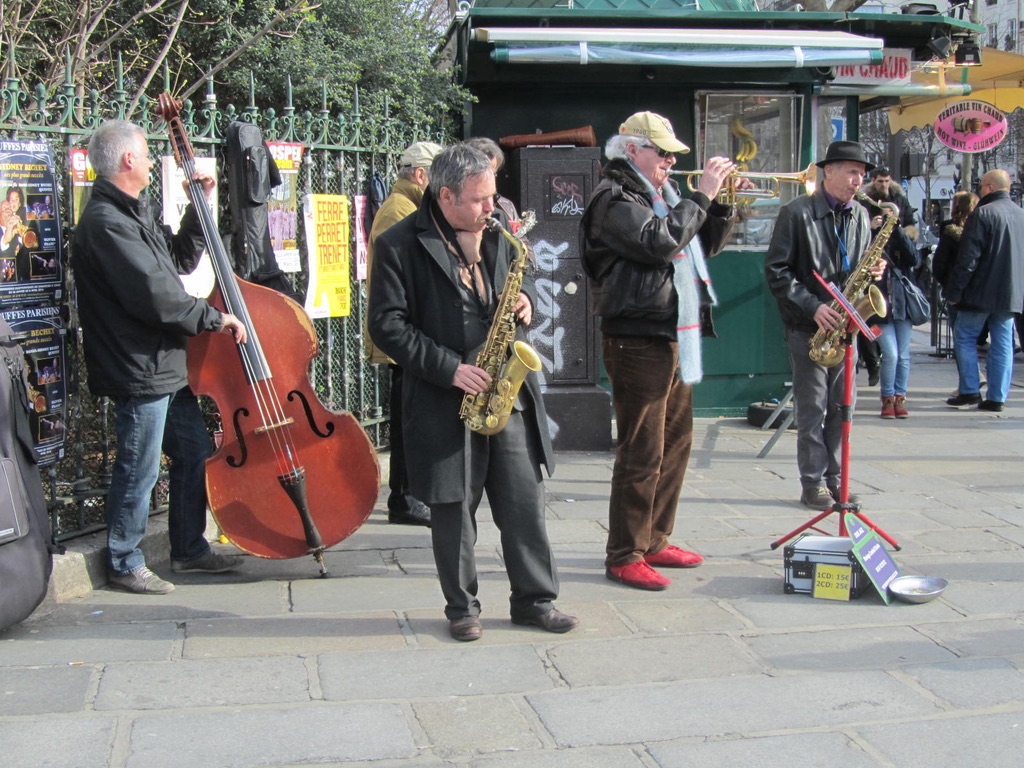
We decided to take the bus over to Saint German to the concert, Sunday schedule so we jumped the metro to Alma Macu and the caught the #63.  We came across a street band that play Dixie on the corner we have seen them before check our November 2, 2013 post.

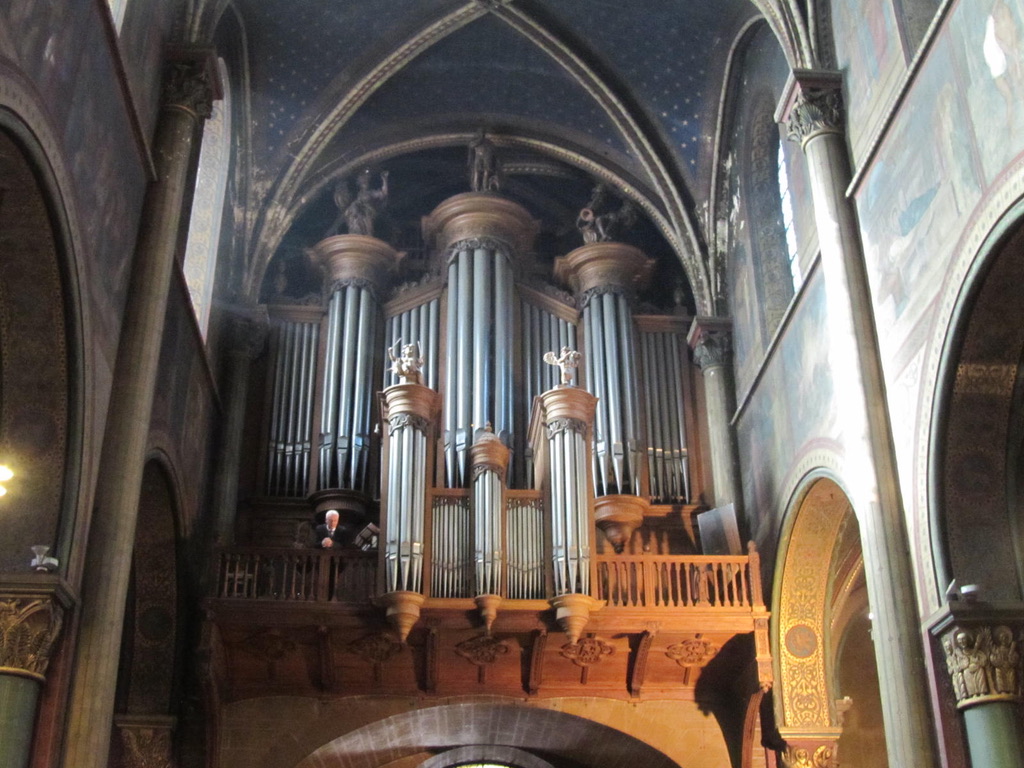
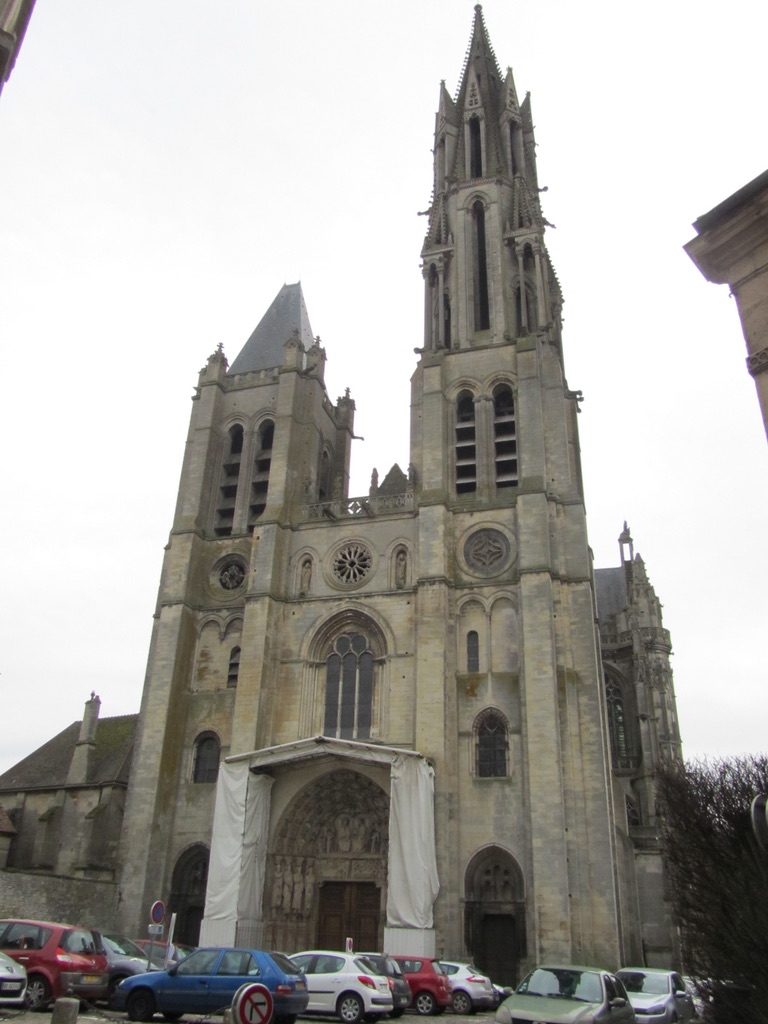
We arrived early so window shopped for about an hour and then to the church Eglise de Saint-Germain-des-pres for the concert.

The program:

Organist – Bruno Beaufils


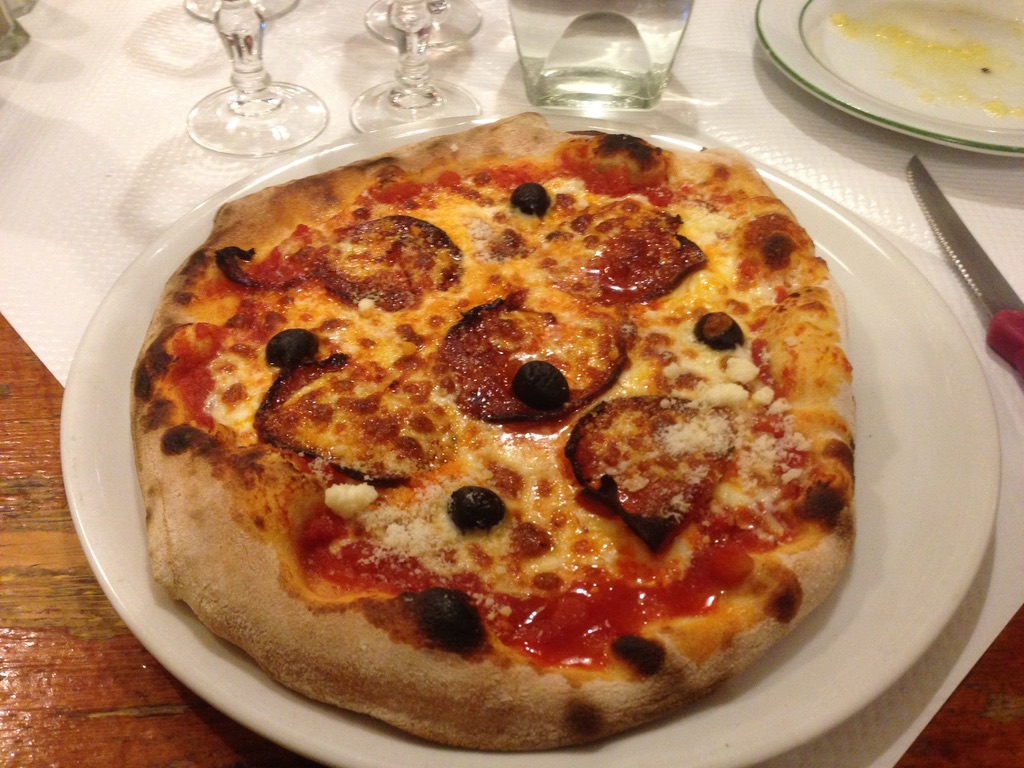
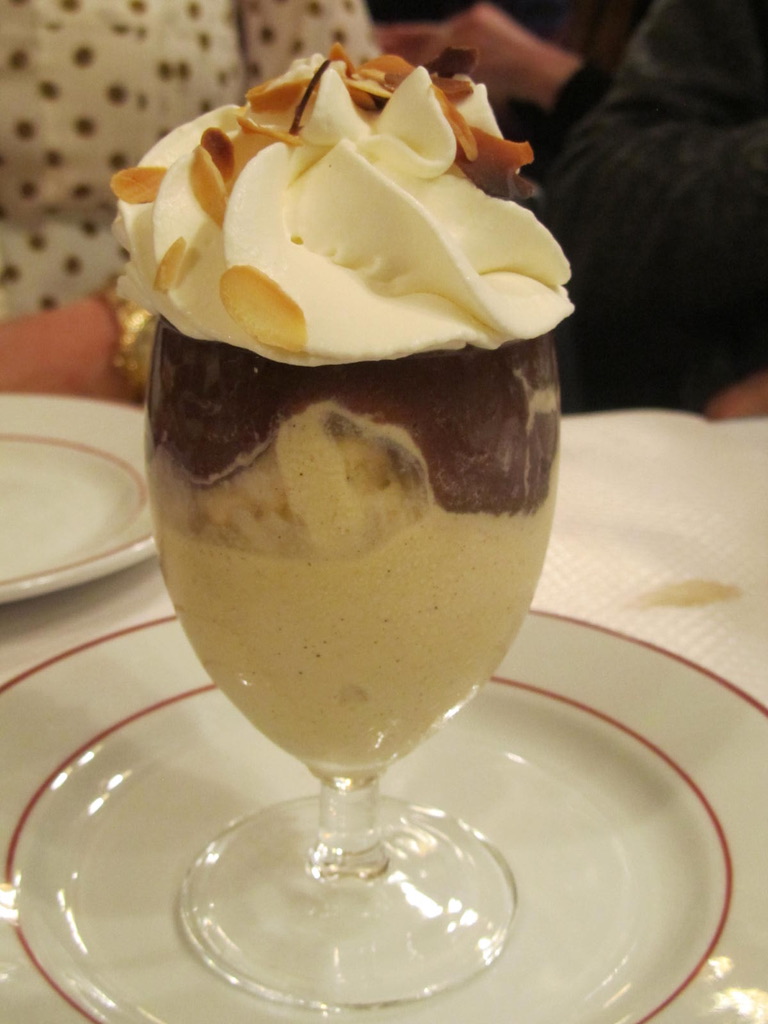
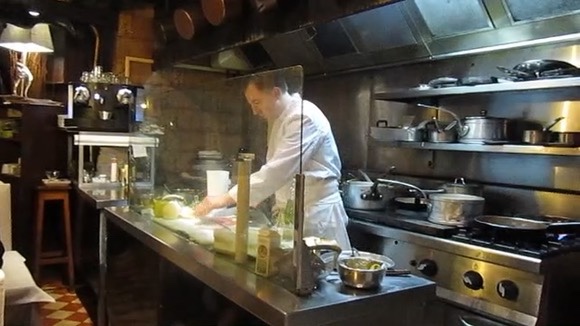
Onion soup at Le Marathon

Onion soup at Le Marathon

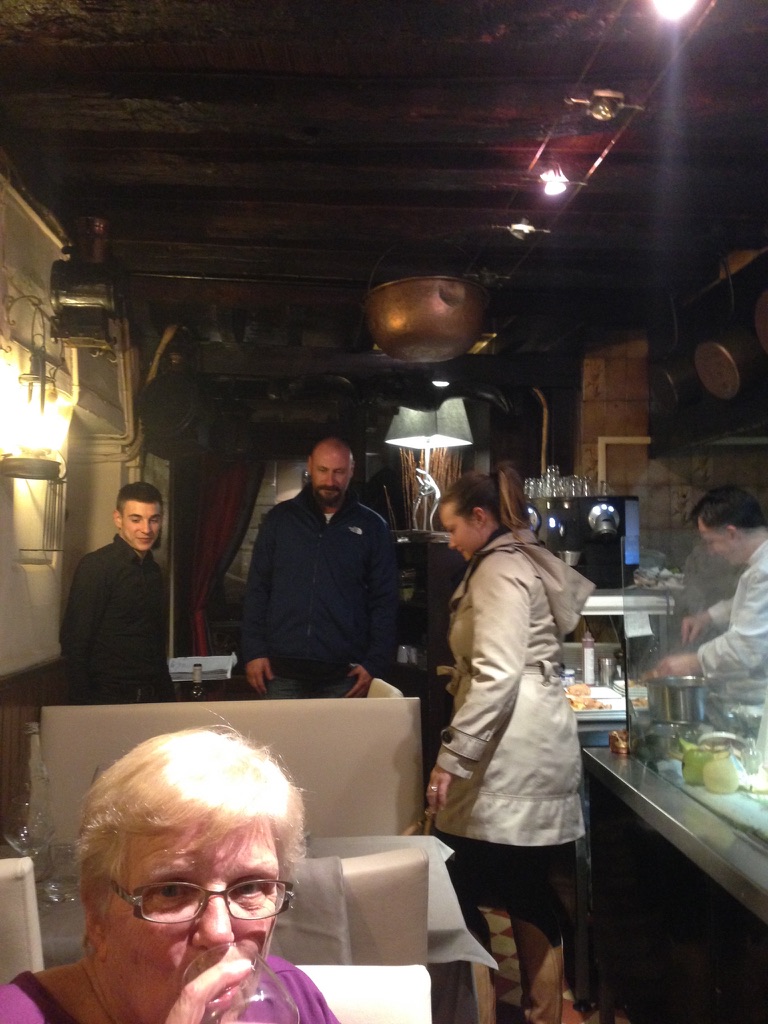
After the concert to Cafe Bonaparte for a glass of wine then on to Le Marathon for and early dinner because we skipped lunch.

Posted in Concerts | Tagged , , , , , , , | Leave a comment

Paris 2014, Day 18 Puces de Clignancourt et Ballet

We were off to meet martin, Paula, Vicky and Aaron at the Porte de Clignancourt metro stop, the last stop on the #4 line. From there its a short walk to The Flea Market, also called the Puce is a real institution and since 2001, has been recognized as a Zone for the Protection of Architectural, Urban, and Landscape Heritage (ZPPAUP) thanks to its unusual ambiance and atmosphere. It is considered as the largest antiques market and second-hand shop in the world. Map of the market.

The market covers seven hectares. The Saint Ouen Flea Market near Paris hosts 15 markets which offer an authentic and a unique atmosphere.

The Flea market, steeped in history, is a real crossroads of the art bringing together antique dealers, designers, artisans and artists, as well as a powerful business location. Together, owners, presidents, managers, associations, artists, restaurant owners and carriers represent its framework and its legitimacy.

You can find them on Facebook.

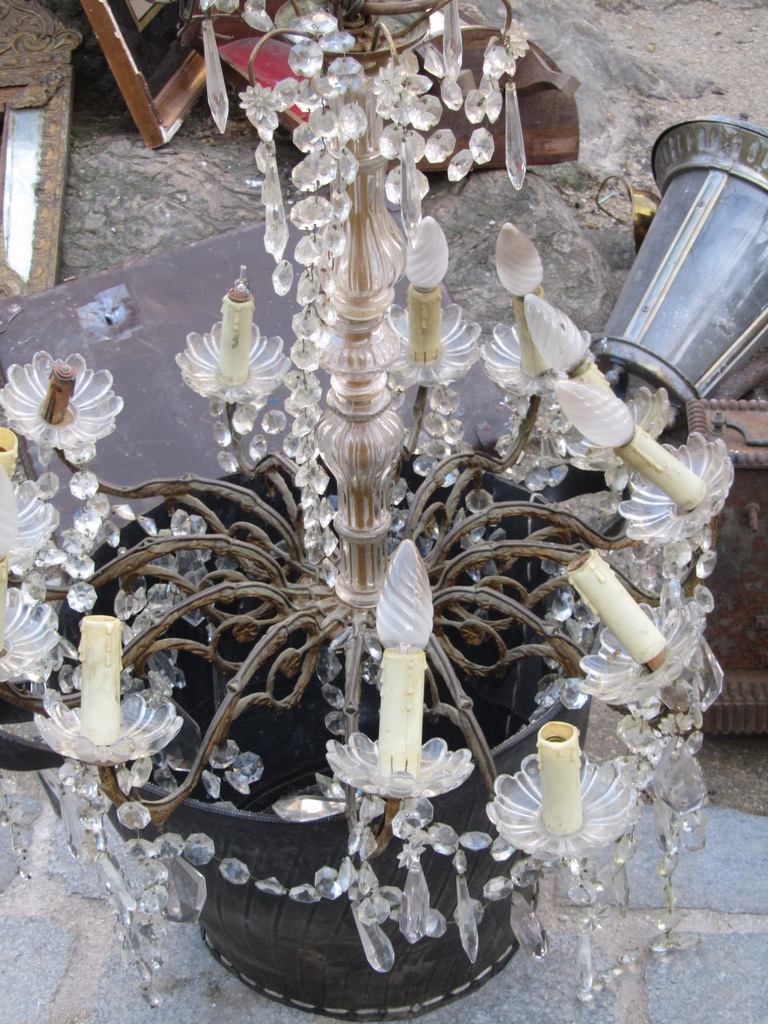
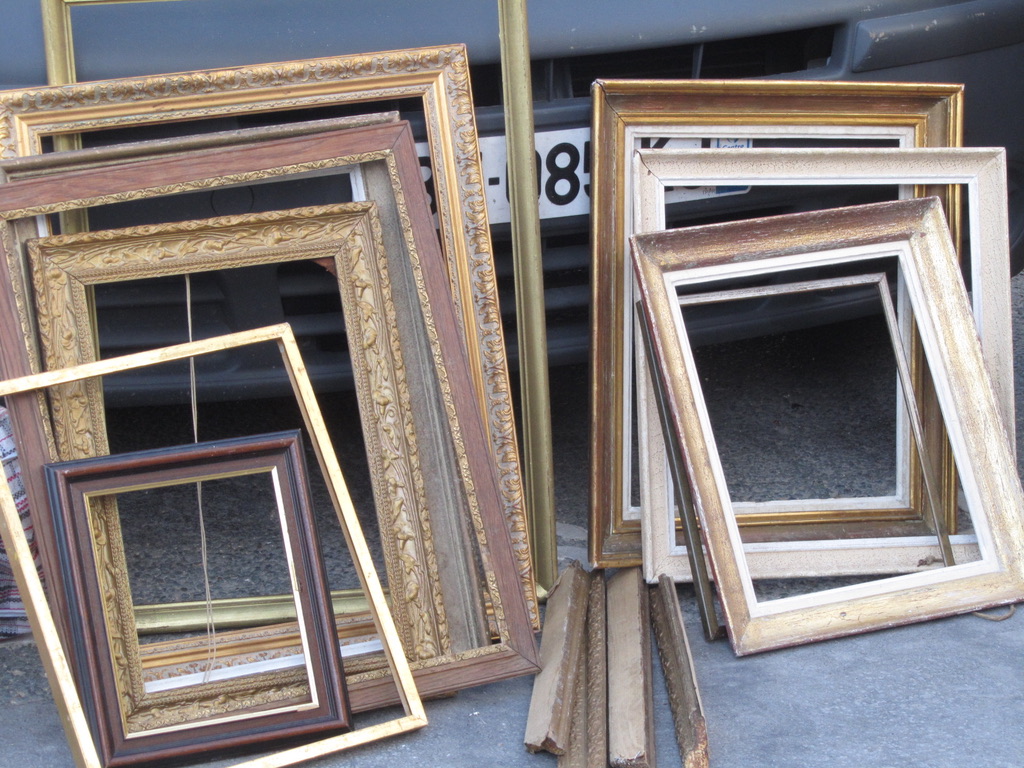
Some of them are covered, others are open-air markets and every one of them overflows with varied goods, from all periods and countries. At the Flea Market, you can bargain-hunt classic antiques or restored top-end goods such as furniture, paintings, bronzes, art items or tapestries, mirrors, lamps, dishes.

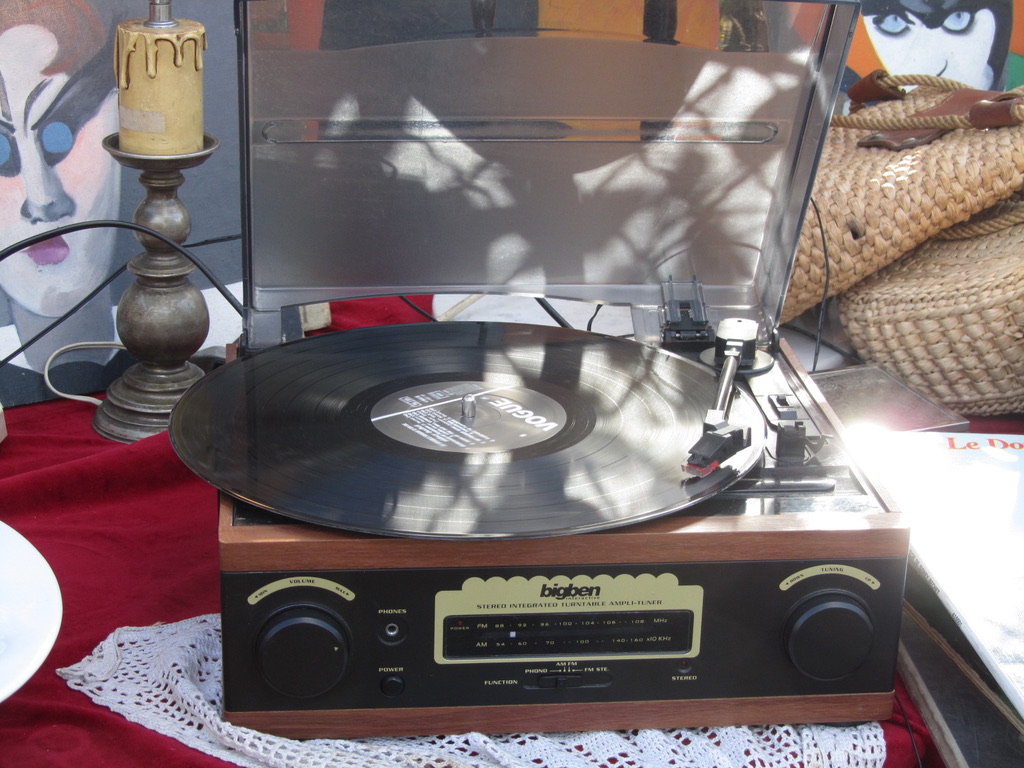
You can find old discs, engravings, toys, posters, books, photography and other unusual items. You can also buy clothes, shoes and vintage or latest fashion accessories.

4th tourist landmark in France

The Saint-Ouen Flea Market is the largest concentration of antique dealers and second-hand goods dealers worldwide, receiving more than 5 millions of visitors each year including a lot of foreigners and even celebrities. This 4th tourist landmark in France, located north Paris in front of the 18th arrondissement, is held on Saturdays, Sundays and Mondays.
You will discover Paris in an original way and will be surprised as you walk around the Puces. It’s a real gold mine for vintage items lovers and antiques amateursé

The market was officially created in 1885. It structured itself gradually to become today a worldwide reference for bric-a-brac shop. Now, with 1 700 merchants including 1 400 antique dealers, some sections of the market look more like a museum or an art gallery than a flea market. The main street is the rue des Rosiers leading to the Marchés Malassis, Dauphine, Biron and Vernaison.

This bric-a-brac atmosphere offers for those who bother to hang around a splendid and unusual sphere and the chance maybe to discover and negotiate the rare pearl.  Moreover, you will find about twenty small popular and friendly restaurants and cafés where a band often plays music and you will see full of coloured characters…That is also the spirit of the Puces!

It’s trendy…

Cristo Gallery

Over the last few years, the Puces tend to renew themselves. As home decoration became very trendy in Paris, a lot of young Parisians try to find rare and original items. This is why innovations have been emerging such as Quintessence Playground which is the first concept store of the Puces. You can also find a trendy restaurant called Ma Cocotte, invented by the famous French designer Philippe Starck (he also created the club Lan  in Beijing) based on a chic and popular canteen concept considered these past few years as very trendy in France. It also draws more and more Chinese tourists. Some of them come especially here to buy restored Chinese antiques at the CRISTO gallery.

We wandered the market for about 2 hours and we stopped for lunch at  La Napoli a small

Italian Bistro, most others could not accommodate 6 people, very common in the area especially for the French cafe and bistros.  We ordered pizza, Veal Scallopene, and various pastas.

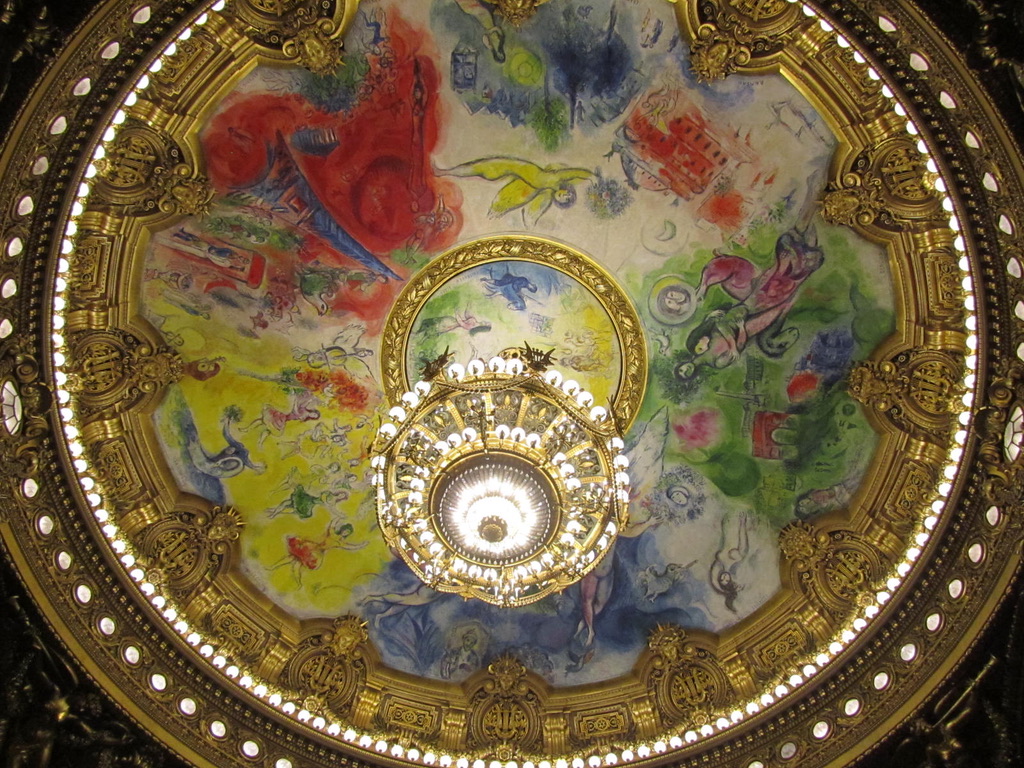
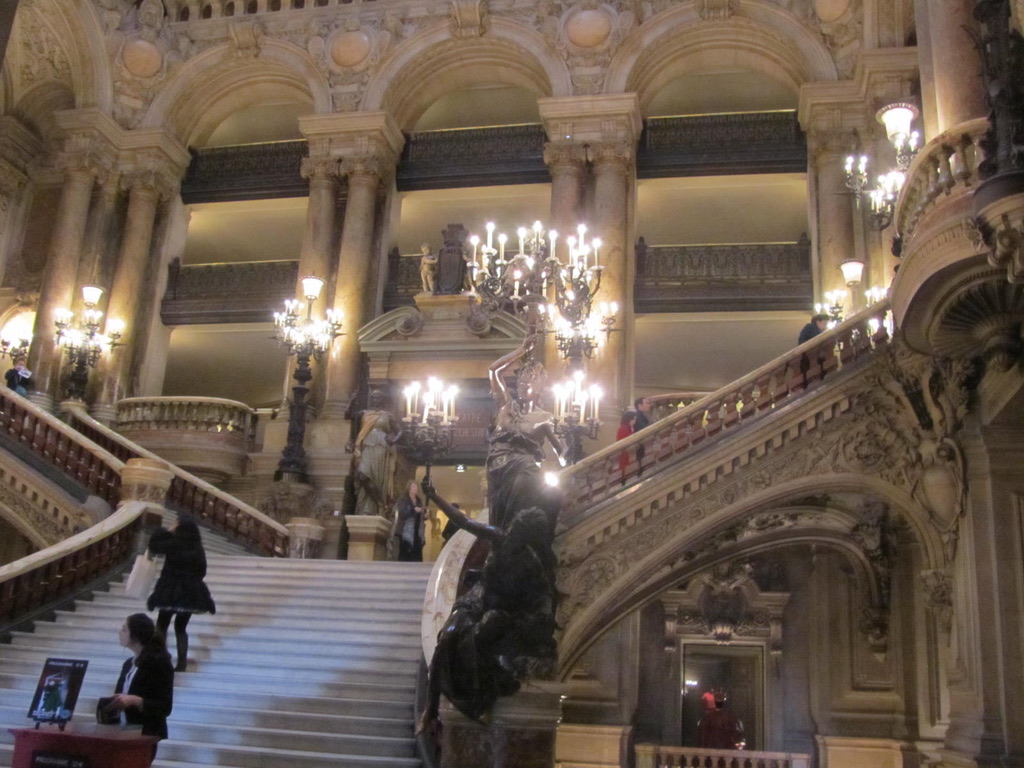
Pat left us at about 1:00, after a just a glass of rose, and headed for a matinee ballet at the Opera Garnier, solo. The ballet experience deserves far more than “Pat went to the ballet.” First of all, there’s the Opera Garnier! I was assigned a seat in the balcony, seat number 78 – which happened to be in the third row of the balcony and dead center. The seats in the two rows in front of me were much lower and mine was positioned off center of the ones in front of me. There were absolutely no visibility issues at all. The very comfortable seats were upholstered in red velvet and seat number in a gold emblem on the top of the back.

The ballet was performed by the Opera National de Paris, the ballet company of 154 dancers who stage about 180 performances a year. Their average age is only 25, making them one of the youngest ballet companies. Fall River Legend, the ballet by Agnes de Mille, depicting the story of Lizzie Borden started the matinee. I had seen the ballet before, but it was great to see again in these fabulous surroundings. The ballet performs with a full orchestra, even in this small theater. After a short intermission, the ballet continued with Birgit Cullberg’s Miss Julie. Both choreographers were pioneers in 20th century dance, both pieces were striking, serious, and grave. Fall River was created in 1945, Miss Julie in 1950. Of course, photos were not permitted during the performances. Dancers were both technically precise and embodied the emotions the pieces dictated.

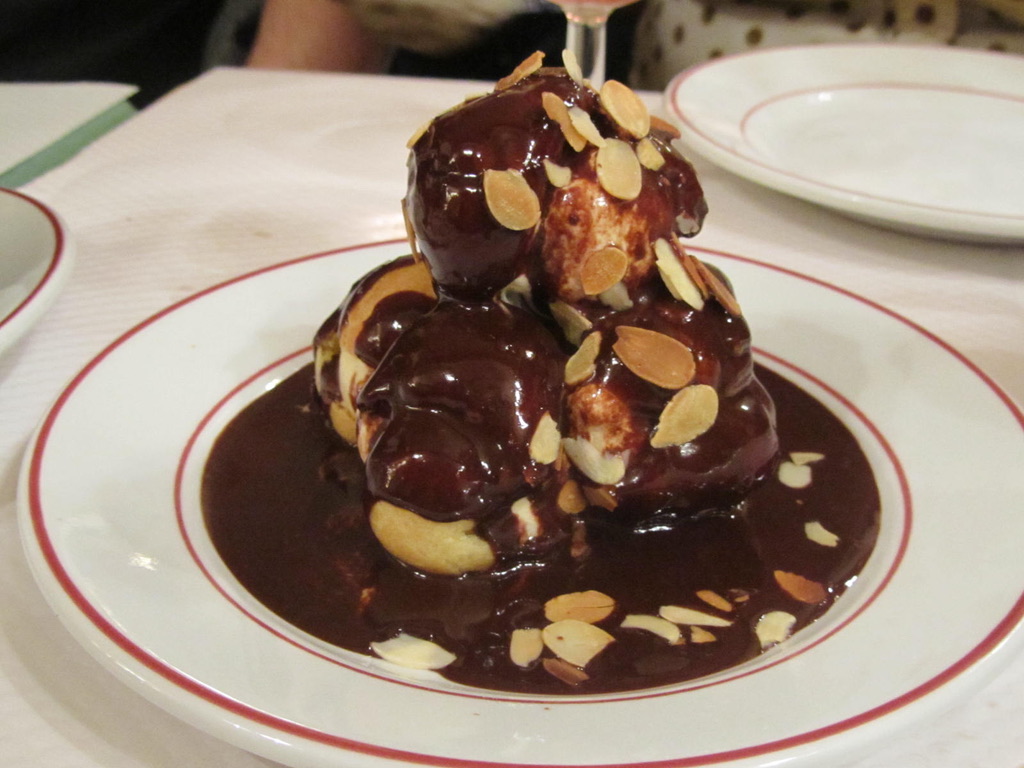
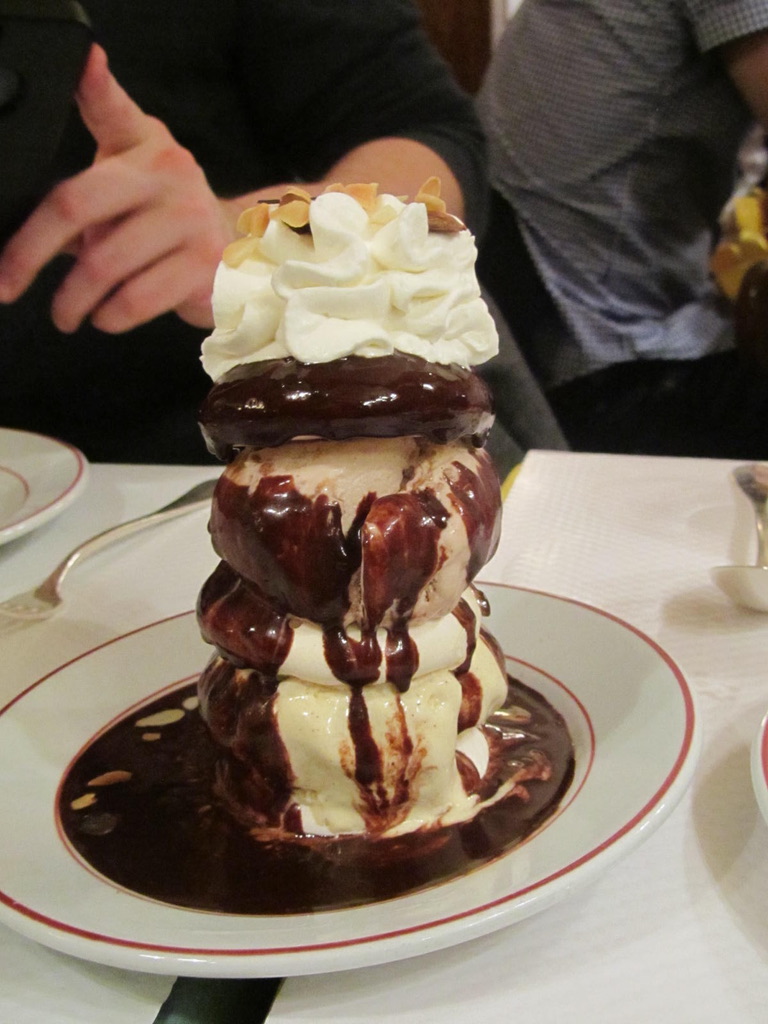
I met her after the performance and then we met Martin and Paula and Aaron at Le Relais d’Entrecote for dinner on rue St Benoit. The Relais has become much more of a tourist location, the entrecote is still the best in Paris, however, the portions have gotten smaller, however, there are still two servings – not as much as you want. We had room for dessert so we ordered three for the table.

Posted in Marche au Puce, Saint Ouen | Tagged , , , | Leave a comment

Paris 2014, Day 17 – Chateau de St Germain en Laye

Off on the RER A1 (Zone 4)  to Chateau de St Germain en Laye for the day.

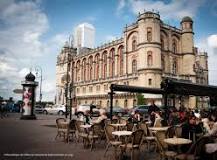
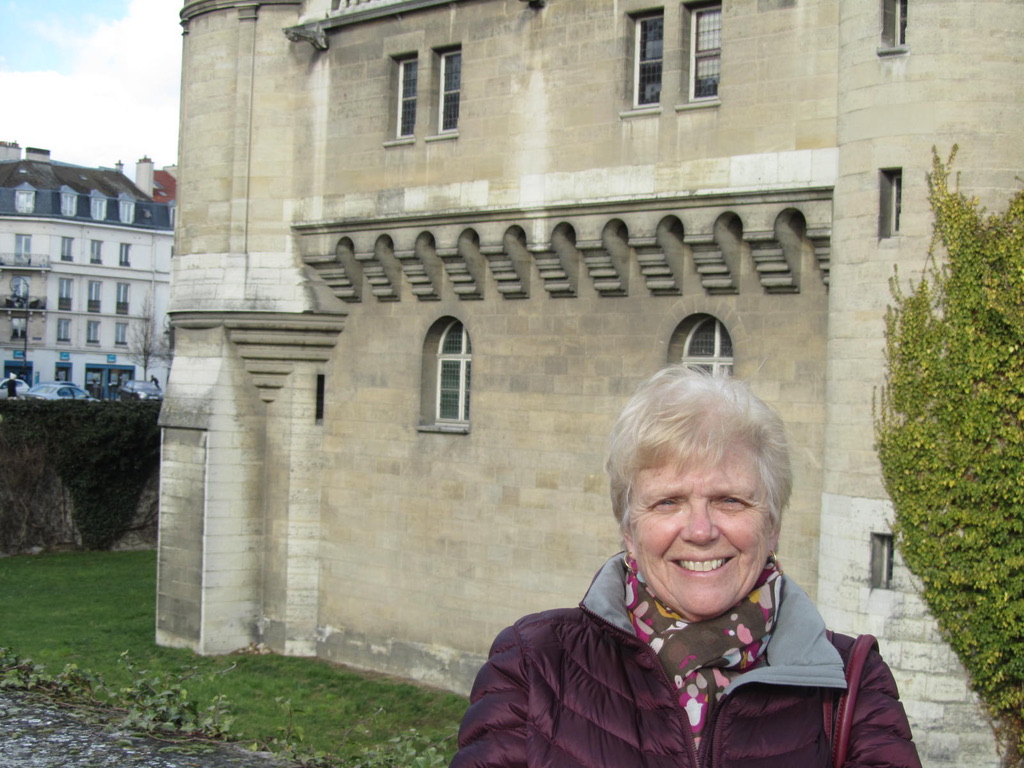
Arrived in St. Germain at about 1020. Got off the train and explored the area around the Chateau and the Chateau Neuf erected adjacent to the old chateau.


Saint-Germain-en-Laye was founded in 1020 when King Robert the Pious (ruled 996-1031) founded a conventon the site of the present Church of Saint-Germain.

In 1688, James II, King of England, exiled himself to the city due to religious conflicts in his own country. He spent the remainder of his days there, and died on the 16th of September 1701.[1]

Prior to the French Revolution in 1789, it had been a royal town and the Chéteau de Saint-Germain the residence of numerous French monarchs.

The Church of Saint-Germain.

The old chéteau was constructed in 1348 by King Charles V on the foundations of an old castle (chéteau-fort) dating from 1238 in the time of Saint Louis. Francis I was responsible for its subsequent restoration. In 1862, Napoleon III set up the Musée des Antiquités Nationales in the erstwhile royal chéteau. This museum has exhibits ranging from Paleolithic to Celtic times. The “Dame de Brassempouy” sculpted on a mammoth’s ivory tusk around 23,000 years ago is the most famous exhibit in the museum.

Kings Henry IV and Louis XIII left their mark on the town.


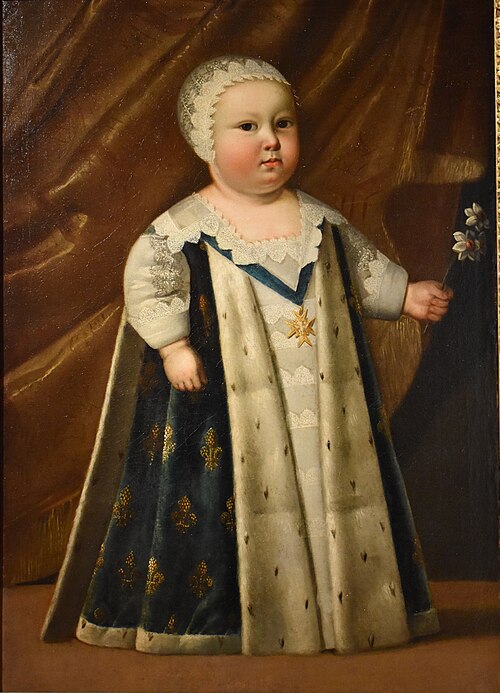
Louis XIVÂ was born in the chéteau (the city’s coat of arms consequently shows a cradle and the date of his birth), and established Saint-Germain-en-Laye as his principal residence from 1661 to 1681. Louis XIV turned over the chéteau to James VII & II of Scotland and England after his exile from Britain after the Glorious Revolution in 1688. James live V, d in the Chéteau for 13 years, and his daughter Louisa Maria Stuart was born in exile here in 1692. James II is buried in the Church of Saint-Germain.

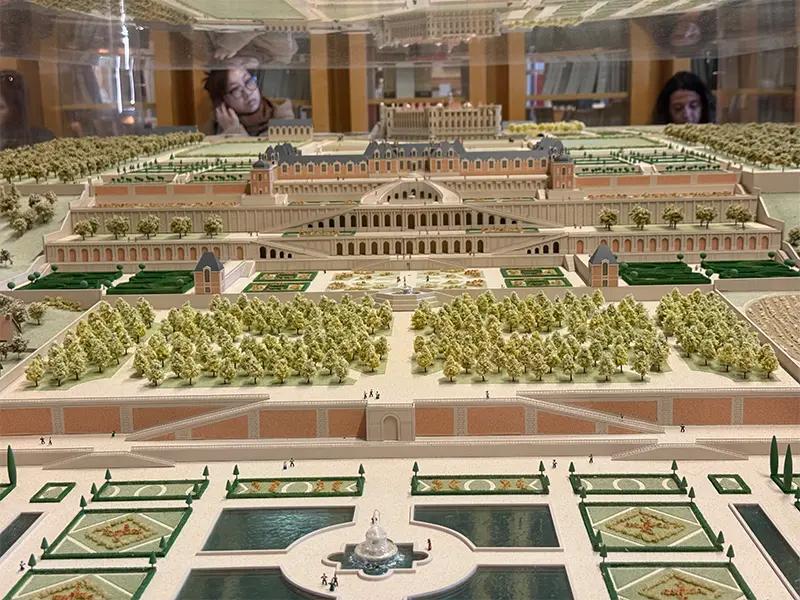
Saint-Germain-en-Laye is famous for its 2.4 kilometre long stone terrace built by André Le Nôtre from 1669 to 1673. The terrace provides a view over the valley of the Seine and, in the distance, Paris.

The Treaty of Saint-Germain was signed in 1919 and was applied on July 16, 1920. The treaty officially registered the breakup of the Habsburg empire, which recognized the independence of Czechoslovakia, Poland, Hungary, and the Kingdom of the Serbs, Croats, and Slovenes (Yugoslavia).[2]

One of the German bunkers built in 1942

During the French Revolution, the name was changed along with many other places whose names held connotations of religion or royalty. Saint-Germain-en-Laye became Montagne-du-Bon-Air.

In the 19th century, Napoleon IÂ established his cavalry officers training school in the Chéeau-Vieux.

During the occupation from 1940 to 1944, the town was the headquarters of the German Army

We walked around the town of St Germain en Laye, which is the western bedroom community and is quiet affluent and has a large population of US Expats. The shops are very upscale and represent most of the designers from Paris saving the residents the 15 Km drive in to Paris.

It was getting close to lunch time so we found a small cafe

Saint-Germain-en-Laye was founded in 1020 when King Robert the Pious (ruled 996-1031) founded a conventon the site of the present Church of Saint-Germain.

In 1688, James II, King of England, exiled himself to the city due to religious conflicts in his own country. He spent the remainder of his days there, and died on the 16th of September 1701.[1]

Prior to the French Revolution in 1789, it had been a royal town and the Château de Saint-Germain the residence of numerous French monarchs.

The Church of Saint-Germain.

The old chéteau was constructed in 1348 by King Charles V on the foundations of an old castle (chéteau-fort) dating from 1238 in the time of Saint Louis. Francis I was responsible for its subsequent restoration. In 1862, Napoleon III set up the Musée des Antiquité Nationales in the erstwhile royal chéteau. This museum has exhibits ranging from Paleolithic to Celtic times. The “Dame de Brassempouy” sculpted on a mammoth’s ivory tusk around 23,000 years ago is the most famous exhibit in the museum.

Kings Henry IV and Louis XIII left their mark on the town.

Louis XIV was born in the chéteau (the city’s coat of armsconsequently shows a cradle and the date of his birth), and established Saint-Germain-en-Laye as his principal residence from 1661 to 1681. Louis XIV turned over the chéteau to James VII & II of Scotland and England after his exile from Britain after the Glorious Revolution in 1688. James lived in the Chéteau for 13 years, and his daughter Louisa Maria Stuart was born in exile here in 1692. James II is buried in the Church of Saint-Germain.

Saint-Germain-en-Laye is famous for its 2.4 kilometre long stone terrace built by André Le Nôtre from 1669 to 1673. The terrace provides a view over the valley of the Seine and, in the distance, Paris.

The Treaty of Saint-Germain was signed in 1919 and was applied on July 16, 1920. The treaty officially registered the breakup of the Habsburg empire, which recognized the independence of Czechoslovakia, Poland, Hungary, and the Kingdom of the Serbs, Croats, and Slovenes (Yugoslavia).[2]

One of the German bunkers built in 1942

During the French Revolution, the name was changed along with many other places whose names held connotations of religion or royalty. Saint-Germain-en-Laye became Montagne-du-Bon-Air.

In the 19th century, Napoleon I established his cavalry officers training school in the Château-Vieux.

During the occupation from 1940 to 1944, the town was the headquarters of the German Army

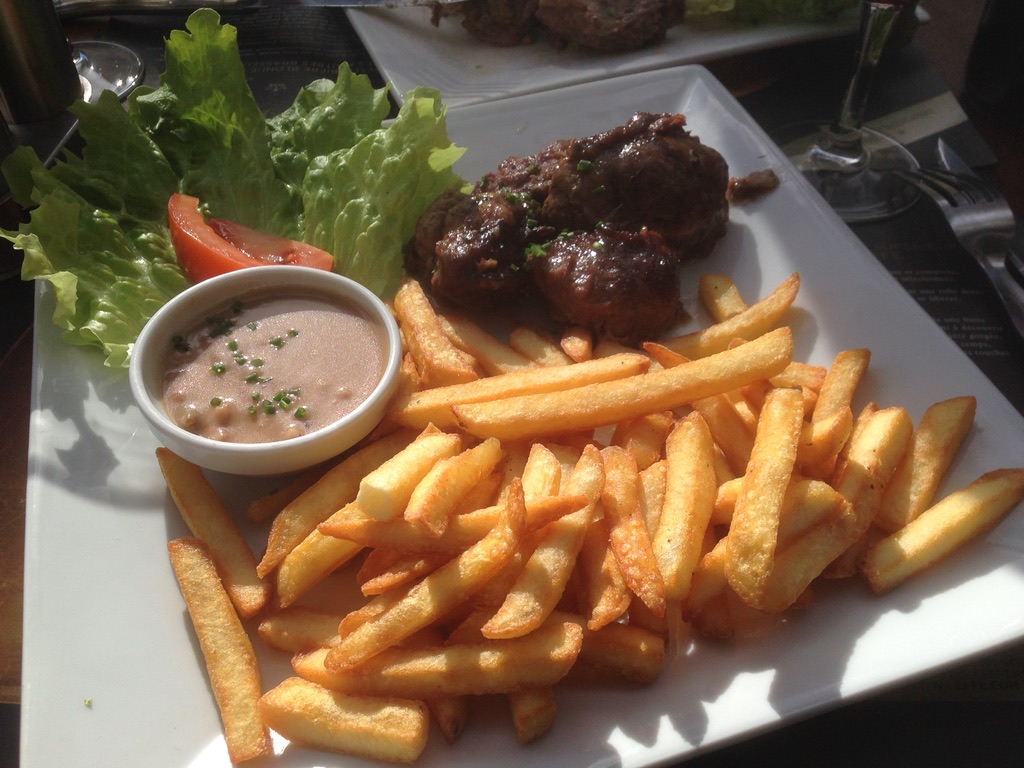
We walked around the town and it was afar lunch so we decided we best eat so we selected a cafe, Le Bon Accueil, where all of the patrons were French and locals so they knew each other, only French was spoken.  We were welcomed by the proprietor and he offered the Plat du Jour and no menus were offered, we had the Plat which was Joues du Porc, or Pig

Cheeks, that were braised and served with a dipping sauce of thickened cooking juice and lardons and either fries or pasta, we chose one of each.  The dish was excellent.

We caught up with Martin and Paula and family, her mom has joined from California for about 10 day so we had Moules and Frietes and then headed home.


Posted in Gardens, St Germain en Laye | Tagged , , , , , , , , , , , , , , , , , | Leave a comment

Paris Day 16 (Museum)

After a late night were hanging out having coffee.  My plan is to make us an omelet for lunch maybe with mushrooms and onions, however, I suspect Pat will want her’s a’ Nature.

Its beginning to rain outside so we may head for a museum, perhaps the Musée Nissim de Camondo which we have not been to for several years and it is always being restored.

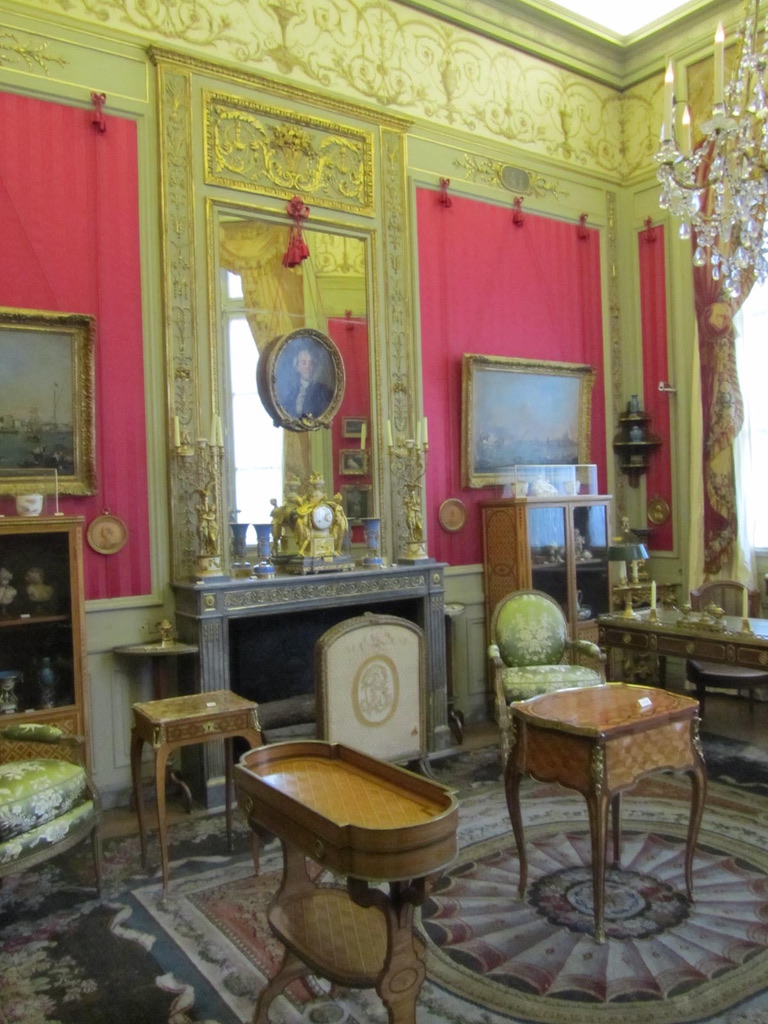
Musée Nissim de Camondo

Musée Nissim de Camondo

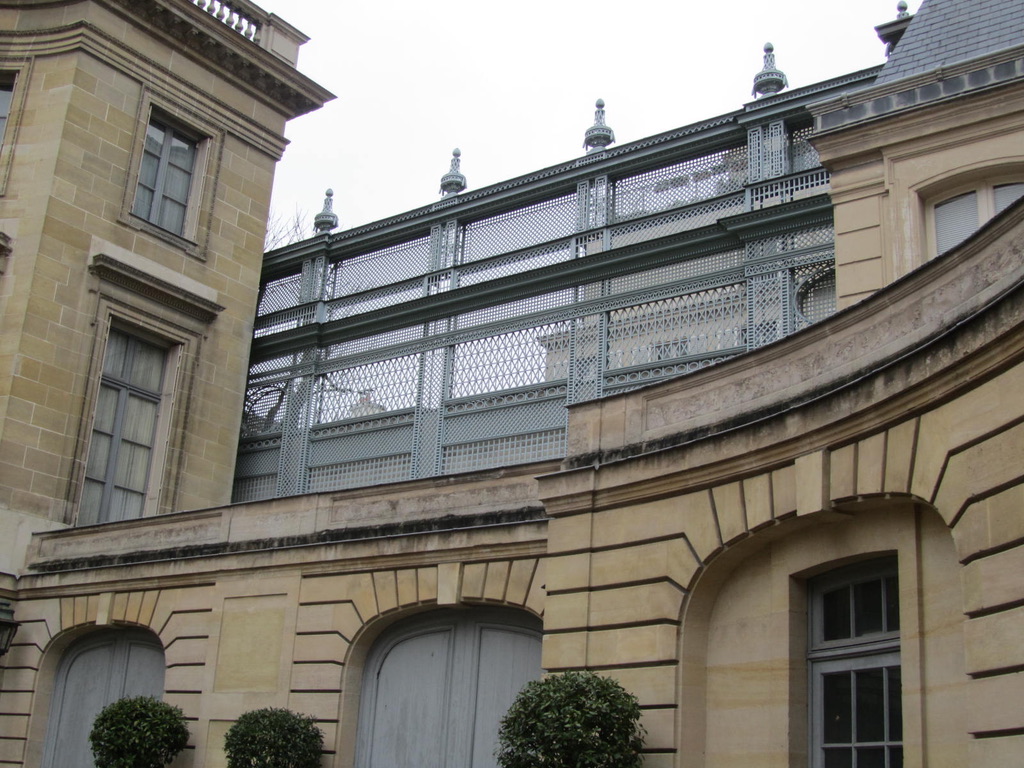
One of the most sumptuous private homes from the early twentieth century in Paris
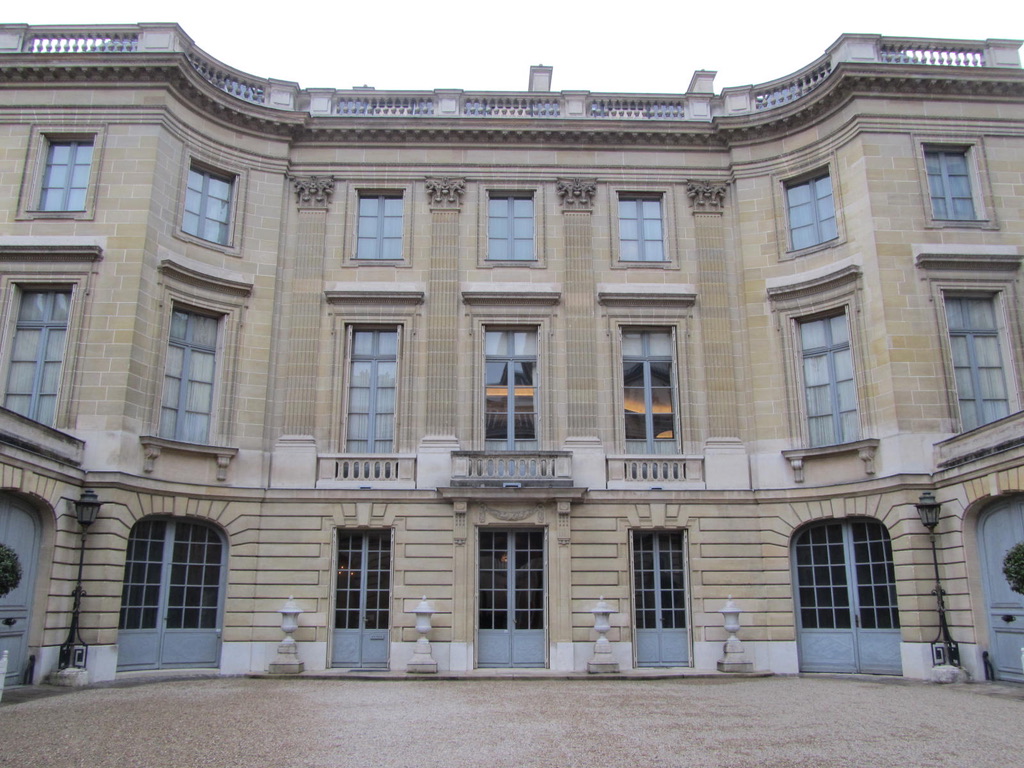
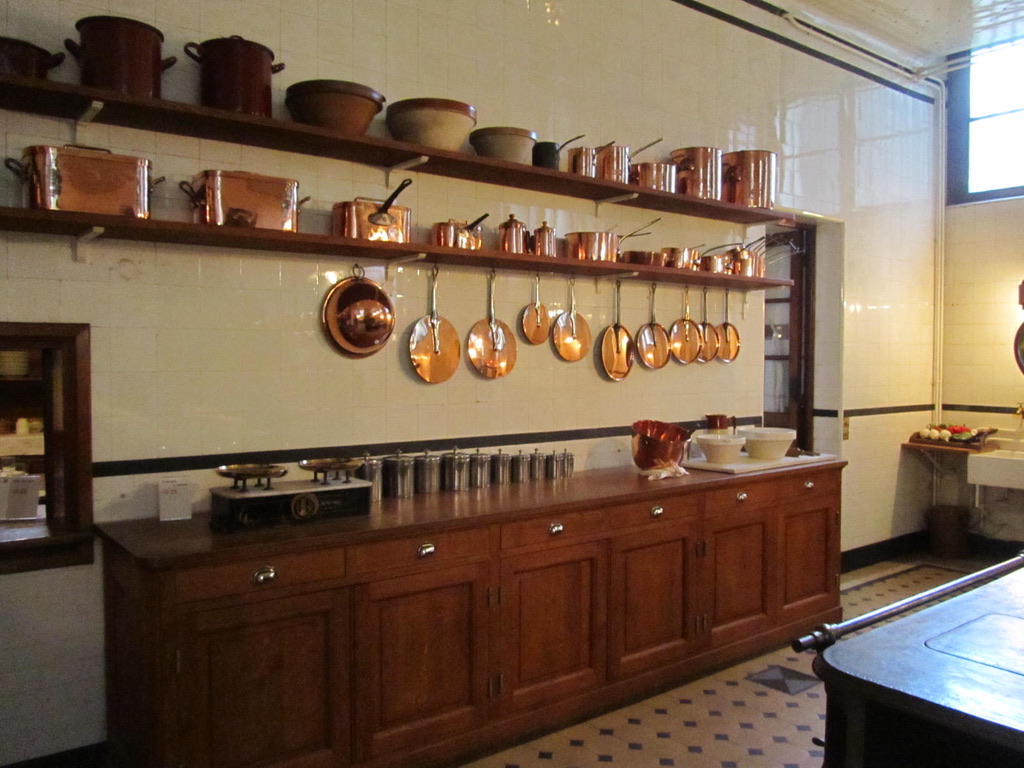
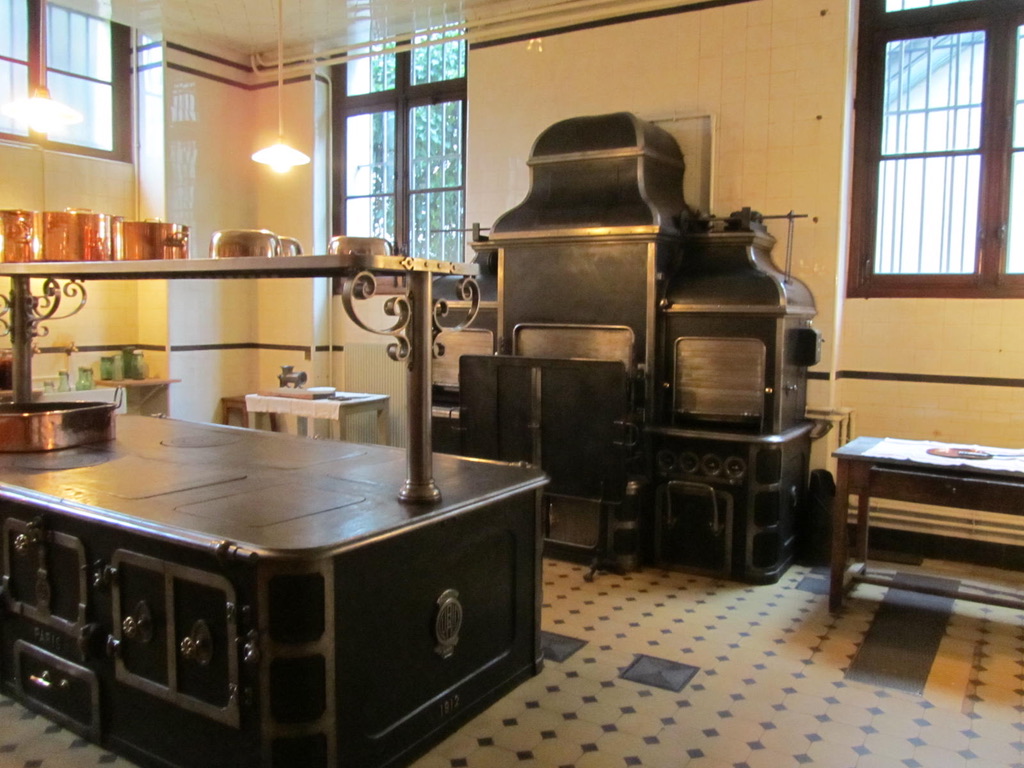
Moïse de Camondo, a reputed Parisian banker during the Belle Epoque, was a passionate collector of French furniture and art objects from the eighteenth century, ans he amassed a collection of unusual quality. In 1911, he hired architect René Sergent to build a private mansion next to Parc Monceau that would be worthy of this collection and suitable for his family. The design was modeled after that of the Petit Trianon in Versailles, but behind the handsome décor of wood-paneled apartments were hidden the accoutrements of modern life, including kitchens, offices and bathrooms. The home, which is fully preserved in its original condition, offers an opportunity to discover the taste of a great collector and to get a glimpse of the everyday life of an aristocratic home.

The facade of the Nissim de Camondo Museum, located on an elegant residential street near Parc Monceau, was inspired by the Petit Trianon at Versailles. This urban townhouse mansion is furnished with the finest in 18th century decorative arts: paintings, furniture, tapestries, etc.

But all the finery and elegance could not protect its former occupants from a tragic fate. The house and it’s contents were willed to the Musee Arts Decoratifs in Paris in 1933 by Moise de Camondo, in memory of his son, Nissim, an aviator killed in aerial combat in 1917. Moise’s daughter, Beatrice and her family, the last descendants of Moise, were deported by the Germans in 1943 and perished at Auschwitz.

The mansion appears that the family just walked out the door, each of the rooms is exquisitely decorated. It’s collections are often considered to be on a par with the Frick Collection in NYC. From a chandelier with goose-egg size drops of

amethyst, rock crystal, and smokey quartz to its vast collection of Sevres, Meissen, and Chantilly porcelain, the rooms can be overwhelming and it’s easy to miss important objets d’art collected by Moise de Camondo, throughout his life.We finally pieced together the story of Moise de Camondo, the great grandson of a devout Sephardic Jew who headed a large family bank. Moise was born in Constantinople in 1860, moved with his father and uncle to Paris when they were establishing a

branch of the family bank. Both brothers died in 1889, after each purchased property on the Monceau plain and, after developing their business to a very prosperous bank. In fact they had been known as “the Rothschilds of the East.” Moise’s cousin, Isaac, took over the bank and his father’s property and continued to develop and collect according to his eclectic tastes from 18th-century furniture to Impressionist art. Isaac died in 1911 and his brother Moise took over business interests of the bank. Upon Isaac’s death, his art collection was was left to France and can be found in the Louvre and Musee des Arts Decoratifs.

Meanwhile, back at 63 rue de Monceau (the site of the current museum), Moise inherited the Hotel Violet from his mother when she died in 1910. Moise demolished the structure at the end of the year and replaced it with a Petit-Trianon inspired mansion. The architect was forced to work around antique wainscoting and other items Moise had purchased, in addition to his vast collection of 18th century art, tapestries, rugs, furniture, porcelain, and collectibles.

Moise finally took up residence with his children, Nissim and Beatrice, about the beginning of WWI. Moise and his wife, Irene Cahen d’Anvers, had divorced in 1901. Nissim had entered France’s defense forces as a lieutenant pilot and was killed in aerial combat in September 1917 and was posthumously awarded the Legion d’Honneur.  Nissim was the intended heir of both the home, its vast collections, and the bank. The bank permanently closed after Nissim’s death.

In 1933, Moise bequeathed his townhouse and collections to the state in order to preserve them in the honor and memory of his son, Nissim de Camondo. Moise, himself died in 1935. Nissim’s sister, Beatrice had married and had a son and daughter. In 1943, she and her family were arrested and sent to Auschwitz where they perished – the last descendants of the de Camondo clan.

The museum’s interior arrangement is very close to as it appeared at Moise’s death. In fact, in early 1936 photographs were taken of each room to document the items and their position. These photos are on display in one of the upstairs rooms. The chandeliers and woodwork details are gorgeous. Window treatments, wall treatments, upholstery, rugs, and the porcelain cabinet are over-the-top. There are clocks and barometers in every room. Rooms are designed on axis to take advantage of the views of Parc Monceau.

Posted in Museums | Tagged | 2 Comments

Paris Day 15 (Recovery)

We slept in until about 0830 this morning then sat around and did a whole lot of nothing.

We were trying to recover from both our trip to Senlis (see previous days post) and wine and cheese (our dinner, after the big lunch in Senlis) with friends in Saint Germain des Prés.

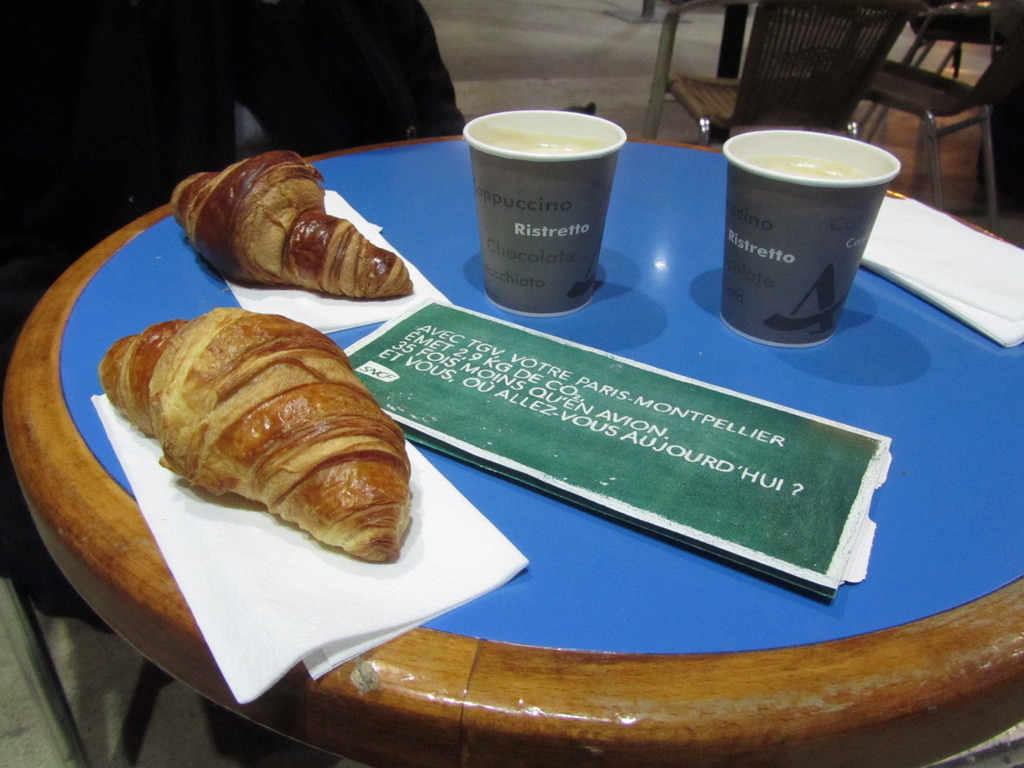
We headed out of here after lunch time, we had croissants for breakfast and 2 pots of coffee and were skipping lunch in anticipation of dinner at La Cordonnerie tonight (Hugo’s restaurant).

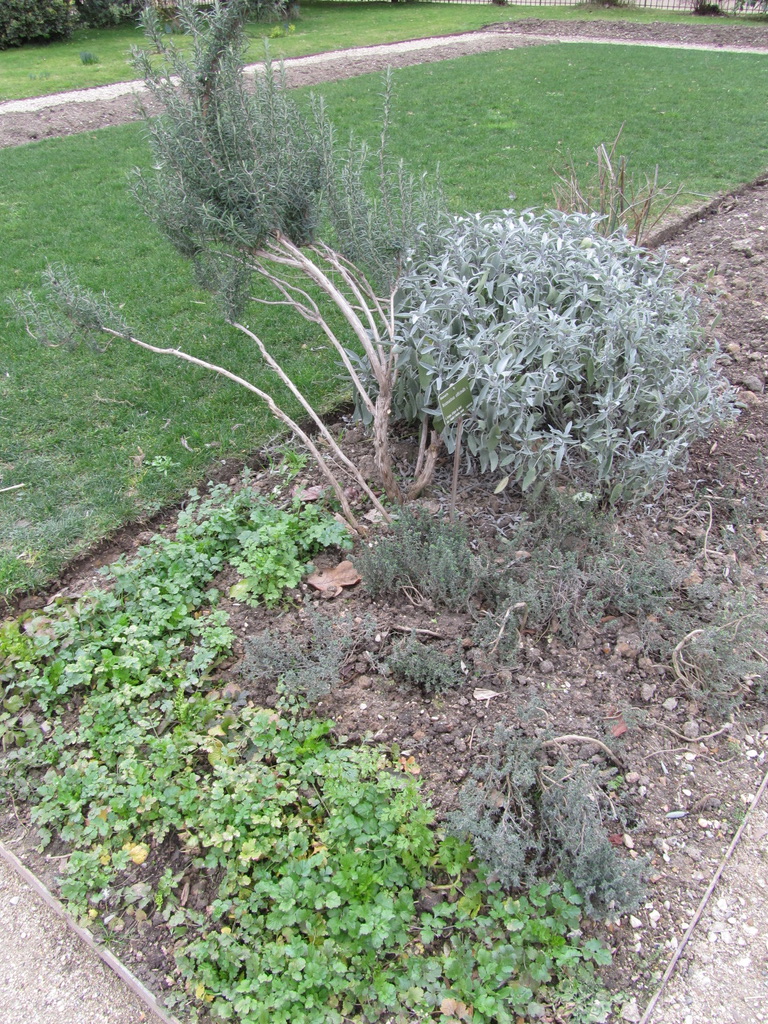
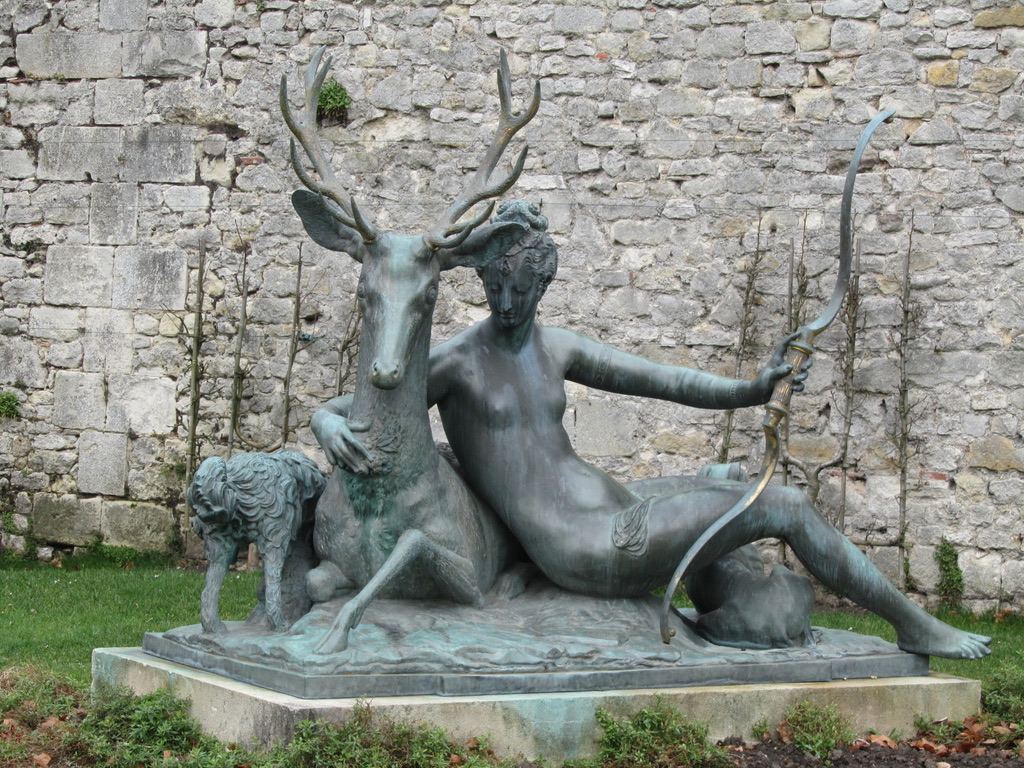
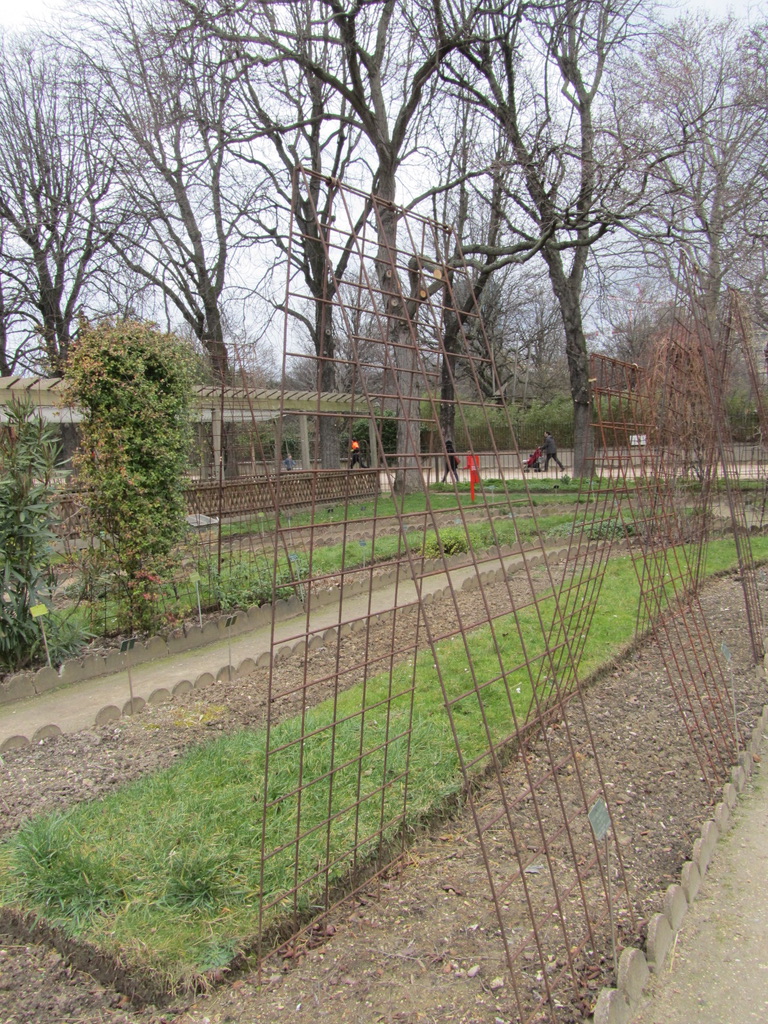
We took the bus over to the 6th arrondissement to the Jardins des Plantes to walk around

and enjoy a sunny day, although the wind was a bit blustery.

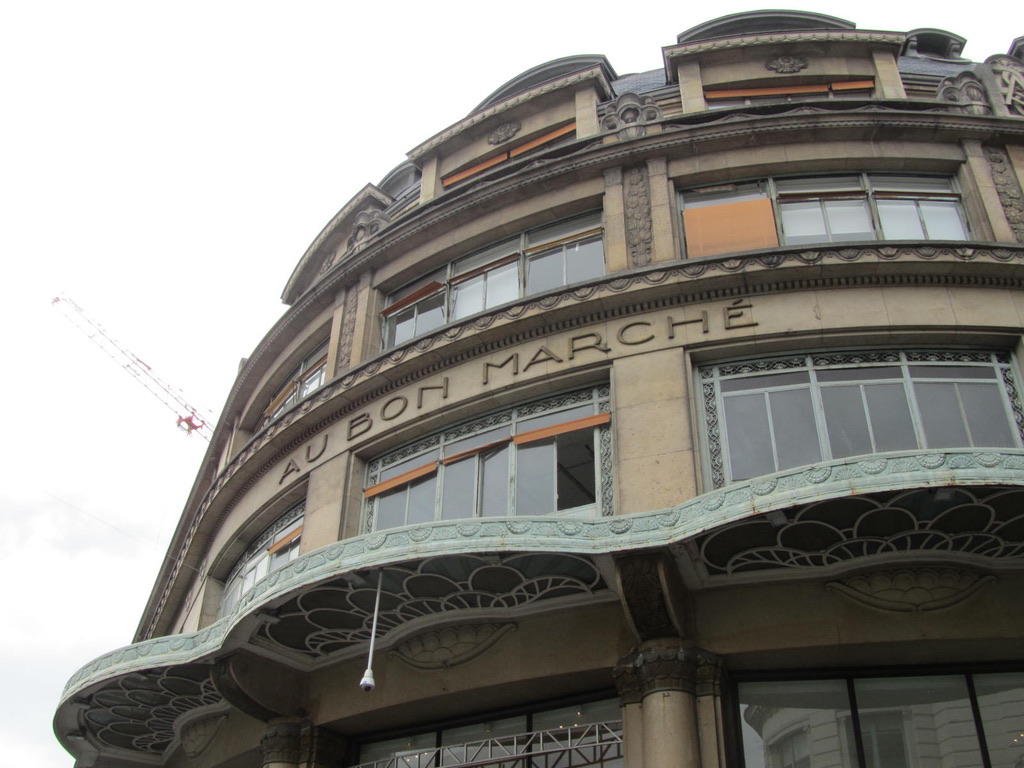
We walked, took photos and enjoyed the gardens for about 2 hours and then headed over to Bon Marche and the La Grande Epicerie de  Paris.  We found that both store have been completely refinished on the inside and some places it was still a work-in-progress.

We were truing to decide bus or metro on the way home but

chose the bus because there is more to see and it was still light outside.

When we arrived home we poured a glass of wine, rosé for Pat and Cote du Rhone for Mike, sliced up two Comice pears and some comté cheese for a light snack, the pears were excellent.  We’re still working on a piece of 30-month old comté also

delicious.

We’re now catching up on blogs and Facebook (Pat) and anticipating dinner.

Report back later!

Dinner was great Pat started with a salad of fresh-water shrimp, apple and a citrus dressing, I had the fricasseed mushrooms with a rosemary cream sauce and some truffle

reduction, both were excellent. We followed the first course with Cod for Pat poaches in light citrus sauce and then finished with a citrus butter sauce, very nice plate. Pat of course asked Hugo

to substitute fries for the rice and it also was accompanied by sautéed zucchini.

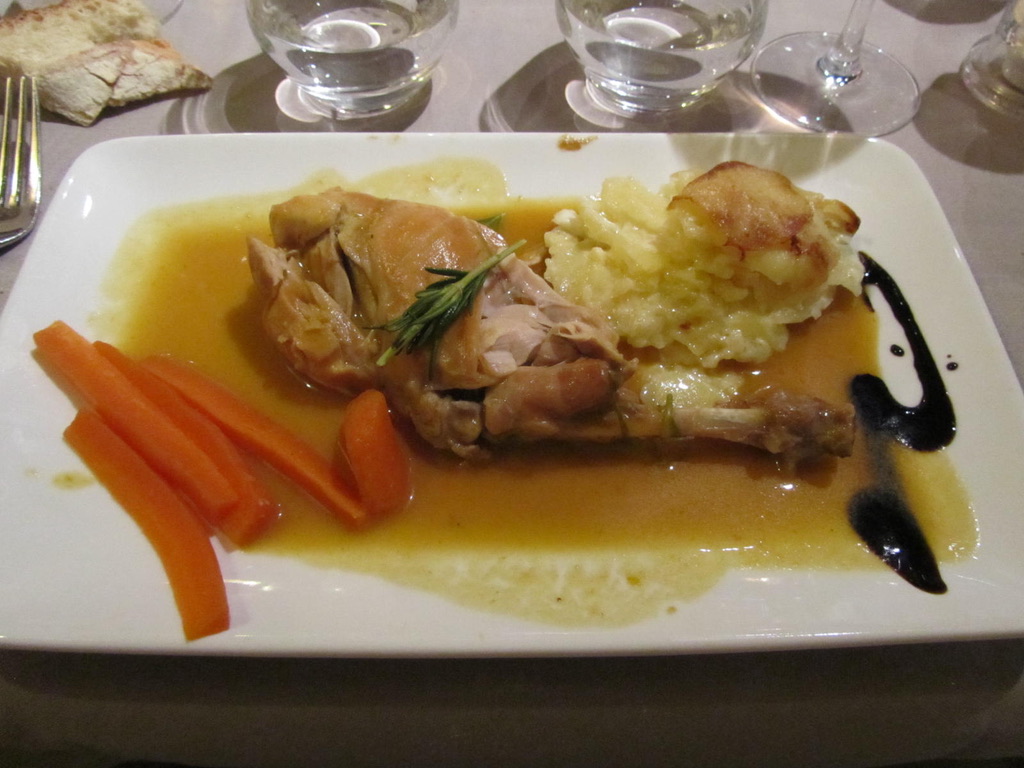
I opted for the leg of rabbit that was braised with carrots and onions, so tender you did not need a knife which had a rich rabbit stock, scalloped potatoes and  poached carrots.

We ove indulged with wine, Cote de Provence, two bottles, and passed on dessert but not before we made a reservation for the following Wednesday night. We spent a long time chatting with Hugo about food, his mom and his dad, his dad died back in 1997 and Hugo’s struggle with taking over the restaurant after his dads death.  Valerie made a short appearance on her way to take their dog for a walk. We met a couple from Wyoming who grow organic wheat and were stopping in Paris on their way home from a trade who in Germany.

We depart the restaurant at about 11:30 PM, the bus had stopped running so we jumped the metro for the ride home.

Hugo in the Kitchen and the folks from Wyoming getting Bananas Flame.

Posted in Gardens, Paris 6th | Tagged , , , , , , | Leave a comment

Paris 2014, Day 14 (Senlis)

We rose early and headed to Gare du Nord to buy tickets and board the 0910 train to Senlis. It was a cold and over cast day and we were hoping for some cleared skies in the country.  We had arrived fairly early at the train station, (we left plenty of time to get from our apartment in the 16th arr, ride the bus across Paris, and negotiate our tickets to Senlis). The hardest part was finding the proper ticket window at Gare du Nord. There is a specific Metro/RER ticket sales area, a specific TGV ticket sales area, and a specific TER ticket sales area.

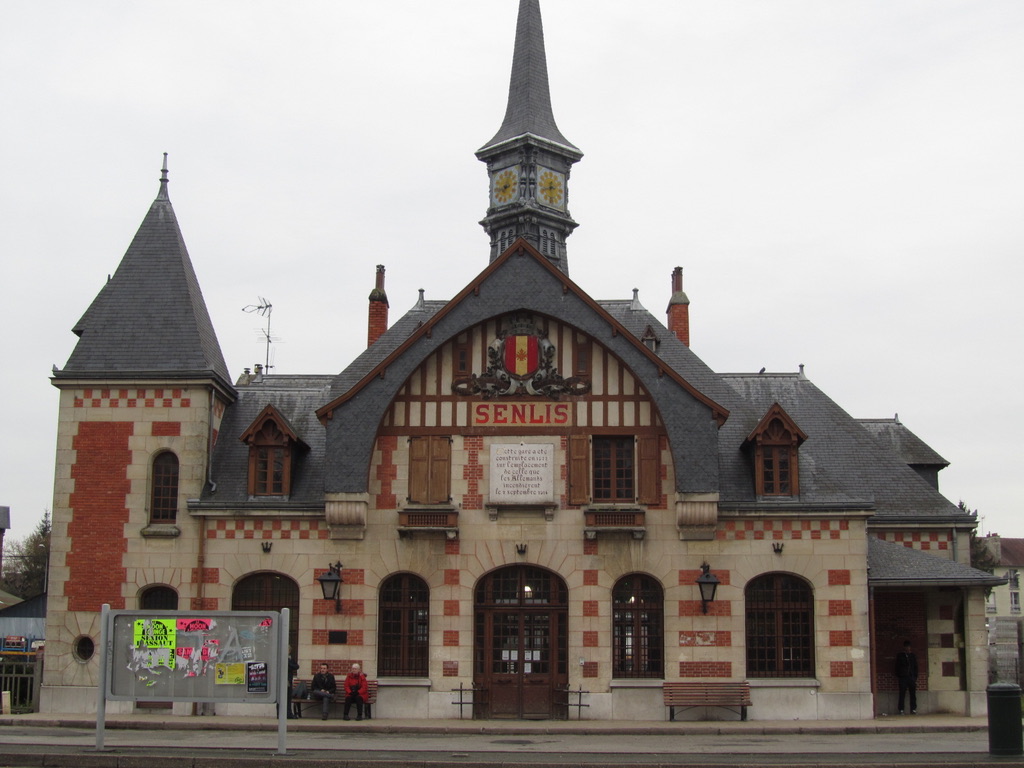
Senlis is about a 30-minute train ride north of Paris and then a 20-minute bus ride.  We purchased  our ticket from  Paris to Senlis (41€ for 2 round trip tickets) the train goes to Chantilly Gouvieux and then you board the 15 bus to Senlis, show your ticket to the driver and he will punch your ticket and drop you off at the former Senlis Train Station.

A word of caution do not get off the train by mistake at Orry de Ville, because you may not find the bus to Sanlis G.R. waiting, after all you are in the French countryside. In our case, it worked out and we had a pleasant ride through the countryside with suburban type enclaves, farms, horse farms, towns.

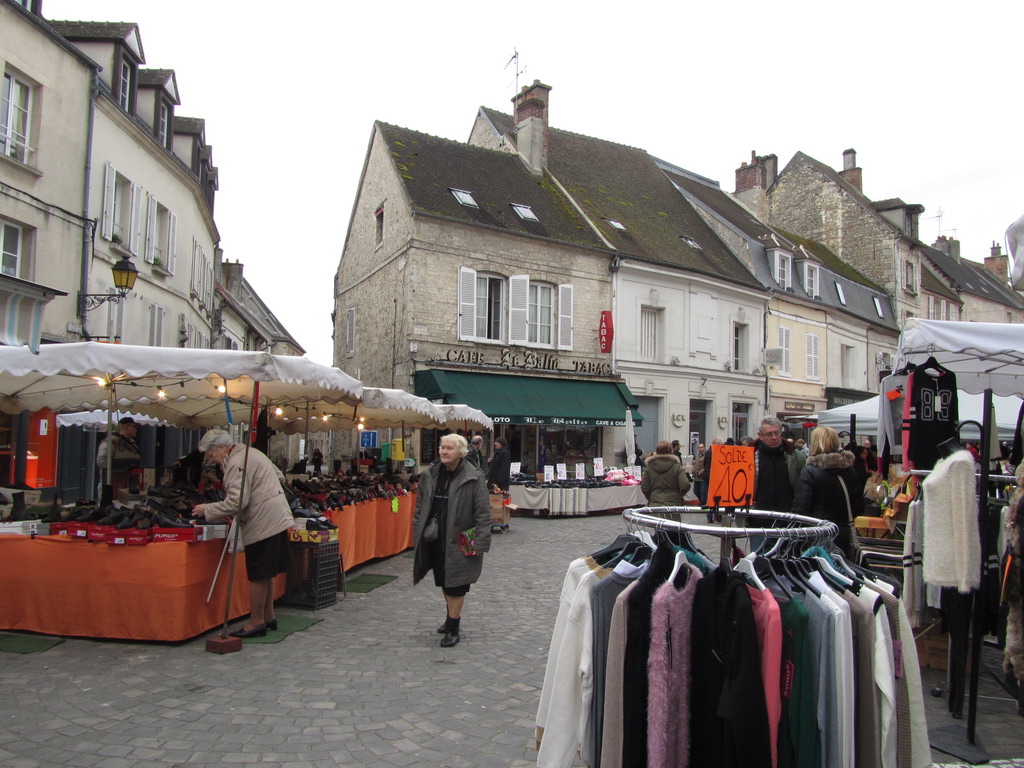
When we arrived in Senlis, there was a street market happening (Tuesday) so we walked the market before heading to the Tourist Office.  Markets are always Mike’s thing. We don’t have to buy anything – just look, observe, smell, and listen. This was a typical small town market with everything from food to clothing to household goods and even fabric/thread/buttons. All of the streets in the town center were filled with vendors of one sort or another.  While walking to the tourist office we checked out restaurants and cafes (menus) for our pending lunch – we are a couple who travel on our stomachs after all!.

The Tourist Office staff was very welcoming; we were given a map, a bus schedule and some information about the return bus trip. Then we headed off on the tourist trail following the map as best we could with a tourist map with the tourist office marked on the wrong spot.

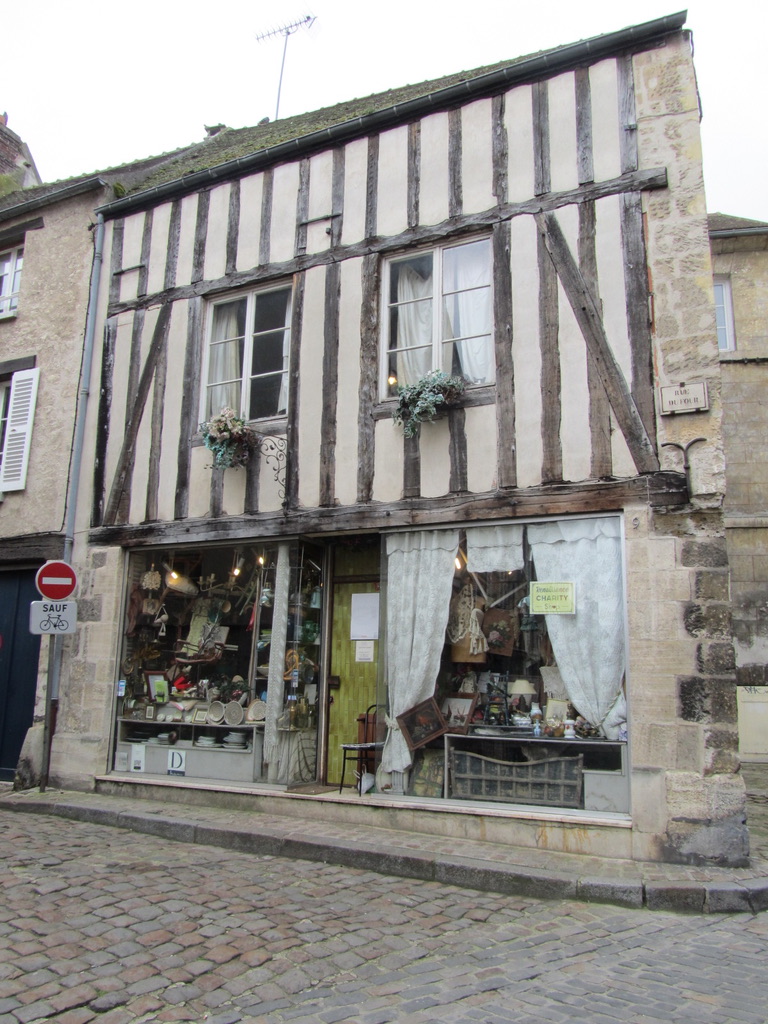
Our hopes for a clearer day in the country were not realized; it was damper and felt colder here than in Paris. The streets and walks were all cobbled, the buildings mostly stone. Though we did see a few half-timbered structures. The stone walls of Senslis date back to the third century, built as fortifications by the Romans with 30 towers – some remaining. The streets within the walls are tight picturesque streets with many businesses on the first floor interspersed with residences. But, you think the Fan has parking problems? This is a whole new level.

The cathedral in the center of town dates back to the 1100’s. The medieval fortifications, ramparts around the outside of city, provide a great place to stroll. A portion was closed for repairs so we were unable to complete the entire circuit. We did stroll through the Parc du Palais Royal, built by St-Louis in 1262. Chappelle Royale St-Frambourg is now in private hands (a foundation) restored to be an auditorium in 1973, but its only open limited hours: March to June and from September to November only the last Saturday of the month. So we were unable to check out the stained glass by Joan Miro.

We lunched at a restaurant near the cathedral, Le Scaramouche, a bistrot gourmand. www.le-scaramouche.fr  The plat du jour was a shaded beef with onions, mushrooms, and a smoked paprika sauce. Mike selected  duck pate followed by a brochette of tender lamb with a cream sauce with onions and carrots over rice.

We arrived back in Paris at about 1700 and headed back tot he apartment, we had texted Martin and Paula earlier but they were out shopping and they do not have cell service on their phone  My phone battery died as we got back to Paris, using any GPS/Location apps will run your battery down ASAP.

We agreed to meet up with M&P at La Palette, 43 rue de Seine,  for drinks, we arrived

about 1915 and headed home about 2000 after a couple bottles of Rosé and a cheese board and bread, perfect after our generous lunch.  We were outside under a heater and did not realize how cold we really were and after a day outside it was good to get back to the apartment.

Some Views around Senlis:


From the website http://www.beyond-paris.com/senlis.html

Senlis

There are some towns in France that are just great to visit. Towns that have a life about them, some interesting things to see for sure, but just reward you for visiting. Senlis (pronounced Son-Lee) is one of those.

The town retains a lot of its medieval charm while not feeling like you are visiting a museum. Rather, the town has kept the best of the past and has the best of today.

Senlis is about 53km/33mi from Paris, almost directly to the North.

What to see

Part of what makes this town great to visit is just the vibe of the town. Really the best thing to do is to wander around.

The tourist office (opposite the cathedral) has a map of the town with a number of walking trails that intersect with each other (ie one starts where the previous one ends) so you can choose the length of the walk you want to do and the sights you want to see.

The main sights in Senlis are the Cathedral, the castle royal, the hotel de ville, and the Saint Vincent abbey.

The medieval centre to the town is great to wander around. There are a wide range of old buildings, small pathways and remains of the city walls to walk around. There are great cafes and salon de teas in and amongst the city buildings to stop and take a hot or cold beverage and sample some local cake’s.

The Cathedral Notre Dame de l’Assomption de Senlis is one of the dominant features of the town. It was built in the late 1100’s and much of the original cathedral remains, despite a fire in the 1500’s. It has the distinction of being one of the smallest catherals in France and at the moment there is work being undertaken to restore the gates to their original colors.

The Royal Palace was a castle home to a number of dynasties before it became a “Palais Royal” under Louis VI in the 12th century. This was not open to the public when we were there, but much of the structure and the castle walls are visible from around the outside.

In the medieval times the town was fortified by circular walls. Some of these walls remain, and it is possible to walk in and around them. Even where the walls are no longer extant it is possible to see where they were by the circular layout of the city streets.

One of the unique features in Senlis is the Roman arena. Dating from 1st Century (before or after Christ?) the arena was rediscovered in 1865 and has been partially excavated. Visits are through organised tours only, so it is important to contact thetourist office before going to Senlis if you want to visit the arena.

There are also four museums in the town.

Things to do

  • Take coffee in the old part of the town
  • Walk around the old ramparts
  • Explore the Gallo-Roman remains
  • Uncover hidden secrets in the small winding medieval backstreets.
  • Choose one, two, or all of the walking trails recommended by the Tourist Office.

How to get there

Senlis is slightly more complicated than other towns to get to as there is no direct rail link. However there is only one change and it is not difficult.

Trains leave from Gare du Nord and go via Chantilly (change at “Chantilly Gouvieux” station) or Creil (change at “Creil” station).

If you are changing at Chantilly the bus stop (Gare Routiere) is beside the train station. Exit the train station through the main entrance into the car park. Turn left on Rue d’Orgemont. Walk along infront of the train station and just beside the train station is the bus stop. If you don’t speak French, asking the driver “Son-lee?” when you hope on and showing them your ticket (see below) should let you know if you are on the right bus. The first bus stop is for Senlis, it should be labeled with a timetable – its a good opportunity to check when the last bus leaves Senlis for Chantilly.

We have not taken the route from Criel so cannot comment on how easy it is.

If you purchase a ticket from Paris all the way to Senlis you will not need to buy a bus ticket in Chantilly or Criel. This is useful for getting on the bus because you can show the ticket to the conductor when you board to make sure you are on the right bus.

Ironically, the main bus stop for Senlis is the now abandoned train station. From here it is a short walk into the main old section of the town.

The tourist office (opposite the Cathedral) in Senlis can tell you when the buses leave Senlis for your return journey and show you where from (they speak good English). You can then buy your bus ticket on the bus for Chantilly or Criel and your train ticket at the Chantilly or Criel train station. This saves you having to predetermine when you want to return.

While trains are reasonably frequent, it is a good idea to make sure that you know when the last train leaves for Paris before you leave.

Posted in Paris, Senlie, Ter Train | Tagged , , , , , , | Leave a comment

Paris 2014, Day 13 (Hangin’ in the 16th.)

We decided to stay close to home today, trim the flowers out front and maybe take a walk around the neighborhood.

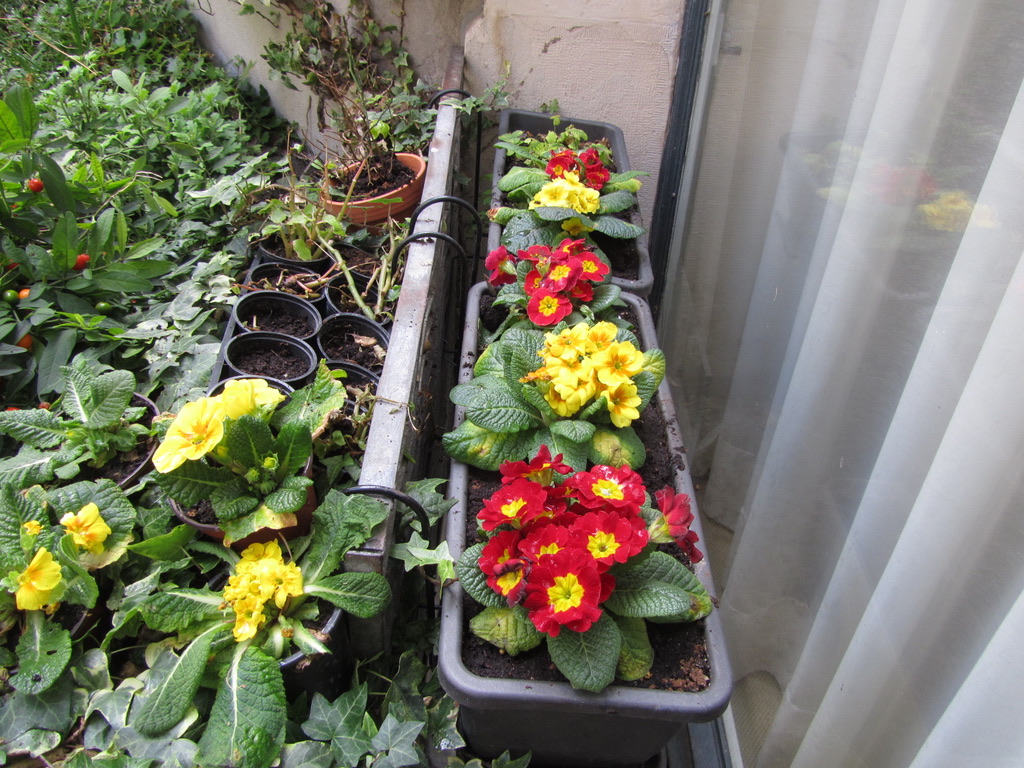
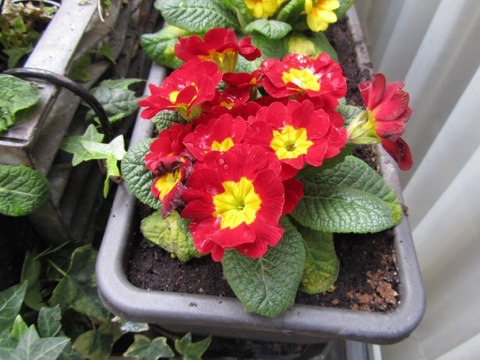
I love it when a plan comes together.  Pat was puttering out front with some flowers that

looked like they were half dead shortly after we arrived.  We realized they were under the overhang so they were getting no water.  We watered them and they returned to life so today Pat planted them so I snapped some photos.

While Pat was planting I did a bit of cooking and food prep.  I cooked off some fresh egg noodles for a dinner

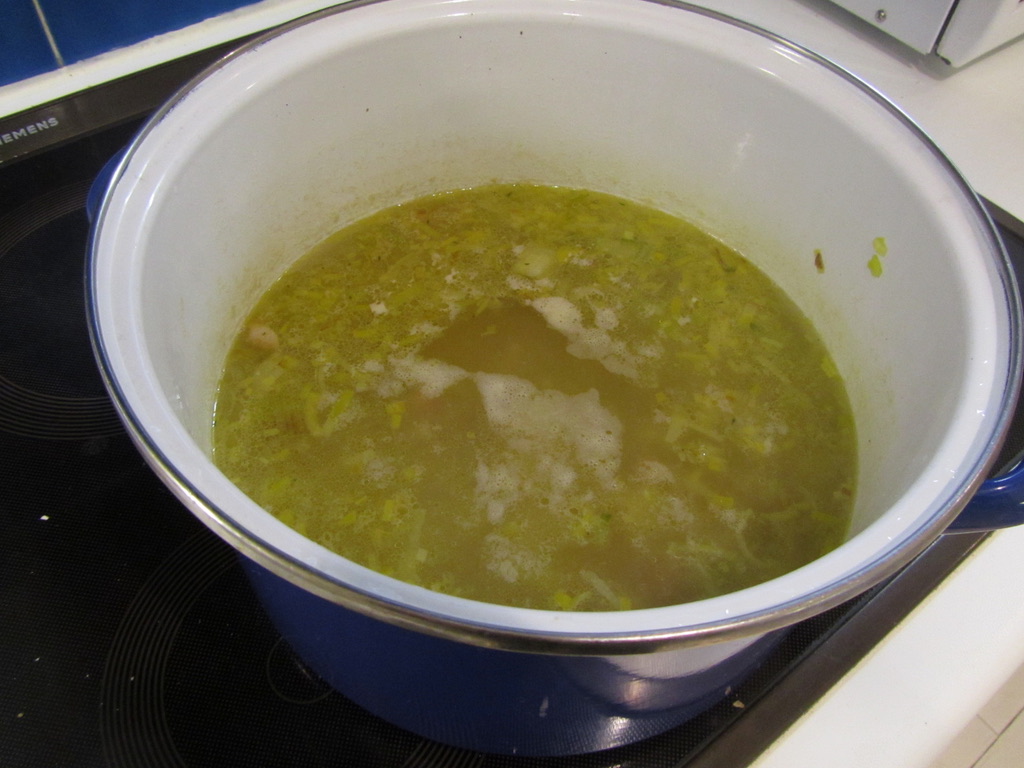
at a later time and made some potato leek soup which we will have for dinner to night soon.

I also remembered to call Hugo at

La Cordonnerie for a reservation on Wednesday night in the Kitchen. It’s hard to believe we have been here two weeks and have not gone to La Cordonnerie for

dinner, my guess is that our late arrival completely threw off our schedule.

We decided to take the bus over to the Parc Monceau and get some exercise and fresh air and also take some photos.


A LITTLE HISTORY ON THE PARC MONCEAU:

In 1769, the Duke of Chartres, acquired the land on which he built the “Folie de Chartres” surrounded by a garden “in French.” He later commissioned amateur landscaper/writer/painter Carmontelle to create his garden.  Carmontelle’s theatrical background yielded a garden of dreams which gave a unique, exotic at the Parc Monceau drawing inspiration from English and German trends of the time. Visitors saw the emergence of buildings of all styles and from all eras: the ruins of a temple of Mars, and a Gothic castle, minaret, Dutch windmill, Egyptian pyramid, Chinese pagoda tent tartare, many small buildings fantasy that made it famous Anglo-Chinese garden.

Rivers were dug, and the famous Naumachie, a basin surrounded by Corinthian columns (in Ancient Rome it was a pool which was used to mimic naval battles),  Carmontelle was even inspired by Grave Valois of the Basilica of Saint-Denis. Parc Monceau was divided in 1787, by the construction of the wall of the Farmers-General. The Pavilion of Chartres with its rotunda of columns, served as a tollhouse and was built by Ledoux, adjacent to the current boulevard de Courcelles.  A part on the first floor, that you can still see, was converted into a lounge by the Duke of Chartres, from which he could admire a breathtaking view over the plain of Parc Monceau. In 1793, a greenhouse, a conservatory, and new paths arose under the leadership of Thomas Blaikie, author of the wonderful Parc de Bagatelle, who transformed the Parc Monceau in English garden.

Parc Monceau became national property during the Revolution, it was returned to the Orleans family, but it did not stay in their hands very long. The state acquired it in 1852. Parc Monceau was then changed dramatically. Financial woes caused part of the park to be sold and many mansions on the sides East, South and West, including museums Cernuschi (Asian art) and Nissim de Camondo (18th century) were built. They are now part of the prestigious district of Monceau, but the park was therefore cut in half, reduced to 22 acres. Drawings Parc Monceau were modified for the last time by the engineer Alphand, the architect and horticulturist Davioud barrel-Deschamps, who worked under the orders of Baron Haussmann. In 1861, Napoleon III was finally able to inaugurate the Monceau park we know today.

Walking:

The appearance of the Parc Monceau has not changed since then, and Marcel Proust who loved to wander recognize it easily. You enter the Parc Monceau by large wrought iron gates with gold enhanced, four-doors bear the signature of Davioud. Parc Monceau is one of the most beautiful gardens in the capital, visited by mothers and their children, some tourists and the Russian community who attend to the Orthodox Alexander Nevsky Cathedral (1861) nearby.

Enjoy the tranquility in the Parc Monceau, isolated by a green belt, of luxury buildings and luxurious mansions. You will find many statues (monument Gounod -1897 – and -1906 Musset – Antonin Mercier, Chopin by Jacques Froment Meurice -1906 – Ambroise Thomas Alexander Falguire -1902 – Guy de Maupassant by Raoul Verlet -1897 – Edward Pailleron Leopold Bernstam -1906 -), and among the sights, a Renaissance arcade of the Hotel de Ville de Paris which burned during the Commune.

Monceau Park is home to spectacular trees including a sycamore with twisted branches, which is the oldest (1853), the largest (4.18 m) and the highest in the district (30m). However, his impressive girth easily competes with that of the oldest Oriental plane (1814), which reached 7 meters!

The massive antlers of a purple maple “on elephant skin” thriving in the midst of a multitude of other trees (Corsican pine, hackberry Provence, Paulownia, silver linden, honey locust, tree of Judea, tulip tree, tree with pockets …) small shrubs and ever-changing floral baskets.

Parc Monceau is also green area of the district which contains a great diversity of birds – which we heard on our walk today. They are attracted by the shelter of the high trees and the cool fresh waters of the basin, inhabited by big carp and smaller goldfish. If you go to the  Parc Monceau in May, you will witness mallards escorting their young chicks. Tit nun, which is often observed in the garden, always move in pairs.

Jays are also regulars at the Parc Monceau. They are easily recognizable by their light beige plumage and a spot of a bright blue on their wing. Their cries are inharmonious and some are able to imitate other species, even the mewing of a cat! Readily distracted, or overcome by OCD, they abandon often unintentionally acorns they hid too well, which helps increase the number of oaks.

The Allee Michael Berger

The northern half of the allele in the Parc Monceau was named Michel Berger in December 2012. It is 210 meters long. This performer, composer, producer and artistic director marked the French popular culture, in the late 1980s.


Posted in Paris 16th., Restaurants | Tagged , , , , | Leave a comment

Paris 2014, Day 12 (A Day of Markets)

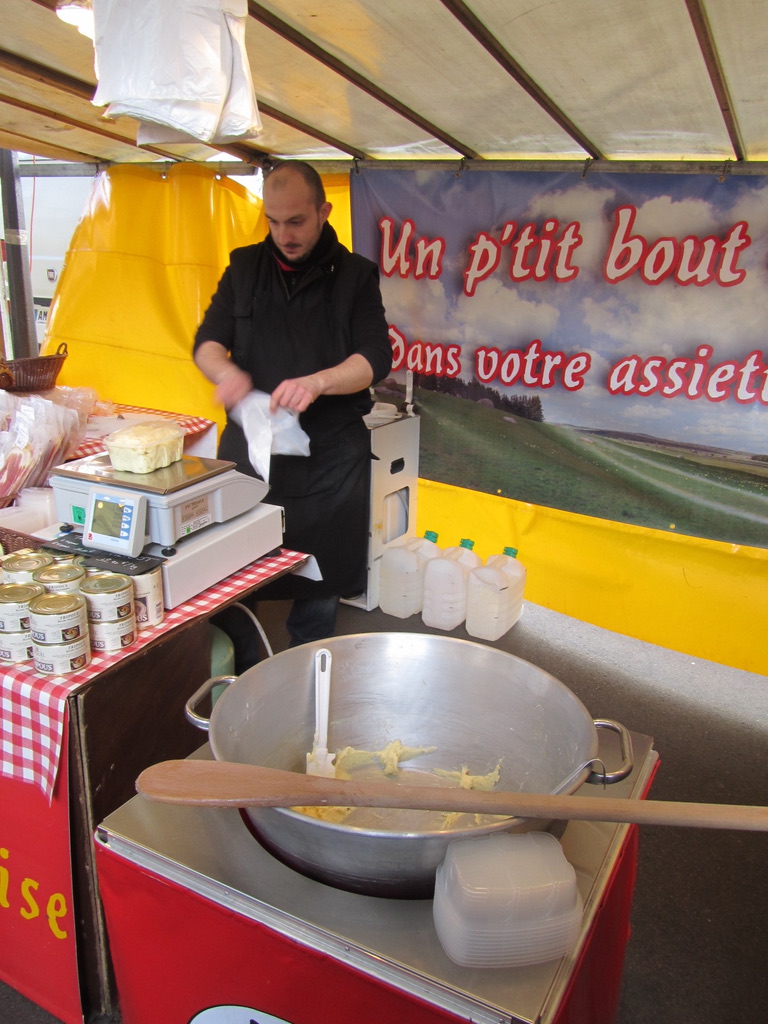
Todays cheese: Aligot, more than a simple cheese

Aligot is a dish traditionally made in L’Aubrac (Aveyron, Cantal, Lozáre,) region in southern Massif Central of France made from melted cheese blended into mashed potatoes, often with some garlic. This fondue-like dish from the Aveyron department is a common sight in Auvergne restaurants.

Traditionally made with the Tomme de Laguiole or Tomme d’Auvergne cheese, aligot is a French country speciality highly appreciated in the local gastronomy with Toulouse sausages or roast pork. Other cheeses are used in place of Tomme, including mozzarella and cantal. The Laguiole cheese imparts a nutty flavour.
Aligot is made from mashed potatoes blended with butter, cream, crushed garlic, and the melted cheese. The dish is ready when it develops a smooth, elastic texture. While recipes vary, the Larousse Gastronomique gives the recipe as 1 kg potatoes, 500 g tomme fraéche, Laguiole, or Cantal cheese, 2 garlic cloves, 30 g butter, salt, pepper.

This dish was originally made using bread by monks, who prepared it for the pilgrims on the way to Santiago de Compostela who stopped for a night in that region. Potatoes were substituted after their introduction to France. Today, it is enjoyed for village gatherings and celebrations as a main dish. Aligot is still cooked by hand in Aveyron, at home as well as in street markets. Aligot is traditionally served with Auvergne red wine.

ingredients (serves 6):

– 300 g of fresh Tomme d’Auvergne
– 500 g of potatoes mealy
– 50 g of butter
– 20 cl of cream
– 1 clove of garlic
-Â salt and pepper

Preparation of the recipe:

Cook the peeled potatoes for 25 to 30 minutes in a pan of water. Drain.
Then reduce them to a puree and season with butter, cream, crushed garlic, a little salt and pepper.
Cut the cheese into very thin slices. On low heat, add the cheese puree.
For at least 15 minutes, beat the ground with a large wooden spoon, forming “eight”, and lifting until a smooth dough that cleans the sides of the pan and file.

Serve each plate: a big lift aligot tape and cut it with scissors

___________________________________________________________

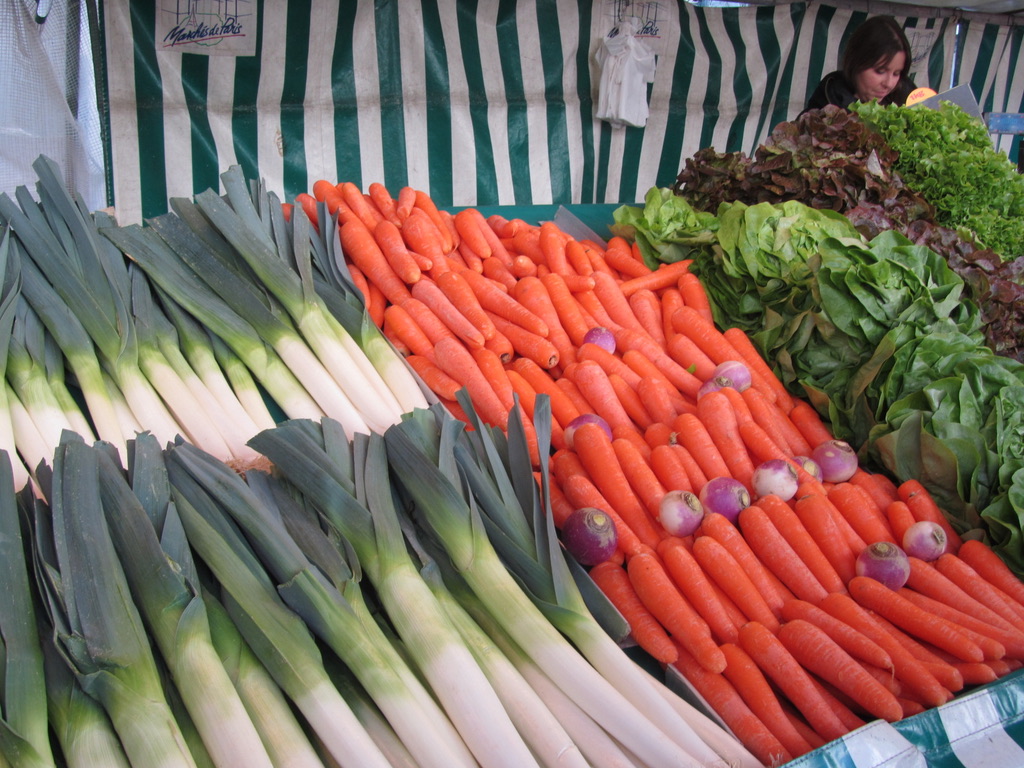
We were out in the morning headed to the Boulevard Grenelle Market which stretches along under the metro from Boulevard de Grenelle, between rue Lourmel and rue du Commerce (Metro: La Motte-Piquet Grenelle)
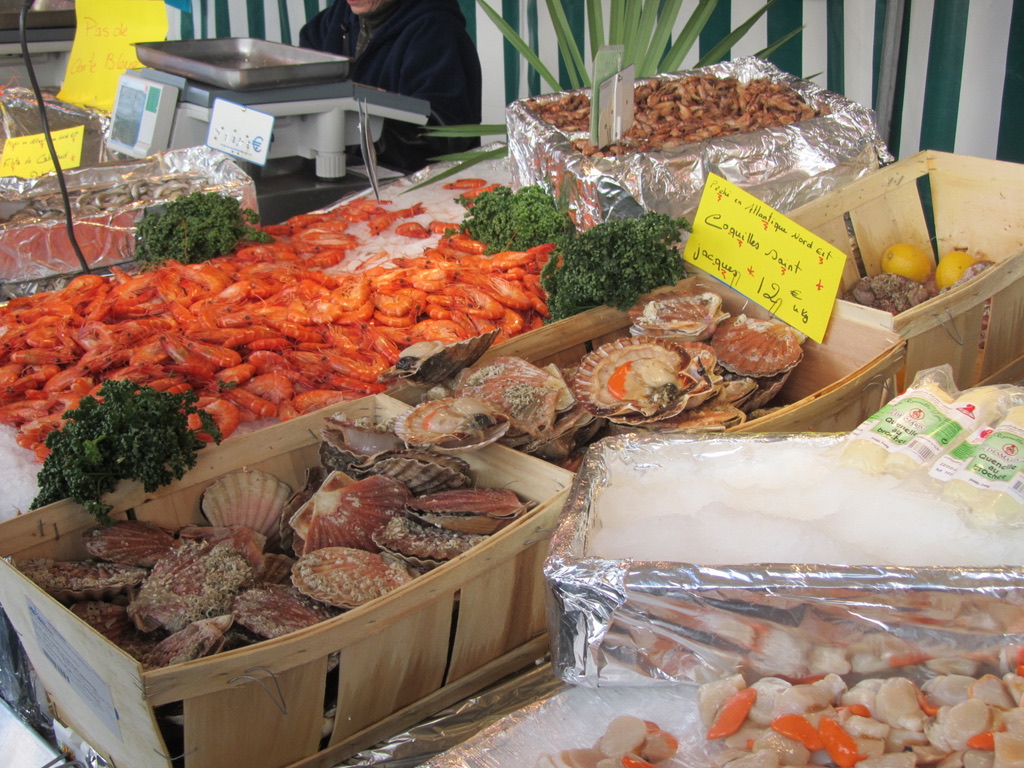
The Boulevard Grenelle market, in the 15th arrondissement is a combination food, housewares, clothing, etc. the markets held every Wednesday and Sunday. While we always like going to the President Wilson Market in the 16th because of the
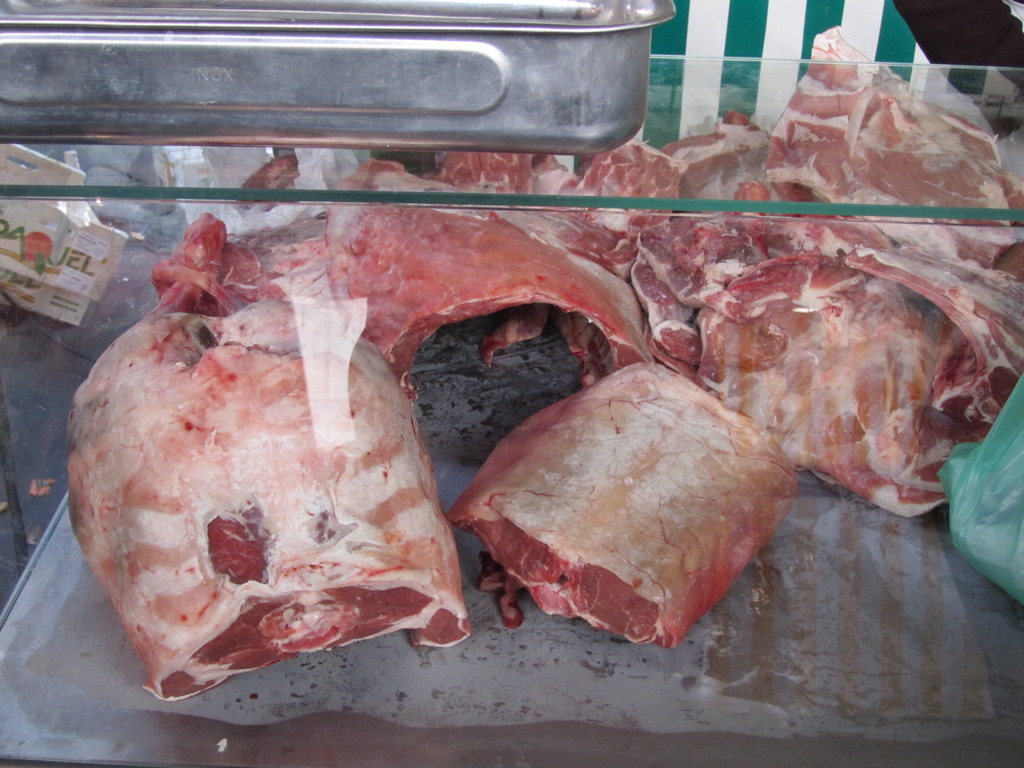
upscale nature the Grenelle market offer better prices and equal quality, especially where fish is concerned. The Grenelle market is where we usually choose to buy a rotisserie chicken, if not from out local butcher, because of so
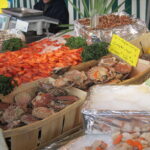
many vendor from which to choose. You can buy whole, parts, duck, roast pork piece of your choosing, with potatoes, rice, and the list goes on to create a typical French Sunday dinner.
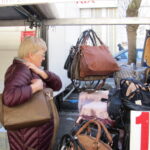
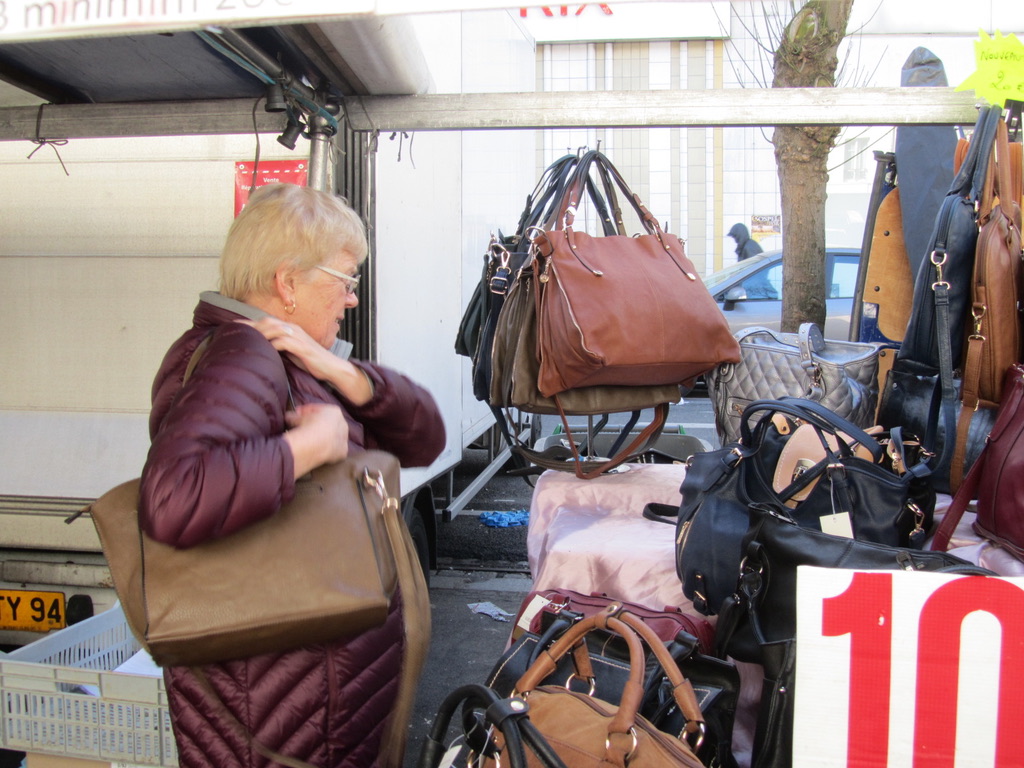
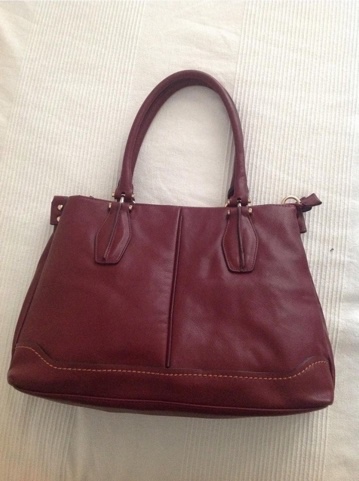
Pat got lucky and scored a great deal on a purse for 20€ very smart looking and it has a pocket for her Navigo metro pass. Nothing was on our list so no food purchases were made on this particular Sunday. We departed the market about 1130 headed for Puces de Vanves.


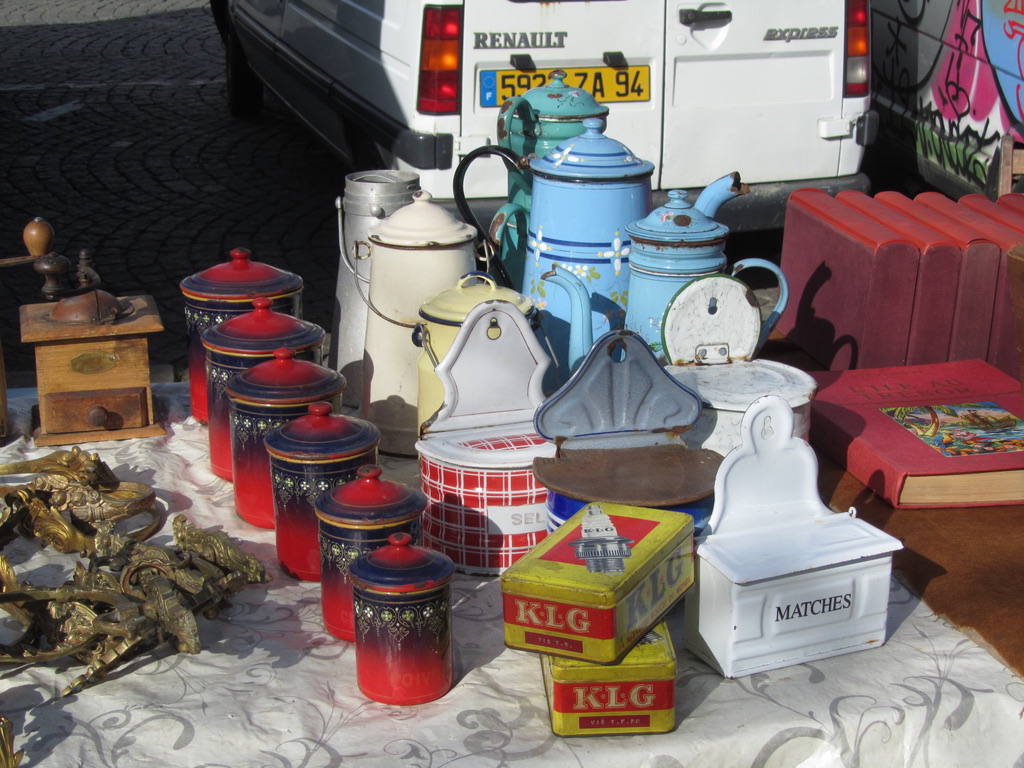
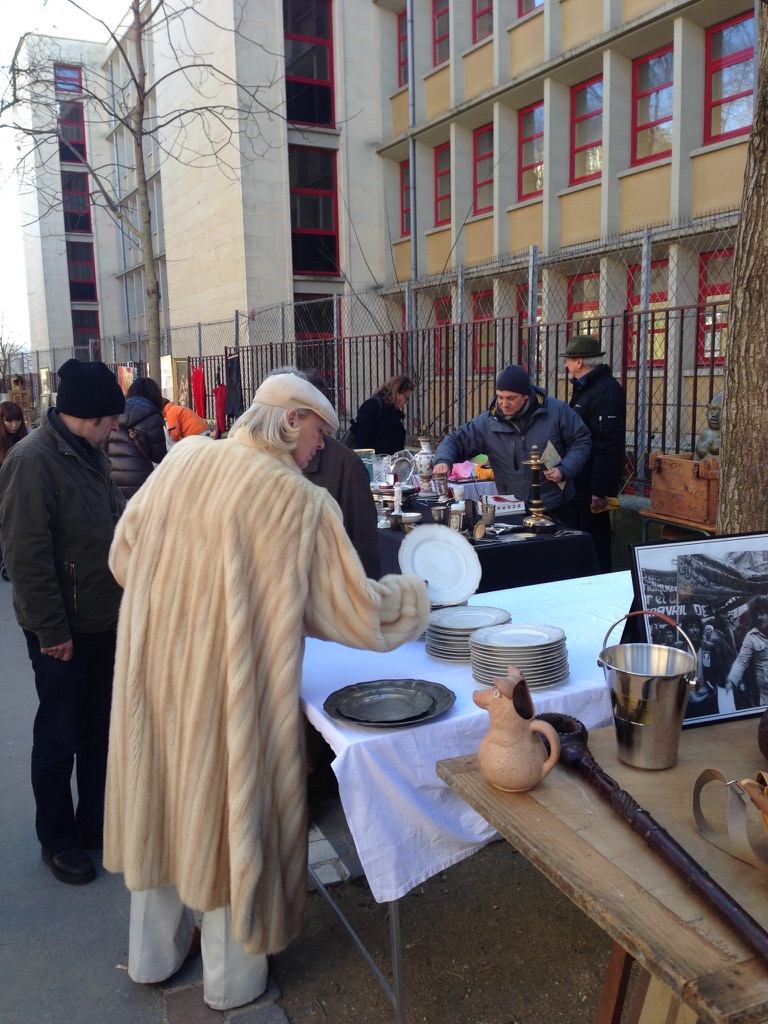
We metro-ed to the Avenue de la Porte de Vanves and rue Marc Sangnier (Arr 14) and arrived at about 1145. This market is on Friday and Sunday from 0700-1930 but don’t always believe the end time, the markets will
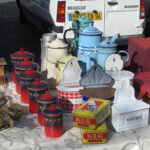
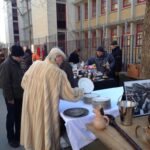
break down early if business is slow or the weather less than optimal. On this particular Sunday they were breaking down at about 1330 but there were almost 200 vendors and much to see, again nothing to buy on our list, but we always enjoy the looking.

About 1345 I got a text from Martin, who we were going to their apartment for market chicken that their local butcher had run out of rotisserie roasted potatoes so if we ran across them “please pick some up”. The Grenelle market was on our way back to the apartment so we detoured through the market and got a great end-of-market buy on the potatoes, half price! A deal always makes one happy no matter where you are, we got a great price and the vendor did not have to eat too many potatoes that night.
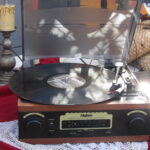
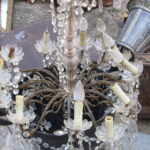
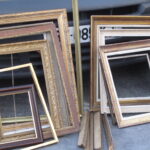
We hung around the apartment for about and hour and then started our cross town trip to Martin and Paula’s, we had to make a stop at the Villa Mazarin Hotel, at 6 rue des Archives to check it out for friends coming later this year. Pat negotiated with the front desk to give us a key to see one of their standard rooms, all
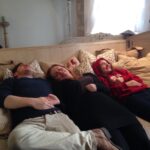
in French, good job Pat! We took some photos which we sent to Zoe Ann.

We then headed to Martin and Paula’s. A good healthy walk through the Marais which was extremely crowed due to a sunny Sunday in Paris with mild temperatures.

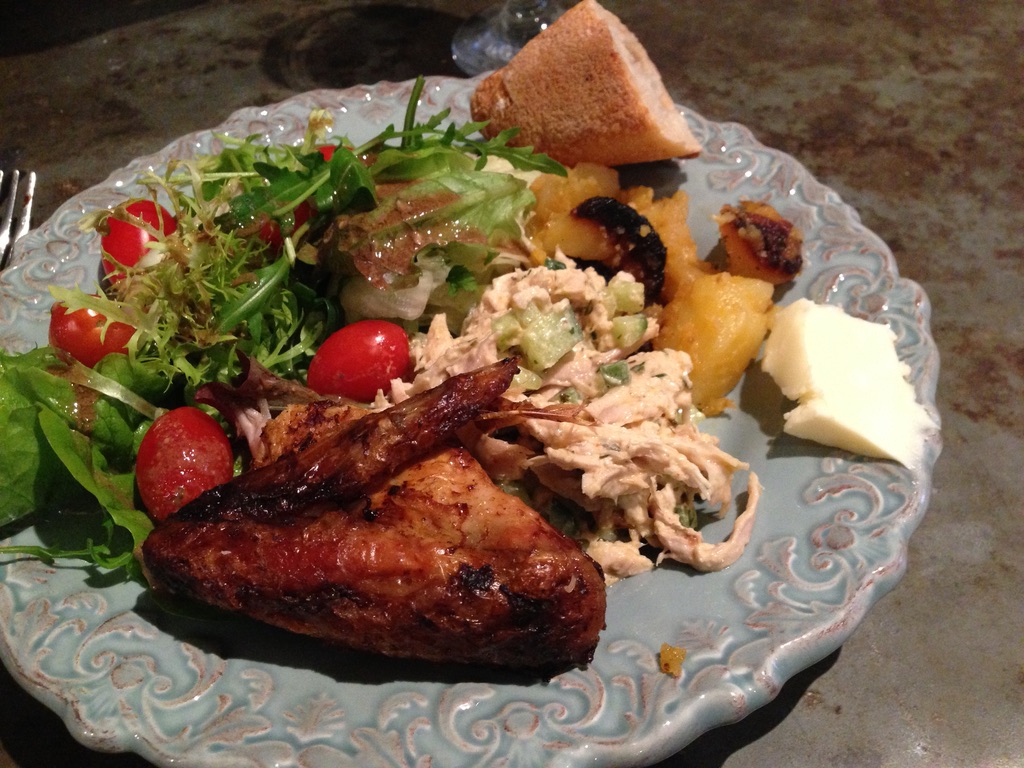
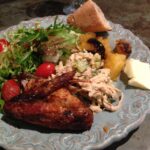
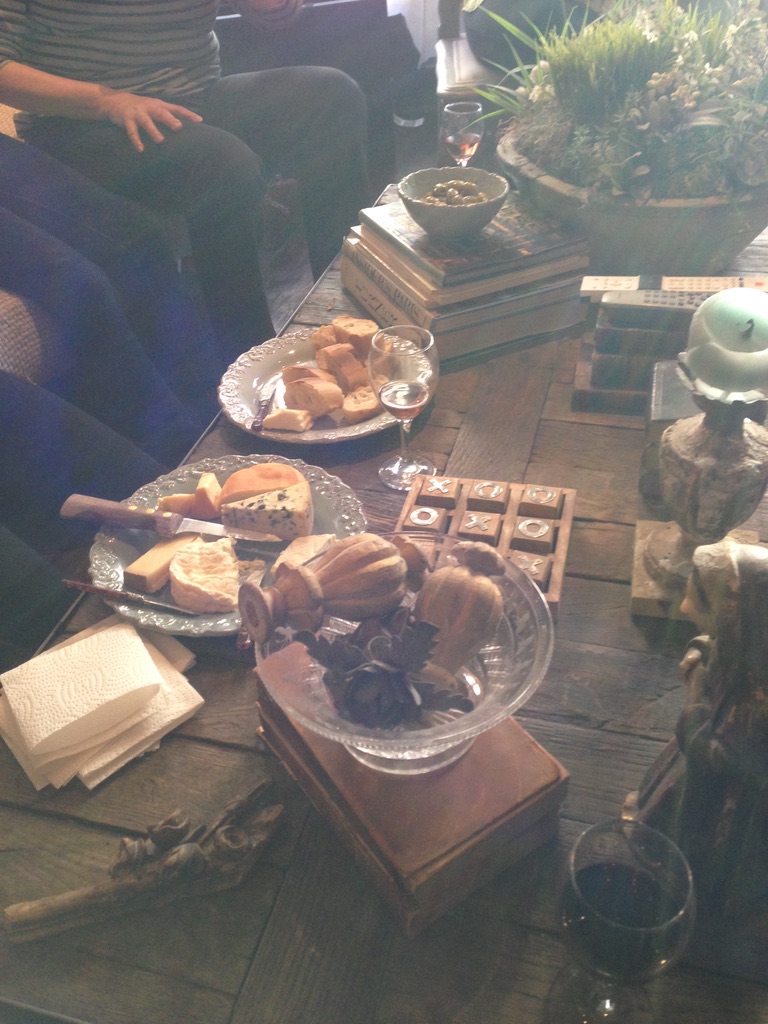
We arrived at about 1610 to wine and chess and then a dinner of roast chicken, salad, chicken with Taziki sauce, bread and of course the market potatoes. A great Sunday dinner with friends and their family.
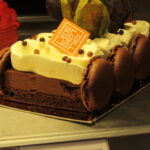
After dinner we walked to get Gelato at Amorino‘s gelato shop where they make the cone into a flower. Martin’s treat!

We quickly walked back to their apartment because it was beginning to rain, we did not bring umbrellas bacause the chance was only 3% which was our luck, but by the time we talked and looked at some photo the rain stopped and we made our way to the metro for the trip home. We arrived home at about 2200, poured a glass of wine and watched a movie before turning in for the night.


.

Posted in Aligot, Paris, Tomme d'Auvergne | Tagged , , , , , , , , | Leave a comment

Paris 2014, Day 11

President Wilson Market at 1000. We walked the market then off to brunch; Â then to Montmartre, via the #30 bus, so Pat and Paula could shop for fabric. Martin and I walked around for a bit and then settled in a Cafe for a couple glass of Gamay.
Montmartre is a hill in the north of Paris, France. It is 130 metres high and gives its name to the surrounding district, in the 18th arrondissement, a part of the Right Bank

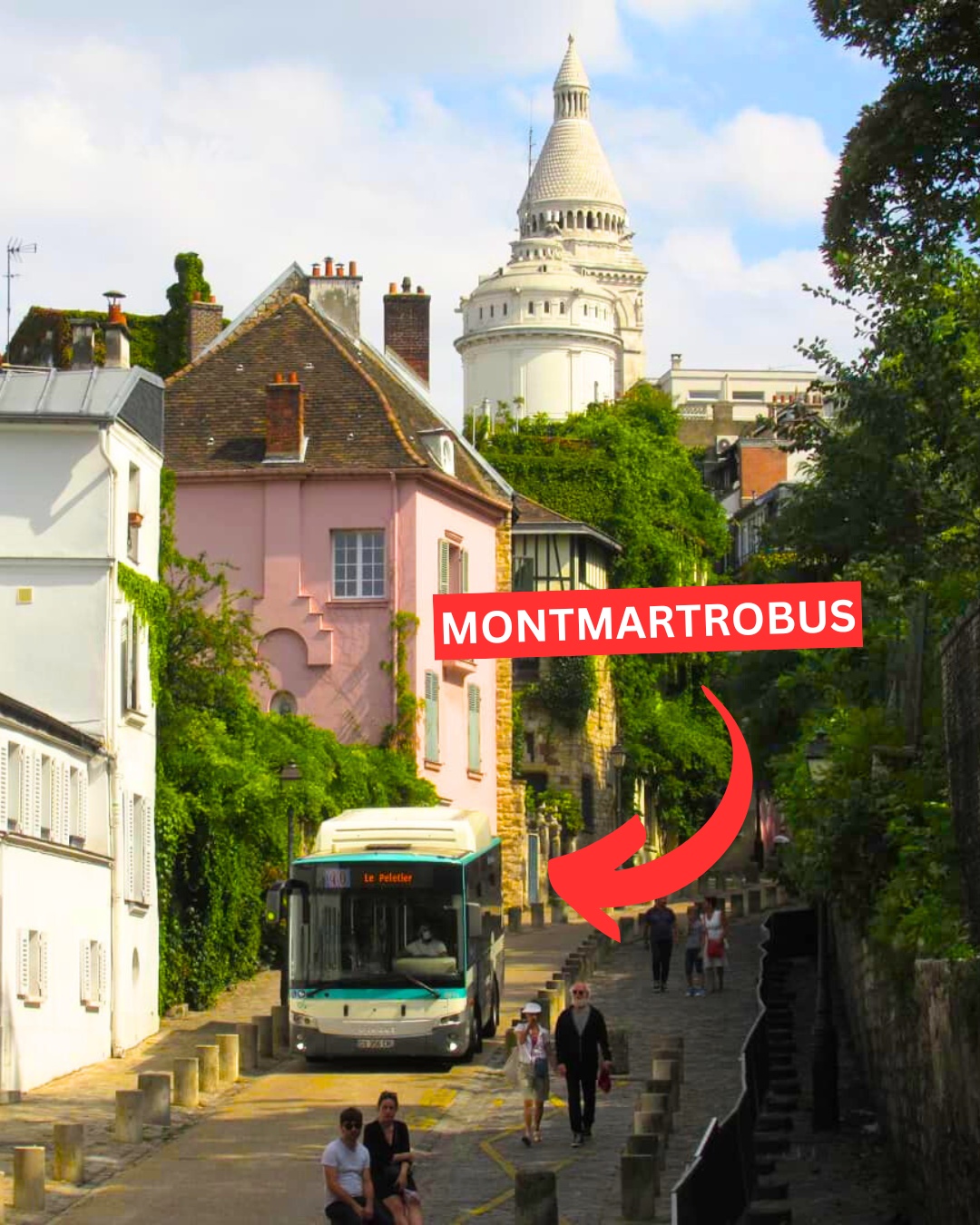
Martin and Paula took the bus back to their apartment and Pat and I took the funicular to the top and then walked to the artists square and look at the artist work. We bought a crepe and shared it and then we grabbed the Montmartrobus, a new service from the top of Montmarte to the bottom along Boulevard de Clichy. We boarded the number #30 bus to Trocadáro then the #63 to our apartment to relax for the evening.

Posted in Montmartre, Montmartrobus, Paris 18th | Tagged , | Leave a comment

Paris 2014, Day 10

Valentines Day and our 13th anniversary; and loving ever moment.

Martin, Paula, Aaron and Ginny were coming for dinner and our event was to start at 1700.

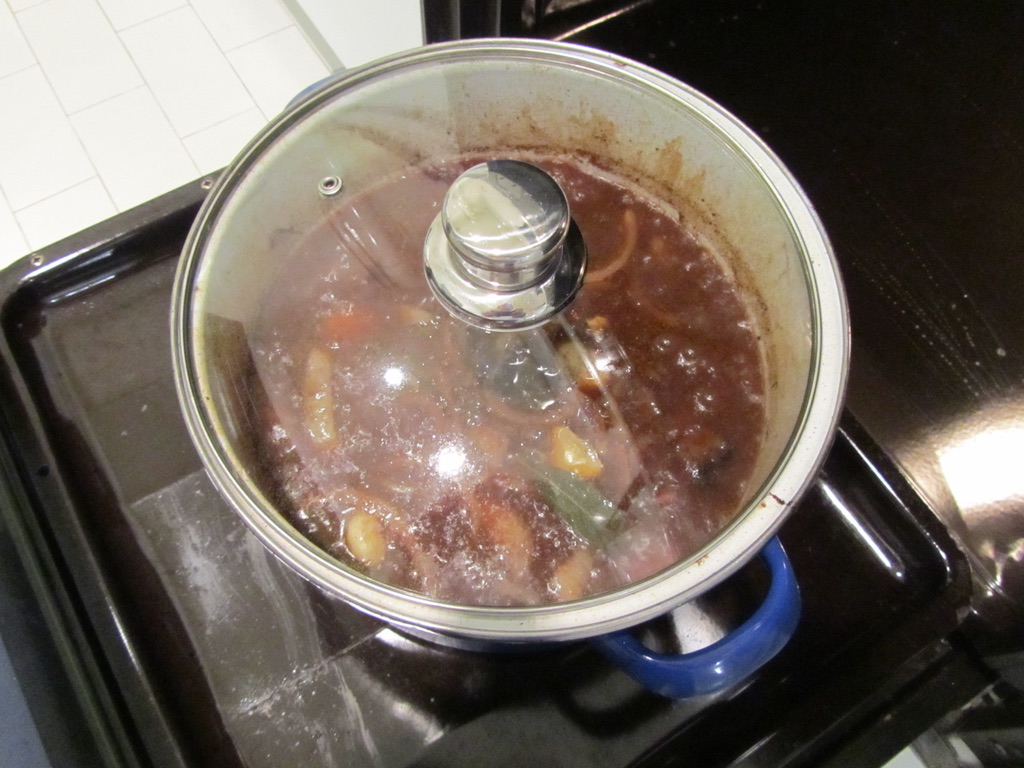
Pat went for croissants while I began prep for dinner, which was Boeuf Bourguignon. I had prepped the onion yesterday, always a task and roasted the bones and simmered the beef stock overnight. I strained the stock, a china cap would have been great, but one make do with a simple strainer.

I began by cutting up the beef and then sautéing in small batches until brown, I had about 3 pounds of meat so it took some time. I had rendered the lardons before the beef and set them aside.

While the meat was sautéing Pat and I had coffee and croissants from a different bakery around the corner.

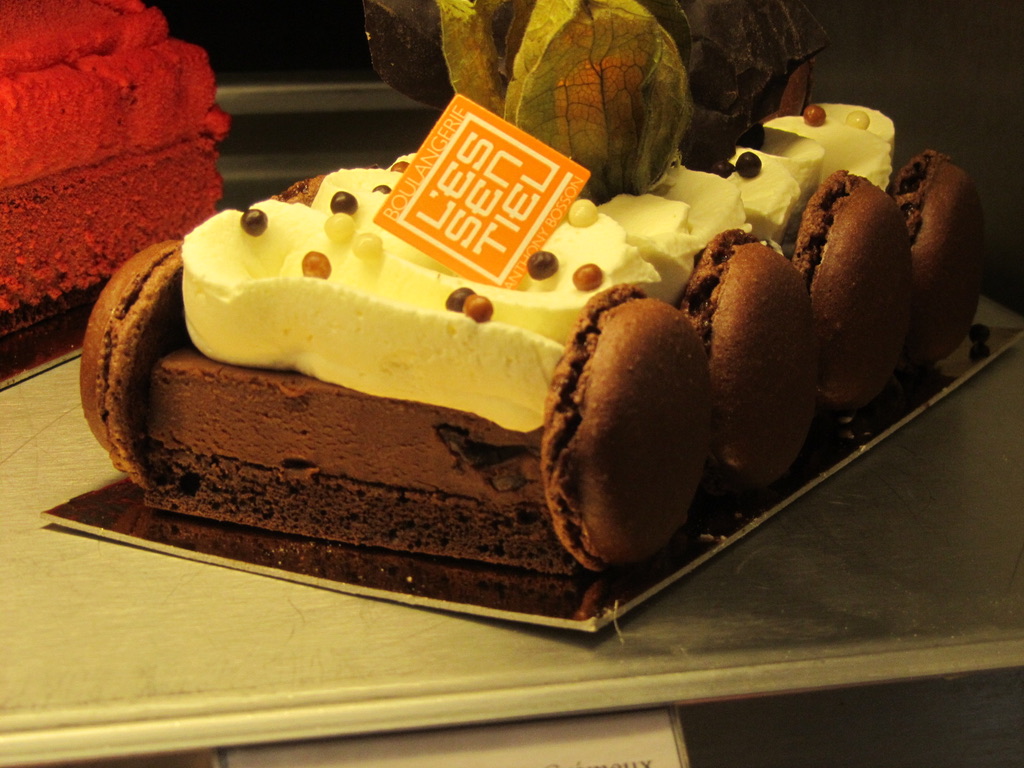
Not to get bogged down in the details; while the bourguignon was cooking Pat and I when out to get champagne, Pate, Cheese and baguettes.

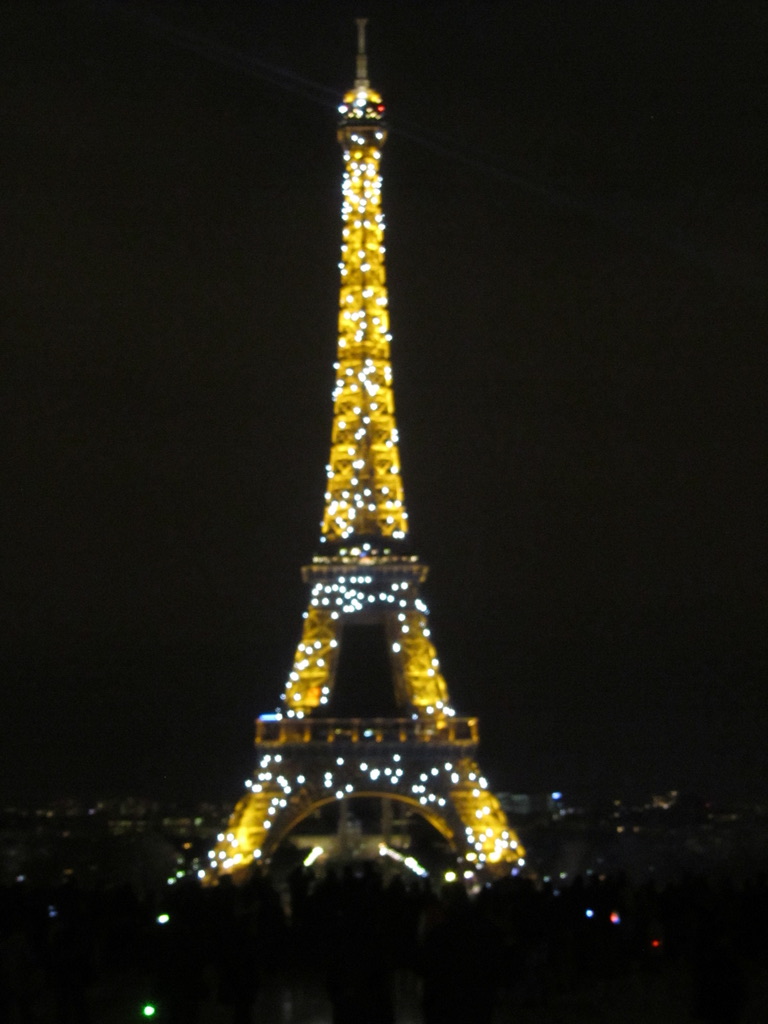
The evening festivities began at about 1710 and at about 2100 the group departed, after a couple of rounds of electronic “Catch Phrase”. Pat and I loaded the dishwasher with the remaining items and then we decided to walk to Place du Trocadáro to watch the Eiffel Tower sparkle at 2200, but checking our watch we only had about 15 minutes to walk the distance so we took the metro the 1 stop and walked back from Place du Trocadáro about 700 meters (about ½ mile).


Posted in Paris 16th., Uncategorized | Tagged , , , , | Leave a comment