DAY 10 February 04, 2023 – Luxor, Egypt

Fly to Luxor to embark the h/s Nebu

After a very early breakfast, we transferred to the Cairo airport at 5:00 am for our flight to Luxor — the ancient Egyptian city of Thebes.

Our stateroom aboard Nebu

Upon arrival, drove through lush farmlands to the Nile waterfront, where the Vantage-owned ship h/s Nebu waited for us to climb aboard for our Nile cruise.  We were greeted with a taste of hibiscus juice which they drink either tart or sweet. We checked in to settle into our spacious suites with bed, dressing area, sitting area and bathroom.  Before lunch, we explored the decks of the boat, ending up on the sundeck with its pool. Buffet lunch was served in the restaurant consisting of assorted fruits, vegetables, meats, and pasta.  For a first this trip, ice cream found its way to the dessert buffet – mango ice cream.

After lunch, we had our safety briefing in the lounge and a discussion of the rest of the day’s activities. Then, we were treated to a documentary  detailing egyptologists discoveries in the Valley of Kings including highly detailed graphic representations of the kings’ crossing of the Netherworld with the sun god, RA (basically when they take to their solar boat and travel with RA through the night to rebirth).

Since our bags had to be out in the hall at the hotel at 4 am, they gave us 2 hours to take a power nap and get ourselves together for a visit to the Luxor Temple complex.
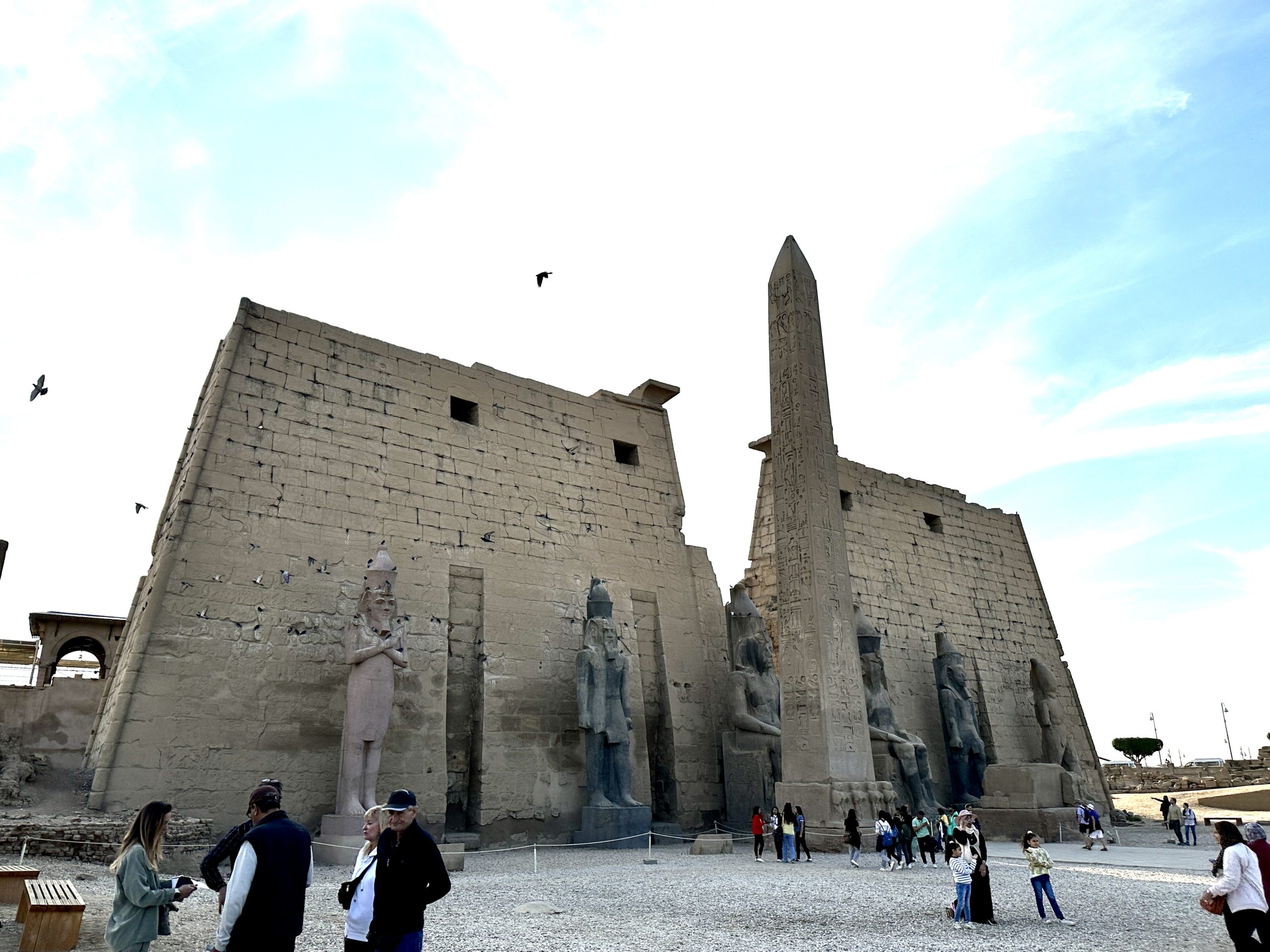
The first pylon to the Luxor Temple

A walkway lined with rams-head sphinxes leads all the way from the Karnak complex  to the 3,500-year-old Luxor Temple complex. Dedicated to the Theban Triad of Amun, Mut, and Khonsu, Luxor’s graceful inner courtyards are lined with Rameses colossi and graceful columns covered in carvings and hieroglyphics. It is an elegant example of Pharaonic temple architecture. It was largely completed by the 18th dynasty pharaoh Amenhotep III and added to during the reign of Ramses II in the 19th dynasty. The temple was further modified by later rulers, including Alexander the Great. Its design is remarkably coherent compared to its neighbor the sprawling complex of Karnak. During 3rd century AD it was occupied by a Roman camp and was subsequently abandoned. Over the centuries, it was engulfed in sand and silt and a village grew up within the temple walls. Then in 1881 archaeologist Gaston Maspero rediscovered the temple but before excavation could begin the village had to be removed. Only the Abu al-Haggag Mosque built by Arabs in 13th century was left intact standing high on the layers of silt accumulated over the years.  Fronting the entrance to the temple, the gigantic first pylon is decorated with scenes of Ramses victories over the Hittites in the battle of Qadesh. Two enormous colossi of Ramses and a huge 82 foot high pink granite obelisk flank the gateway to the temple. The obelisk was one of a pair, the other was removed in the early 19th century and re-erected in Place de la Concorde in Paris, a gift from Egyptian ruler Mohammed Ali to the people of France. Beyond the first pylon lies the Court of Ramses II with Abu al-Haggag Mosque towering over the courtyard to the east. The height of the mosque over the stone floor is a visual indication of the depth of debris that once covered the entire temple. The western corner of the court incorporates an earlier barque shrine (to house the god’s sacred boats) dedicated to the Theban Triad. A double row of papyrus bud columns encircles the court, interspersed with huge standing colossi of Ramses II.  More giant black granite statues of Ramses guard the entrance to the original part of the temple, which begins with the majestic colonnade of Amenhotep III with its avenue of 14 columns. The walls here were embellished during the reign of Tutankhamen and depict the Opet festival when the images of Amun, Mut, and Khonsu were taken in procession from Karnak to Luxor. The western wall shows the outward journey to Luxor and the eastern wall the return to Karnak. The colonnade leads to the Court of Amenhotep III noted for its double rows of papyrus columns, the best preserved in the temple. In 1989 work on the foundation led to discovery of 22 New Kingdom statues now on display in the Luxor Museum. The hypostyle hall on the southern side served as a vestibule to the main temple. It has 32 papyrus columns in 4 rows of eight bearing the later cartouches of Ramses II, Ramses IV, Ramses VI, and Seti I. The antechamber beyond was converted to a church by the Romans 4th century AD, its Pharaonic reliefs plastered over and covered with Christian paintings. A second smaller antechamber, the offerings chapel, leads on to another columned hall with the Sanctuary of the Sacred Barque in the center. It had been rebuilt by Alexander the Great. The birth room to the east has reliefs depicting the divine birth of Amenhotep III, intended to validate his claim to be the son of Amun. Behind the Sanctuary, another hall leads to a small damaged sanctuary that once housed a gold statue of Amun.

The Boat-NEBU

The custom-built h/s Nebu offers the finest and newest accommodations sailing the Nile today. With just 40 cabins, it was the most luxurious and exclusive way to sail this ancient waterway. We could cruise to legendary archaeological sites, relax on the sun deck, take a dip in the swimming pool, savor delectable cuisine, or relax in our spacious cabin. Staterooms offered private bathroom with bathtub and hair dryer, sitting area, individually controlled air-conditioning, minibar, safe, telephone, and TV with video channels.

  • Staterooms (counting suites): 40
  • 4 Supplement-free solo cabins
  • A restaurant featuring sumptuous international cuisine
  • A bar/lounge, perfect for socializing or enjoying onboard entertainment
  • A sun deck and swimming pool on the top deck
  • Top-deck breakfast dining
  • A fitness center, actually a treadmill and a stationary bike
  • An elevator
  • Onboard spa
  • All staterooms feature a private bathroom and hairdryer, sitting area, large windows for optimal views, individual temperature controls, minibar, safe, telephone, and TV with video channels

[print_gllr id=7648]

Posted in Cairo, Luxor | Tagged , , , , , , , , , | Leave a comment

DAY 9 February 03, 2023 – Cairo, Egypt

Saqqara – the step pyramid

Before we delved into Cairo’s historic quarter and the story of Egypt’s predominant religion, we headed off to Saqqara or Sakkara Step Pyramid complex.  Maged, our guide, shared a history of the development of pyramids including that the earliest indications of ancient Egyptians to build a pyramidal shaped tomb trace back to the 27th century BC. The step pyramid is the earliest structure in the world built entirely out of large stone blocks. It was built as the mortuary complex for King Djoser (Zoser) who was the founder of the Third Dynasty (Old Kingdom) by his architect Imhotep. Imhotep was a notable character in his own right, forward-thinking, ahead of his time, and a physician and high priest as well as architect.  Up until this time, Kings were buried under a mound type structure called a mastaba. King Djoser added to his mortuary complex a court called Heb-Sed to be able to renew and extend his rule in the afterlife that included the buildings and features of his current everyday life. There is a colonnaded corridor of pillars leading to the Great South Court featuring a frieze of cobras. Maged even re-enacted the ritual where King Djoser would fight the ox (his High Priest in a mask) to assert his right to continue to rule. This complex was restored in modern times by the French archeologist and architect Jean-Phillip Lauer.

After a brief stop at the carpet school where we learned that each silk thread of native silk they use has 1200 strands of silk. The rugs were beautiful but none are coming home with us. 

Inside the St Sergius Church

After lunch we visited Old Coptic Cairo walking the crowded streets and alleys and markets with all those off for Friday. First stop was the Church of St Sergius and St Bacchus famous for the widely held belief that the Holy Family sheltered in a cave here during their flight into Egypt.  The cave is preserved as a crypt, but it can flood with underground water. Another cave can be viewed through opening in the floor.  

Next we stopped at the gates of the Ben Ezra Synagogue for a briefing by Maged. It is known as the site where some 400,000 medieval secular and sacred manuscripts were found in the 19th century.  Jewish history in Egypt dates back to the era of the Old Testament and the stories of Moses and persecution by the pharaohs. After the Roman expulsion of Jews from Jerusalem in the 1st century AD, Alexandria became the world’s most important center of Judaism. As recently as the 20th century, the Jewish community in Egypt remained significant and prominent. This, of course, changed drastically with the creation of Israel in 1948. Those Jews who had not already left Egypt were forced out when Egypt and Israel went to war. Though legend link Ben Ezra Synagogue with Moses, it was in fact a former church built in the 8th century. About 300 years later it was destroyed and the the site and its ruins were given to Rabbi Ben Ezra, a 12th century rabbi of Jerusalem. Repairs in the 19th century unearthed Hebrew manuscripts from the treasury. In Egypt any paper bearing the name of God had to be preserved. This resulted in a legacy of thousands of documents dating largely to the 11th century providing a detailed chronicle of life in medieval Cairo.

Suspended or Hanging Church end of 4th century

Then, our tour continued with a trip to the Hanging Church, one of the oldest churches in Egypt, so called because it was built on top of the Water Gate of the old Roman Fortress of Babylon. Built as early as the 4th century AD, it was destroyed and rebuilt in the 11th century. The facade surmounted by its distinctive twin bell towers is a relatively recent addition dating from only the 19th century. The sanctuary screen is carved from cedar wood and delicately inlaid with ivory and screens that shields the main altar from view. It is considered the finest of its kind in Egypt. The marble pulpit rests on 13 columns representing Christ and his disciples. In the interior, three barrel vaulted roofs are supported on columns with Corinthian capitals, indicating they were recycled from earlier structures. The Roman Towers belonged to the southwestern bastion of the original Roman fortress of Babylon and date from the 1st century AD.

Central dome with its four quarter domes and gorgeous chandelier

Our tour of Islamic Cairo, featuring visits to the fortified, medieval Citadel (home to Egypt’s rulers for almost 700 years) and the Great Mosque of Muhammad Ali (dating to the 19th century). The grand, domed mosque is built in the Ottoman style and is partly clad in translucent alabaster, hence its nickname “the Alabaster Mosque.” The ornate clock in the courtyard near the entrance to the mosque was a gift from King Louis-Phillipe of France in exchange for the obelisk in Place de la Concorde in Paris. The clock was damaged on delivery and has yet to be repaired.  Mohammed Ali is regarded as the founder of modern Egypt. When he came to power in 1805, Egypt was a backwater province of the Ottoman Empire.  By the time he died in 1849, Egypt was a regional superpower. His body rests in a marble tomb to the right near the entrance to the vast space of the prayer hall. We had our phone’s  capture the panoramic views of the city from the Citadel’s hilltop site, where, on our clear day there, we could see all the way across to the Pyramids.

An insightful lecture by Maged on Islam helped our understanding of its history and culture[print_gllr id=6829]

Posted in Cairo | Tagged , , , , , , , , , , , | Leave a comment

DAY 8 February 02, 2023


The photos from today speak for themselves! Especially the Giza Pyramids and the Sphinx.

Entrance to the National Museum of Egyptian Civilization

But first, we stopped at the National Museum of Egyptian Civilization.  It is where the 16th-11th century Royal Mummies were moved in the Celebration YouTube we posted yesterday.  It also focuses on Egyptian civilization and cultural development through historical times. Built with joint funding by UNESCO, it was started in 2002 and completed in 2017,  The additional hall to display the Royal Mummies was added in 2021.  Photography was not allowed in the Hall of Royal Mummies and silence and respect for the deceased is expected.  Each mummy was displayed out of its sarcophagus and along with its sarcophagus.  Each had signage describing the name, parents if known, dates of reign, accomplishments of the individual and what had been determined about their physical attributes and cause of death, including bone cancer, gangrene, even disabilities like poliomyelitis. The exhibit is very dark and temperature controlled with all the latest technology.

Afterwards we entered those exhibits tracking the development of agriculture, tools, metals, weapons, jewelry and life along the Nile. Then we moved on to the Hall of Textiles to see the development of clothing, weaving, embroidery, etc.

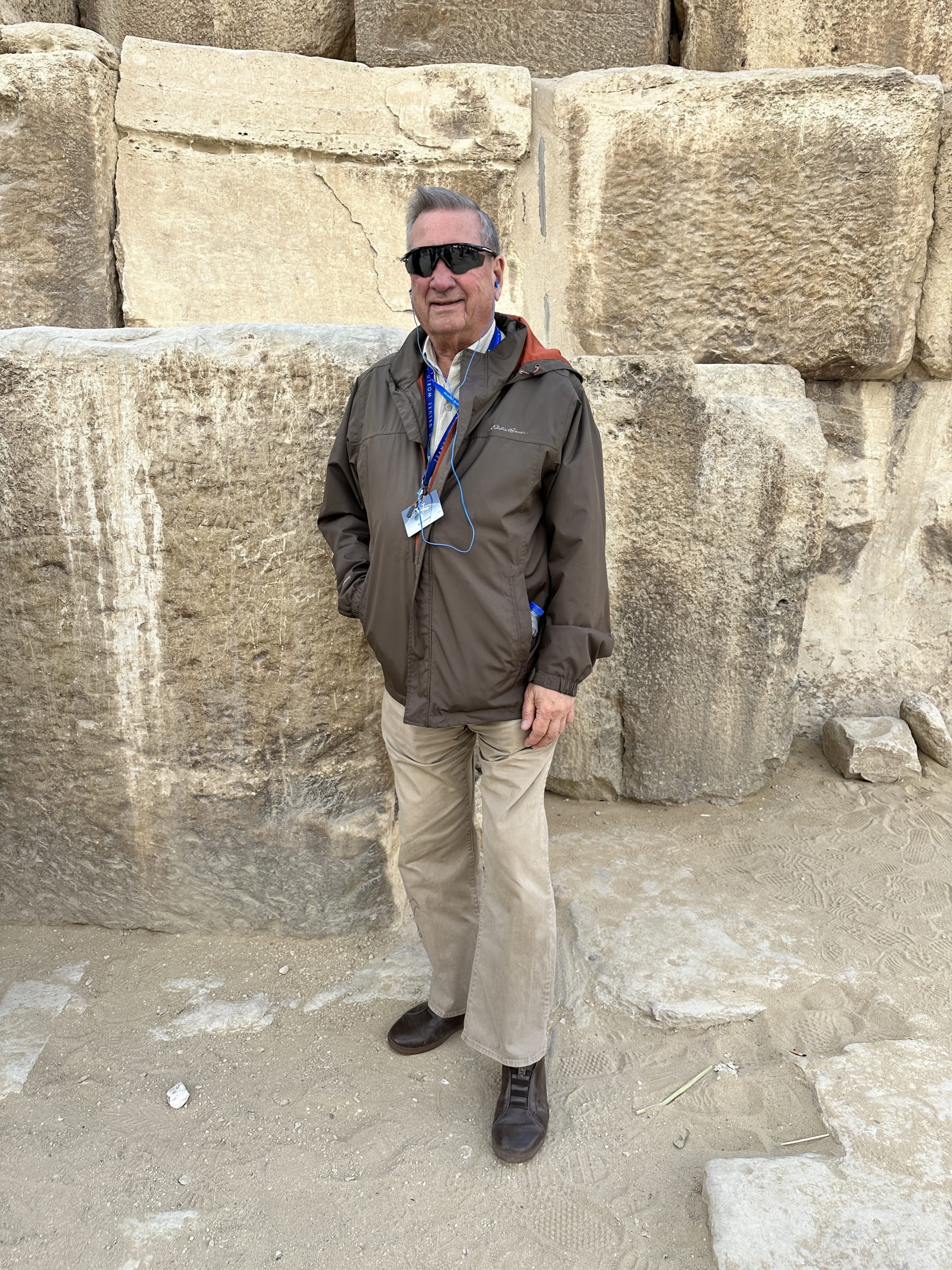
Mike in front of the Great Pyramid

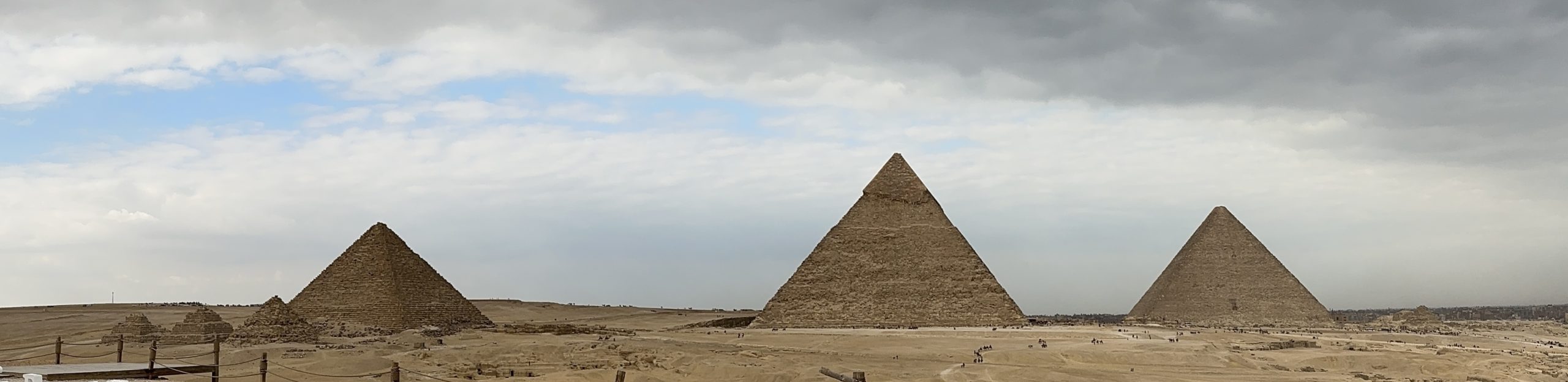
Finally we started an exciting excursion to the Giza Plateau in the southwest outskirts of Cairo, to see Egypt’s iconic Pyramids of Giza and the Great Sphinx. Constructed as tombs for the pharaohs Khufu, Khafre, and Menkaure, each of the three stone structures was built by hand using finely tuned ancient techniques that remain a mystery today. They were built by successive generations of the same family and each began construction on their own pyramid when they assumed control so that their burial chamber would be ready when each needed it. The Great Pyramid of Giza — or Pyramid of Khufu — is the oldest and largest of the three, dating back to 2580–2560 BC and reaching 455 feet high. Each pyramid was part of a complex consisting of a mortuary temple, valley temple, causeway connecting the two temples, boat pits surrounding the main pyramid, and smaller, subsidiary pyramids for Queens.  The three temples are surrounded by mastaba (Arabic word for bench) shaped tombs for other family members and high officials.

Since public schools are on winter break, the scene was chaotic with tourists, families with children, and vendors hawking “authentic Egyptian goods” from China. We stopped first to get close to the great pyramid, where Maget gave us discussion on the construction of the pyramids. Construction is currently establishing a new entrance and visitor center. Then we moved on to a panoramic overlook where we could view all three. Of course, camel rides were available!

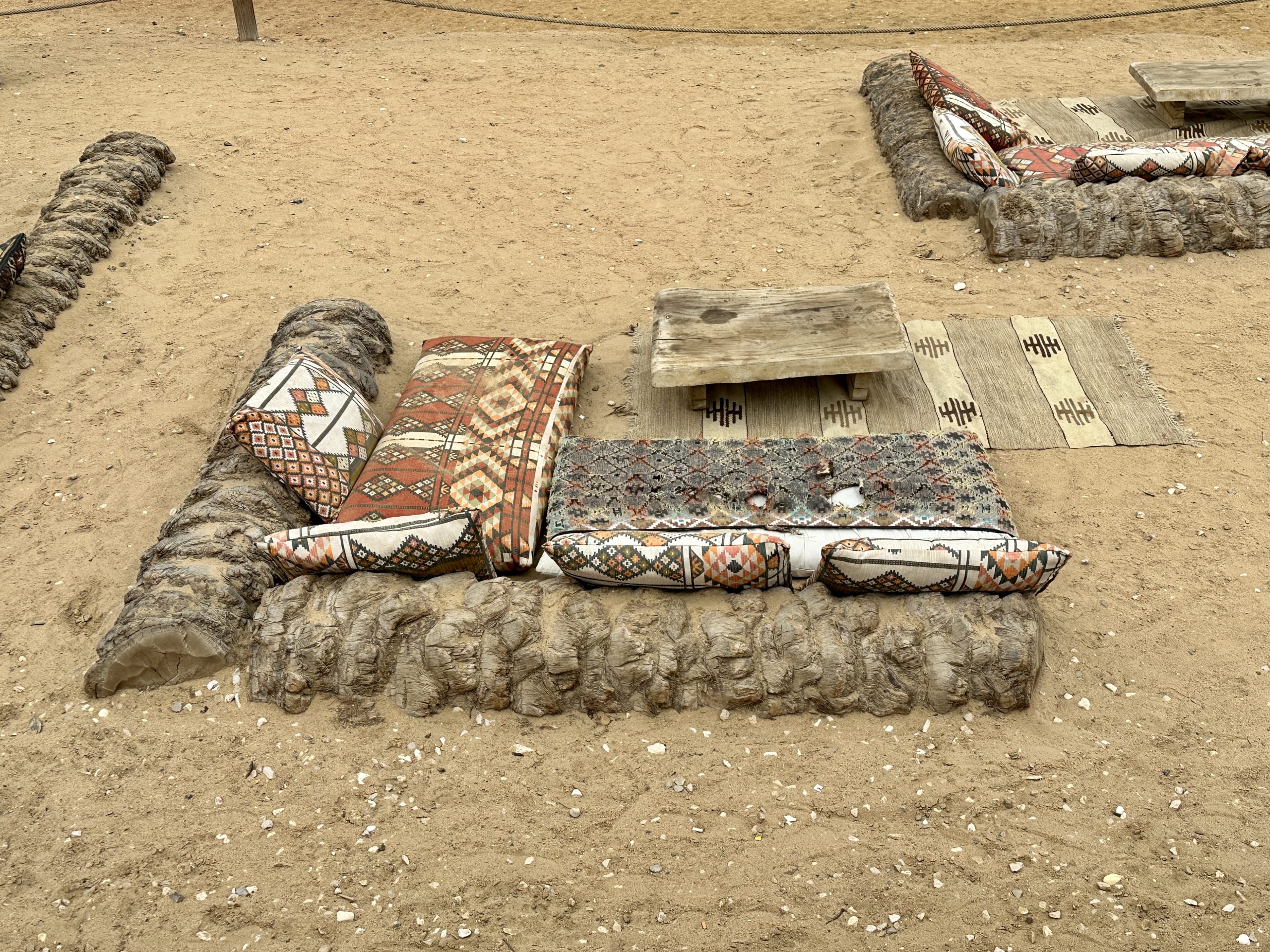
Dining Beduoin Style at 9 Pyramid Lounge

Beduoin style dining

We ate lunch at the 9 Pyramid Lounge of traditional appetizers, grilled chicken, rice, and vegetables, and a rice pudding type dessert. From this location, we could see 9 pyramids: the three large pyramids, three smaller to the left, and three smaller in a row on the right.

The Sphinx

The Sphinx

Located nearby on this otherworldly archaeological site, you’ll also see the mystical Sphinx, a huge limestone statue of a reclining lion with the head of the pharaoh Khafre, sited so that, through eternity, he can guard his family cemetery. It is actually the form of a solar god called Horemahket.

Tonight’s dinner will be aboard a stationery restaurant boat on the Nile[print_gllr id=6390]

Posted in Egypt, Giza | Tagged , , , , , , , | Leave a comment

DAY 7 February 01, 2023 – Egypt

Following a buffet breakfast at the hotel, our first full day in Egypt started with a 2 hour briefing to meet our guides and our fellow travelers, to gain an overview of our activities in Cairo, and a bit of Egyptian history in addition to housekeeping and logistics details like dividing us into 2 groups of about 30. Maged (we call him Magic) ended up being our guide and even gave us homework about the three kingdoms (periods of unity and power: old, middle, and new kingdom), made up of 30 dynasties, covering 3000 years before we head over to the Grand Egyptian Museum after lunch.

The Grand Egyptian Museum took the better part of the remainder of the day. This vast state-of-the-art repository, the largest archaeological museum in the world, is the home of the country’s most valuable antiquities, including the iconic, gold funerary mask and 5,000 other items uncovered in the tomb of the boy-king Tutankhamun. It was the concept of French architect and archeologist, Auguste Marietta. He founded the Egyptian Antiquities department in 1858 and was its first director with the goal of  eventually building a museum to house the artifacts being discovered across Egypt. It opened in 1902, designed by French architect, Marcel Dourgnon, in a Neo-classical style. It was built by the Italian company Garozzo Zaffarani. Since the museum houses the largest collection of Pharonic antiquities, we saw artifacts fro the Predynastic Period to the Greco-Roman era. The museum has two floors: the ground floor has items arranged in chronological order while first floor items are grouped according to subject or material.

Our homework studies had covered the unification of Upper and Lower Egypt by Upper Egypt King Mena through the defeat of lower Egyptians, considered by historians as the beginning of Ancient Egyptian History, about the time that making paper out of papyrus was discovered. The periods of unity were disrupted by periods of disorder (intermediate periods of foreign occupation or civil wars) which brought about the collapse of the kingdoms. We saw various representative artifacts from each kingdom including the golden mask of King Tutankhamoun, as well as his throne and footstool. We also saw the best preserved mummies, which had not been transported to the Museum of Egyptian Civilization.

Afterwards more homework in preparation for tomorrow’s visit to the Museum of Egyptian Civilization. This video:


[print_gllr id=6326]

Included Feature:

  • Grand Egyptian Museum visit
Posted in Cairo, Egypt | Tagged , , | Leave a comment

Day 6: Bethlehem to Cairo, Egypt

It was raining today, off and on torrential downpours.  We borrowed an umbrella from the hotel room to stave off some of the rain. We climbed aboard our bus and headed to Bethlehem.  On the ride toward Bethlehem, Michal filled us in on the history of Jews in area and the migration of authority over time.  Once we approached the border of the Palestinian Authority, as an Israeli, she left us and went back to Jerusalem.

In Bethlehem, the Church of the Nativity

On the other side of the line, Johnny, a Greek Orthodox Christian, boarded our bus to serve as our guide.  We drove through a small town known as Shepherd’s Valley to Bethlehem. Once in Bethlehem, we visited the Church of the Nativity, built atop the grotto where Jesus was born. This is the oldest site continuously used as a Christian place of worship. The writings of St Justin Martyr around AD 160 first identified this site as Jesus’ birthplace. In 326, emperor Constantine ordered a church to be built and in 530 it was rebuilt by Justinian. The crusaders redecorated the interior, but much of the marble was looted in Ottoman times. In 1852, shared custody of the church was granted to the Roman Catholic, Armenian and Greek Orthodox churches.

Touching the silver star marking the place where Jesus was born. The manger however was not available since the Catholics were celebrating Mass

The exact spot where Jesus was born is supposedly marked by a 14-point silver star. The steps down to the grotto were fairly precarious, so Mike stayed topside. I knelt and touched the silver star for a blessing. The differences, between each of the responsible religious organizations, are very marked.  The Greek Orthodox is very opulent, over the top, highly decorated.  The Catholics control the manger area and were conducting a service so photos not allowed. Subsequent to the partition of the space, the Catholics built an entire church connected to the Church of the Nativity.  The Armenian area was more similar to the Greek Orthodox but a bit simpler. While we waited to descend into the grotto to view the birthplace, the Greek Orthodox monks were cleaning their sanctuary with mops and brooms having just concluded a service.

The pope mobile left in Bethlehem under the care of the Franciscans after Pope Francis’ visit

From there, we popped into a small cafe for coffee and to catch sight of the “popemobile” in a plexiglass specially built enclosure . It was left here when Pope Francis came for a visit.  Because of the rain it was all steamed up, but I took a photo anyway.

Johnny escorted us to the Shepherd’s Tent, a restaurant overlooking Shepherd’s Valley, for lunch. He left us there to tend to a leaking roof at home.  Our driver, Surya, drove us back through the border to Jerusalem to the hotel to pick up our bags and rejoin Michal.

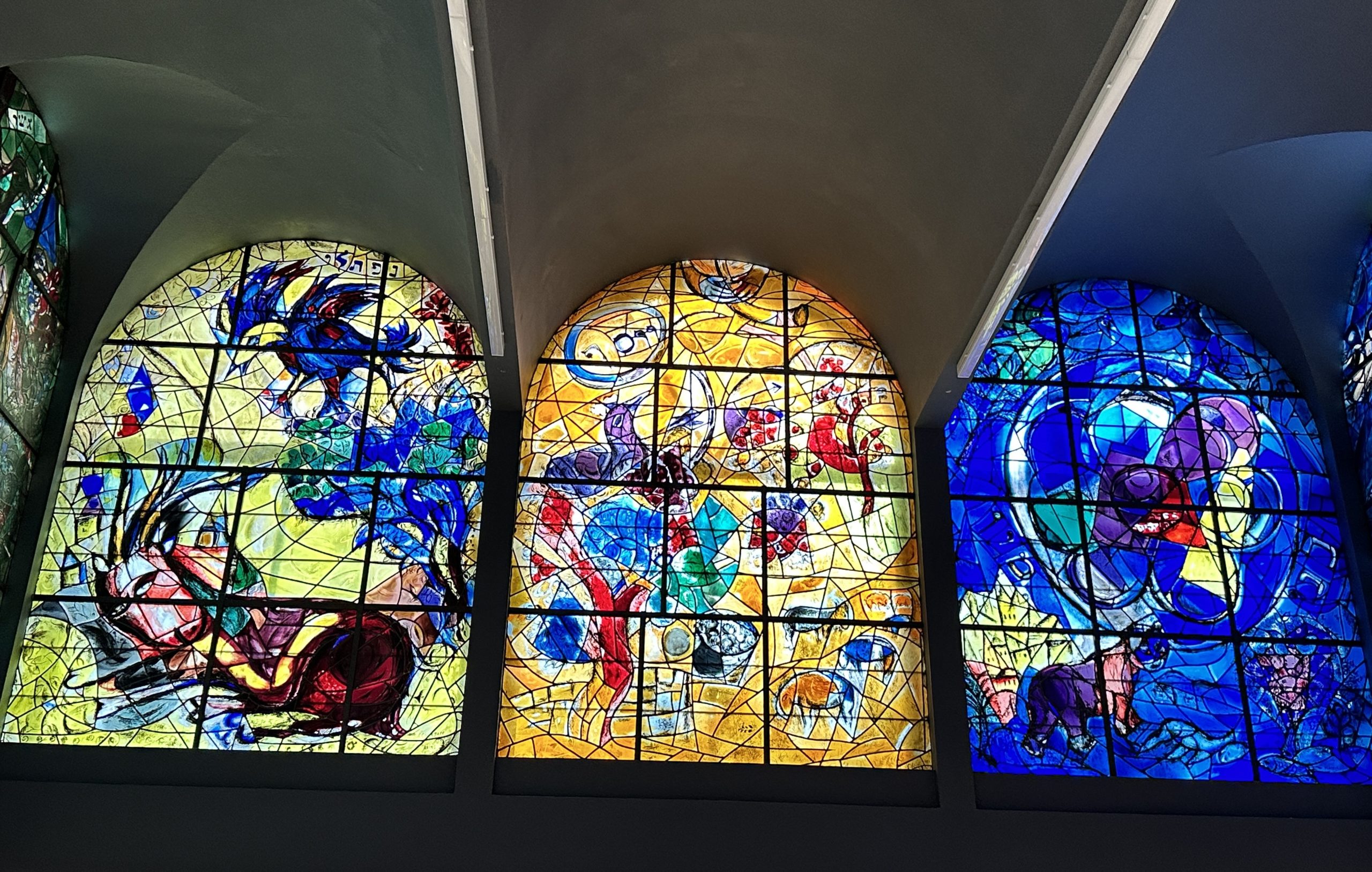
3 more Chagall windows in the synagogue in the Haddassah. Joseph is the one in the center.

She was escorted by her son, Jonathan, to visit the stained glass windows of Marc Chagall in the Hadassah Hospital synagogue. Created by Marc Chagall in 1960-61, depict the 12 tribes of Israel; Joseph was my favorite for its bright colors. They were installed in 1962. Tradition associates each of the 12 tribes with a symbol, a precious stone, and a social role. These elements are all represented in Chagall’s imagery and choice of color. During the six days war, several were damaged and replaced graciously by Chagall. It took him a year and a half to complete the repair project. He always considered these windows his gift to the Jewish people.

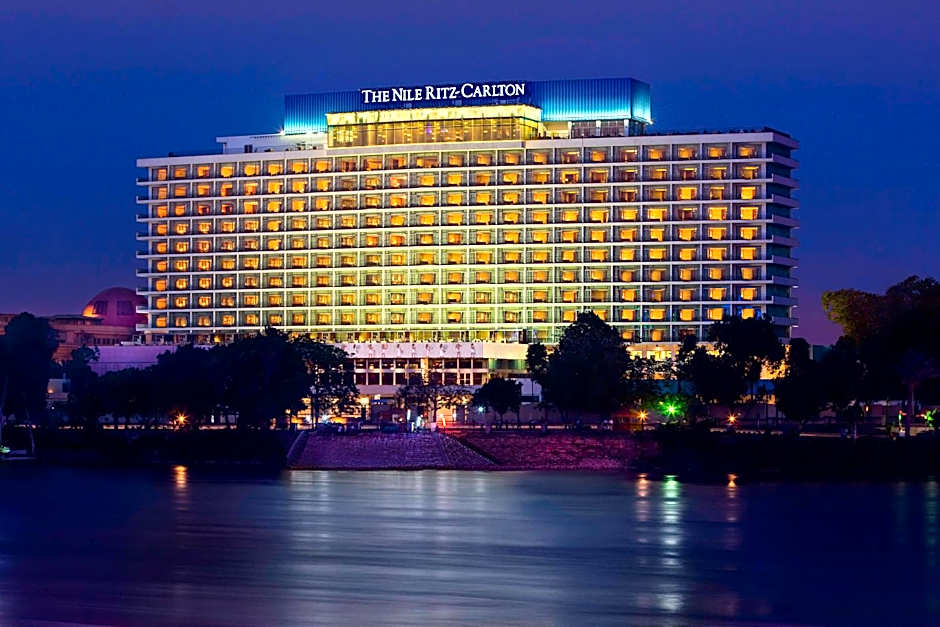
We left Hadassah and headed to Tel Aviv to catch our flight to Cairo. We had no issues with security but our flight was delayed a bit. We finally boarded, taxied out to the runway and a thunderstorm with lightening struck. We are placed on a ground hold until it was safe to take off.  We took off very late, arrived in Cairo a little after 10 pm, and arrived at our hotel the Nile Ritz-Carlton around 11 pm. Upon check-in we found dinner waiting for us in our room[print_gllr id=6311]

Posted in Bethlehem, Jerusalem | Leave a comment

DAY 6 January 31, 2023 – Egypt

Arrive in Cairo and relax in splendor at your Deluxe Nile hotel

Upon arrival, transfer to your Deluxe hotel, located in the heart of the city on the banks of the Nile River. Since we purchased airfare from Vantage, we were met outside the airport arrivals area, and our hotel transfer will be waiting. On our first evening in Egypt, we toasted the beginning of our Egyptian journey with a Welcome Drink and Briefing, followed by a Welcome Dinner at the hotel.

Posted in Cairo | Leave a comment

Day 5 Jan 30 -Jerusalem

Men gathering at the Western Wall. The smaller stones sat the top are later additions, the oldest are lower, huge blocks.

We began our day by entering the gate in the wall closest to the Western Wall. After passing through security, Michal gave us instructions about how to proceed. This particular area is under the control of the Orthodox Jews. We had written notes/prayers on slips of paper, folded them into tiny squares. Women went to the right, separated from men by a wall. We each approached the wall, placed our hands on the wall, said a little prayer, and inserted our prayer note in a crack in the wall.  Next door in the men’s section the same thing was going on.  Since it was Monday, 13 year old boys and their families were coming to celebrate their bar mitzvah and read for the first time from the torah – with the women on one side of the wall and the men on the other. The women, dressed to the nines, for this special occasion stood on benches to peer over the fence.

Dome of the Rock on Temple Mount

Next we proceeded to Temple Mount, venerated as a holy site for thousands of years by Jews, Christians, and Muslims alike to go through security again. Gazed on the magnificent golden Dome of the Rock under which, according to Jewish tradition, lies the foundation stone of the world, and where Abraham almost sacrificed his son Isaac. The Dome of the Rock was built in AD 688-91 and was one of the first and viewed as the greatest achievements of Islamic architecture. It was intended to proclaim the superiority of Islam and provide an Islamic focal point in the Holy City. The dome was originally copper but is now covered with gold leaf thanks to the support of the late King Hussein of Jordan to get on the good side of Muslims world-wide. It took 176 pounds of 24-carat gold to re-gild the dome in 1993. Since we were not Muslim, we were not permitted to enter either building. The Dome of the Rock is supposedly the spot where Mohammed rose into heaven.  Michal referred to the Temple Mount as the belly button of religion. We did walk all around the Dome of the Rock and we spent some time in front of El-Aqsa Mosque learning more about the Muslim faith. One interesting note was that Muslim women pray at the Dome of the Rock, while Muslim men pray at the El-Aqsa Mosque.

Crown of Thorns in the ceiling of the Church of the Flagellation along the Via Dolorosa

We strolled by the entrance to the Cotton Market to leave by a northern gate to reach the Old City, we followed the Via Dolorosa (which traditionally traces the last steps of Jesus from where He was tried to Calvary where He was crucified) west to the Church of the Holy Sepulchre on Calvary, where we saw the two holiest  sites in Christianity: the site of Jesus’ crucifixion and the empty tomb from where He is said to have resurrected. Our trail started at the Monastery of the Flagellation which is under the control of Franciscans and climbed up on steep streets to Calvary. The Via Dolorosa’s path has changed over the years but many pilgrims walk the route, pausing at the Stations of the Cross. On Fridays, the Franciscans lead a procession along the route. The 14th Station is the Holy Sepulchre itself.  The first basilica of the Church of the Holy Sepulchre was built by Roman emperor Constantine between AD 326 and 335 at the urging of his mother St Helena. It was destroyed by Fatimid sultan Hakim in 1009, rebuilt in the 1040s, enlarged by crusaders in 12th century, and damaged during a fire in 1808 and an earthquake in 1927, requiring extensive repairs. At the heart of the church, a marble shrine known as the Aedicule encloses the place where Jesus’ body was laid to rest after his death. The Stone of Unction commemorates the anointing and wrapping of Jesus’ body. We saw many people placing gifts on the stone to receive a blessing of the gifts they want to give to others, thereby transferring the blessing to gift recepient. This church is under control of Greek Orthodox, Catholics, Armenians, Copts, Ethiopians and Syrians. They have physically taken control of specific areas and we saw various sects taking part in various customs and focus.  The church actually houses the 10th to 14th Stations of the cross: Golgotha/Calvary where Jesus is stripped of His garments, Jesus is nailed to the Cross, Jesus dies on the Cross, Jesus taken down from Cross, and Jesus is laid in the tomb.

After a traditional falafel lunch, we continued on, exploring the Christian Quarter, the Arabic Quarter, and the Armenian Quarter.  Each of the quarters had several Roman ruins.

Tower of David, also Herod’s palace

Off we go to visit the Tower of David, also known as Jerusalem’s Citadel. The archaeological ruins date back 2,700 years. The museum uses multimedia (maps, holograms, and models) to present 4,000 years of Jerusalem’s history. A walk around the ramparts offered spectacular views of the city. There is a lot to see here, and they have designated three routes: observation route runs along ramparts and has best views of Jerusalem; the excavation route concentrates on the archaeological remains in the courtyard; the exhibition route takes in the displays and dioramas tracing the city’s history.

The travel group in Jerusalem.


[print_gllr id=6287]


Posted in Jerusalem | Tagged , , , , , | Leave a comment

Day 4 January 29 – Jerusalem

Mount Herzl’s Memorial: the National memorial for all soldiers who gave their lives establishing and defending the State of Israel

On our way to the museums, we passed “bureaucratic hill” where the Knesset, Israel’s Parliament, meets – which provoked a bit of discussion about Israeli politics. Mount Herzl is a high hill named after Theodor Herzl, the man considered to be the founder of Zionism, who is buried at the top of the hill. The slopes are a large cemetery, similar to our Arlington National Cemetery, where Israel’s military can be buried in the main military cemetery. The entrance was filled with young military persons out for a day of learning about their history.

We visited the Yad Vashem, Jerusalem’s official museum of the holocaust remembrance. Its very name, taken from Isaiah, means a memorial and a name. It is an archive, research institute, and a monument to perpetuate the memory of the more than six million Jews who were killed during the holocaust. The entrance is along the Avenue of the Righteous Among Nations, which is lined with plaques bearing the names of 23,000 Gentiles who put their own lives at risk by helping Jews, including Oskar Schindler.

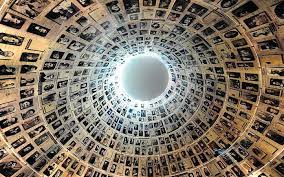
The dome in the Hall of Remembrance in Yad Vashem

Photos were not allowed inside the museum. Exhibits in the museum include 2,500 personal items donated by survivors. The Hall of Remembrance bears the names of 21 of the main death camps on flat, black basalt slabs. At the center is a casket of ashes from the cremation ovens. Above it is an eternal flame. The Hall of Names records the names of all those Jews who perished along with as much biographical detail as possible.    We were guided by David, a museum guide originally from Baltimore, now living in Israel.  Our tour lasted about 2 ½ hours as he recounted stories of the history of the rise of Hitler, Nazism, and the development of the “final solution to the Jewish problem.”  Visitors are expected to dress appropriately – no shorts or miniskirts!

We had lunch at the restaurant at Yad Vashem, called Modern. We were served a first course of traditional Middle Eastern nibbles: hummus, quinoa, beets, roasted vegetables, pita quarters.  The second course was chicken schawarma (dish that finds it roots in the Ottoman Empire) and an Arabic dish called upside down (eggplant, rice, vegetables, and shredded beef) – all served family-style.

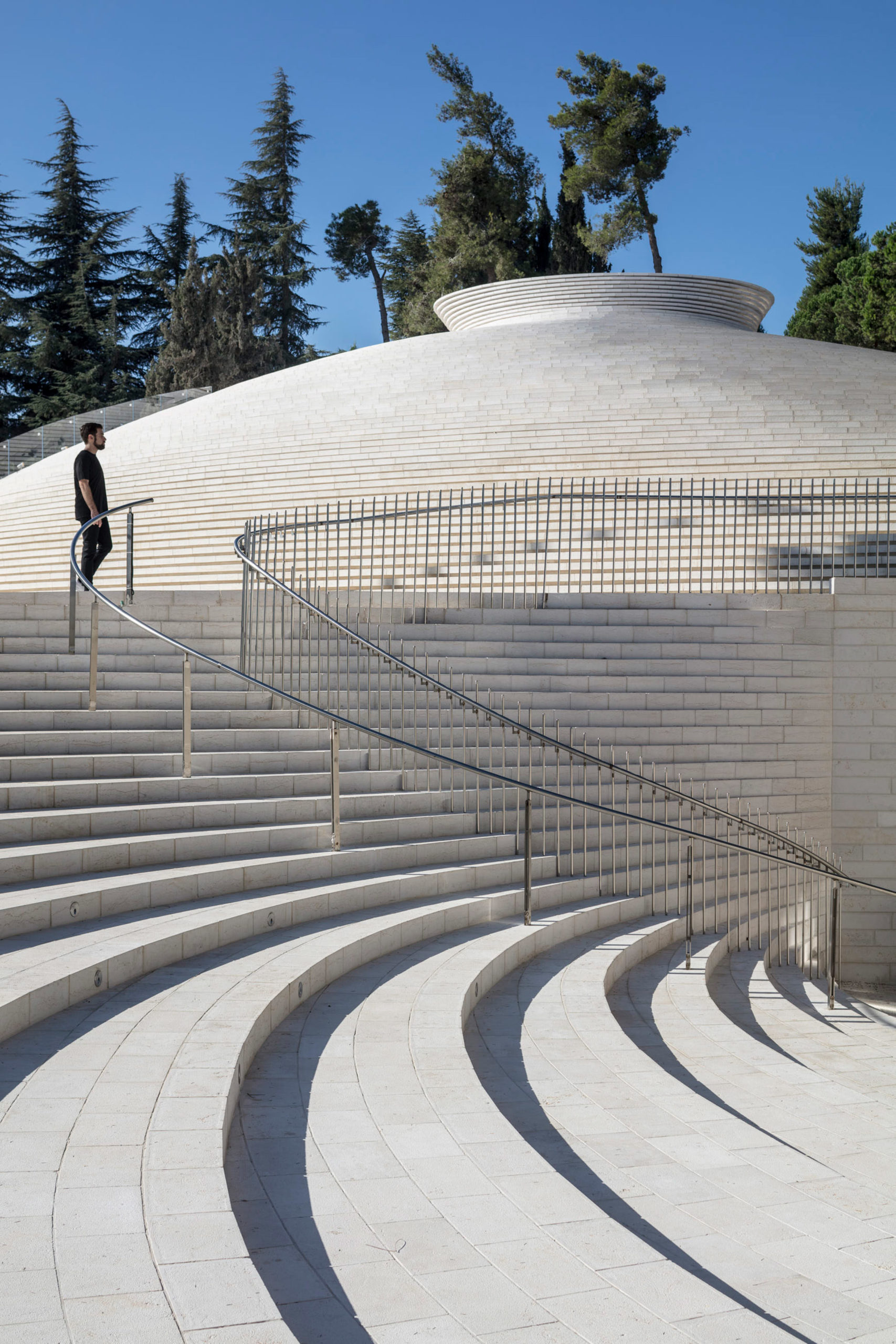
After lunch we visited the Israel Museum one of the world’s leading museums of art and archaeology, where some of the Dead Sea Scrolls are displayed in the incomparable Shrine of the Book. The design of the shrine was inspired by the lids of the jars in which the scrolls were found.  The white dome and the black basalt wall depict the battle between the Sons of Darkness and the Sons of Light described in the War Scroll. The jets of water symbolize the ritual purity of the community that wrote the scrolls.

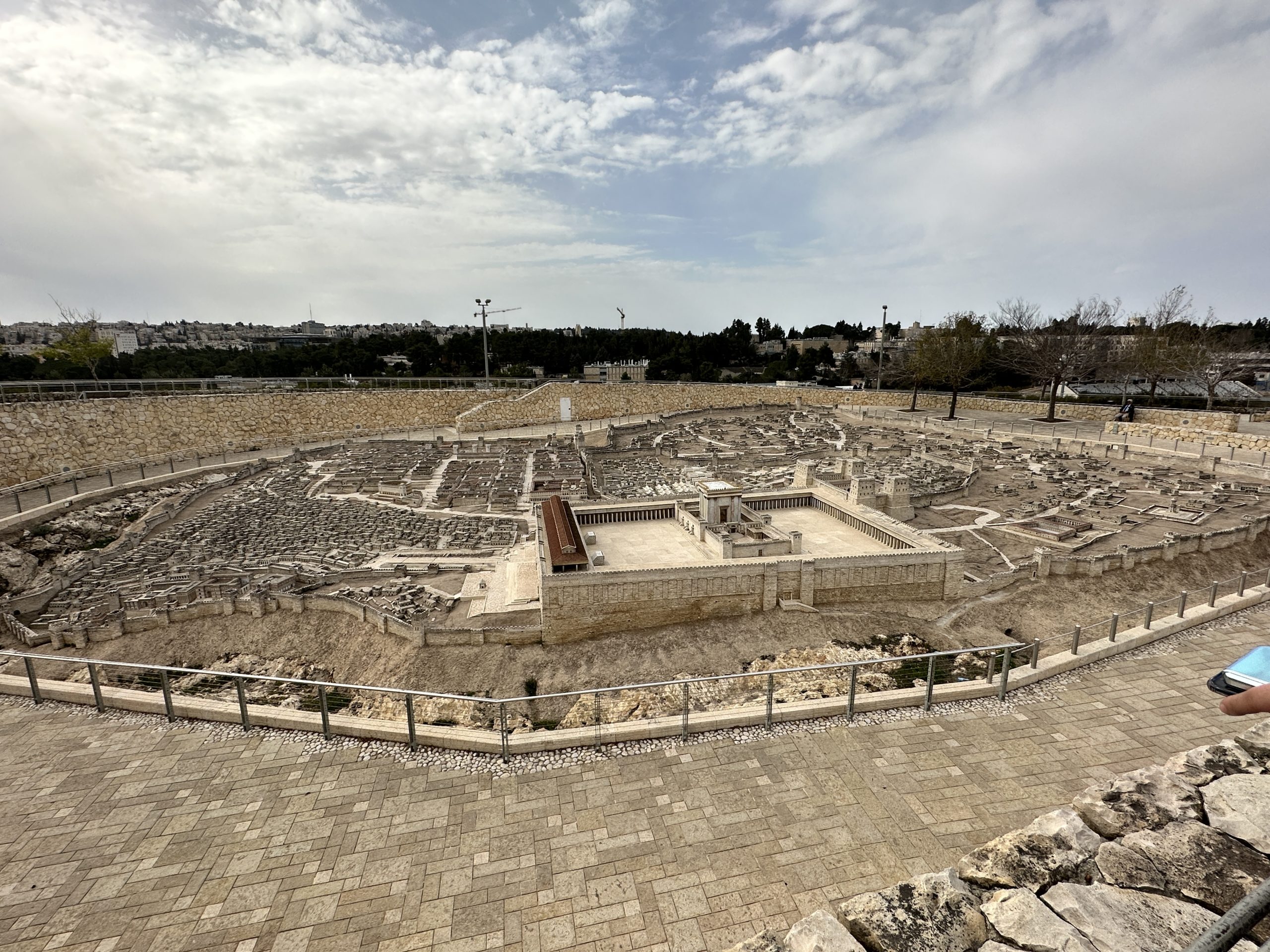
The model of old 2nd Temple era Jerusalem

Before we entered the museum, Michal gave us a history lesson as we viewed the  Second Temple Model, which depicts the city in Jesus’ time. It is now in a open air location and easy to walk around and to view the model from many angles.

After our history lesson we entered the Book of the Shrine to see Dead Sea Scrolls – in 1947, a Bedouin shepherd discovered jars  containing seven ancient scrolls. Over the next 20 years, fragments of some 800 more were found in 11 caves and the nearby settlement of Qumran was uncovered. The scrolls date to between the 3rd century BC and AD68, with some containing the oldest existing versions of biblical scripture. The main chamber under the dome, reached after passing through a long passageway with an exhibition on life in Qumran, contains a facsimile of the Great Isaiah Scroll, the only biblical book that survived in its entirety. Its 66 chapters were written on strips of parchment, sewn together to be 23 feet. one of the display cases contained part of the real scroll.

On the Shrine’s lower level, is the 10th century Aleppo Codex, the oldest complete Bible in Hebrew.

We had some time remains so we spent about 30-minutes in the archeological section, and saw of the three Bronze busts of Emperor Hadrian (one is in the Louvre, and one in the London Museum), we Also saw Herod’s Tomb and a burial box with an ankle bone with a spike through it indicating additional crucifixions were more common than thought.

[print_gllr id=6173]


Posted in Jerusalem | Tagged , , , , , , | Leave a comment

Day 3 Jan 28 -Jerusalem

Day 3 Jan 28

Good Morning!

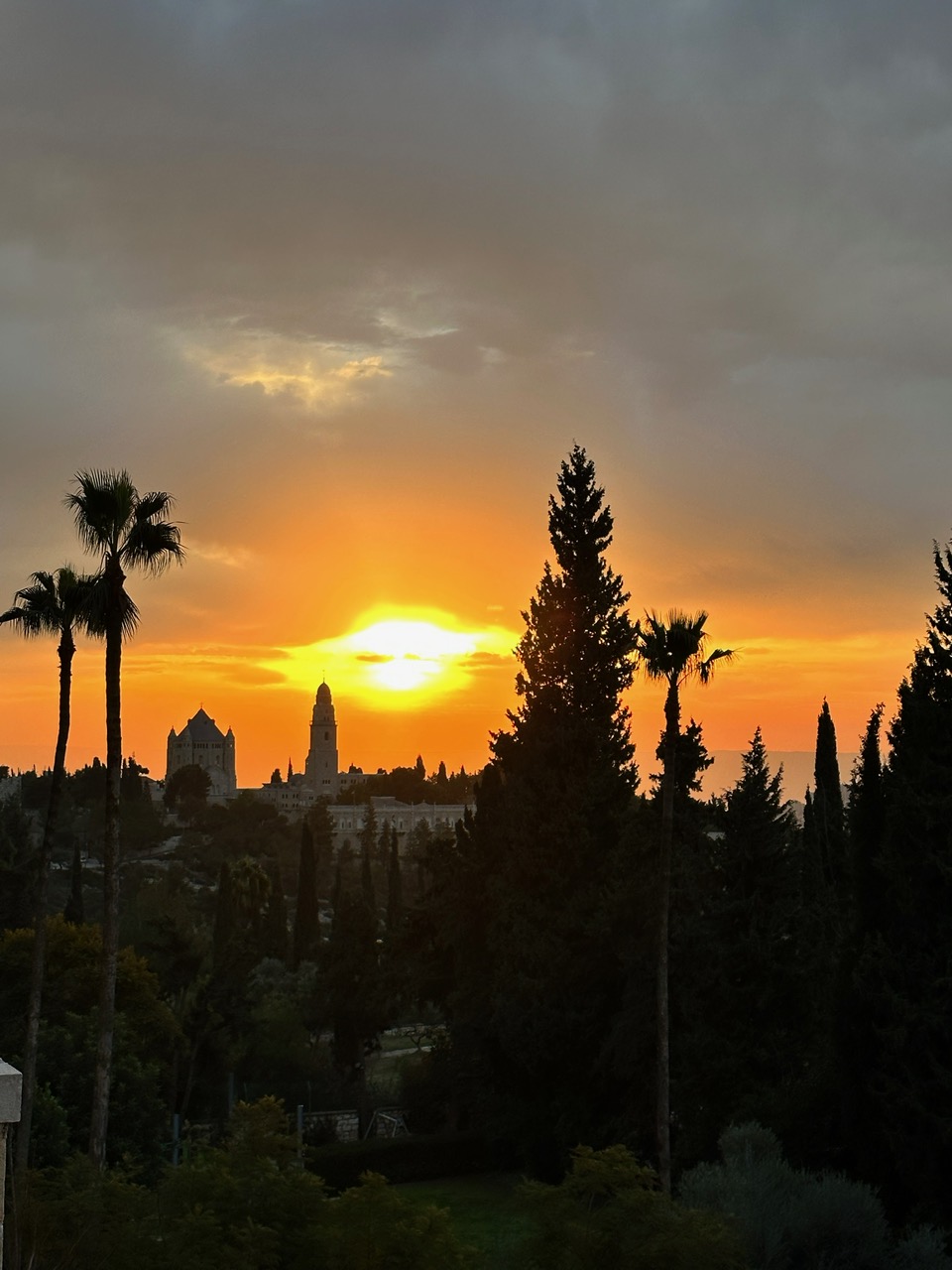
I caught the early morning sun from the balcony of our hotel room! A new day! We were given a ready-to-hit-the-tourist trail time of 8:00 am! And even on the Sabbath!


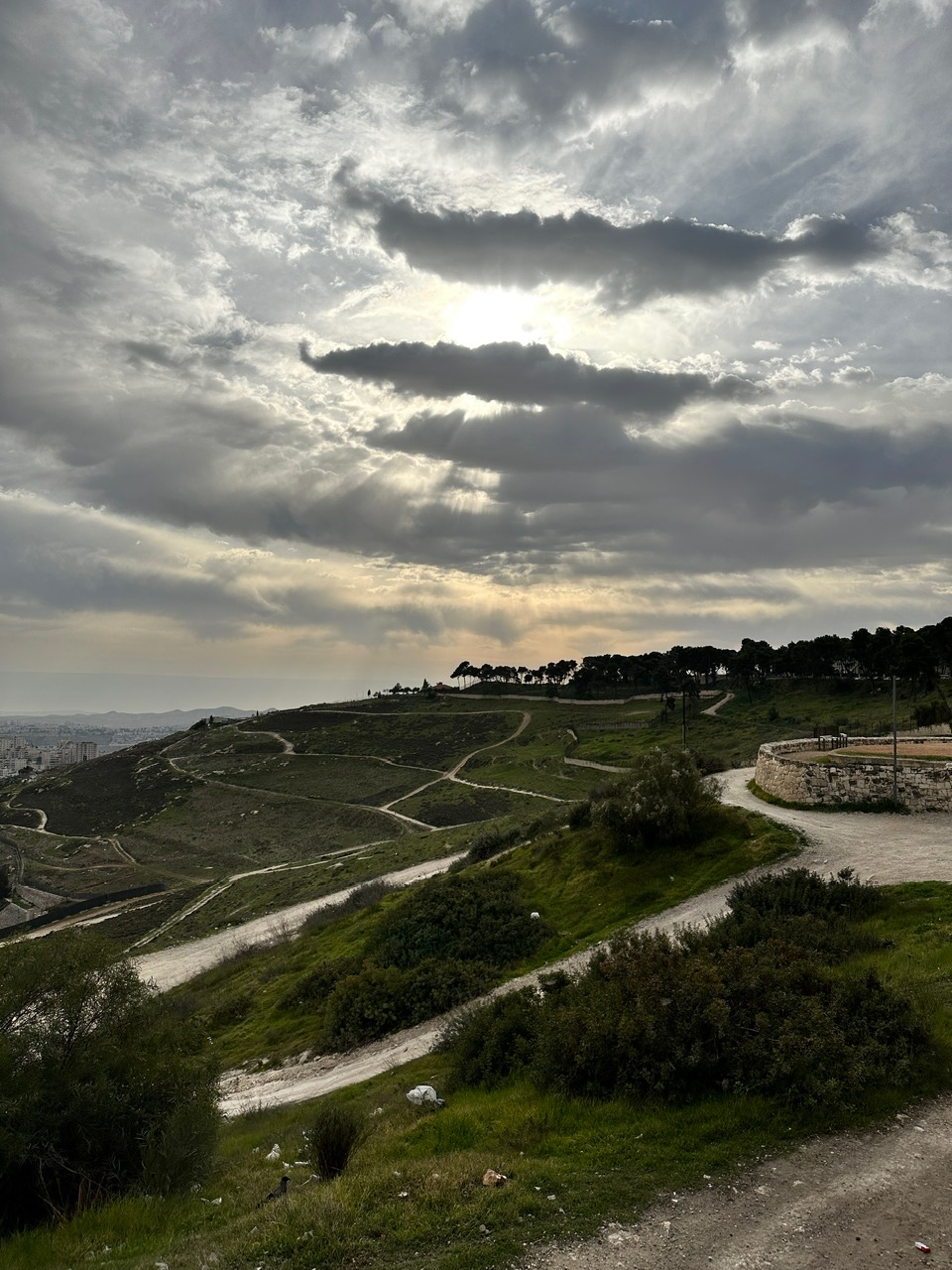
View from Mount Scopus

View from Mt Scopus

After a buffet breakfast at the hotel (modified because of the Sabbath), we prepared to discover a few sites of the city of Jerusalem. We started with a visit Mt Scopus.  Behind us was the main campus of the Hebrew University of Jerusalem as we stood on the overlook and gazed over settlements into Jordan.

Then we were off to the Mount of Olives, named for the olive groves that once covered its slopes. Between the Mount of Olives and the Old City is the Kidron Valley. Ancient rabbinic tradition holds that in the Messianic Era the resurrection of the dead will start here.

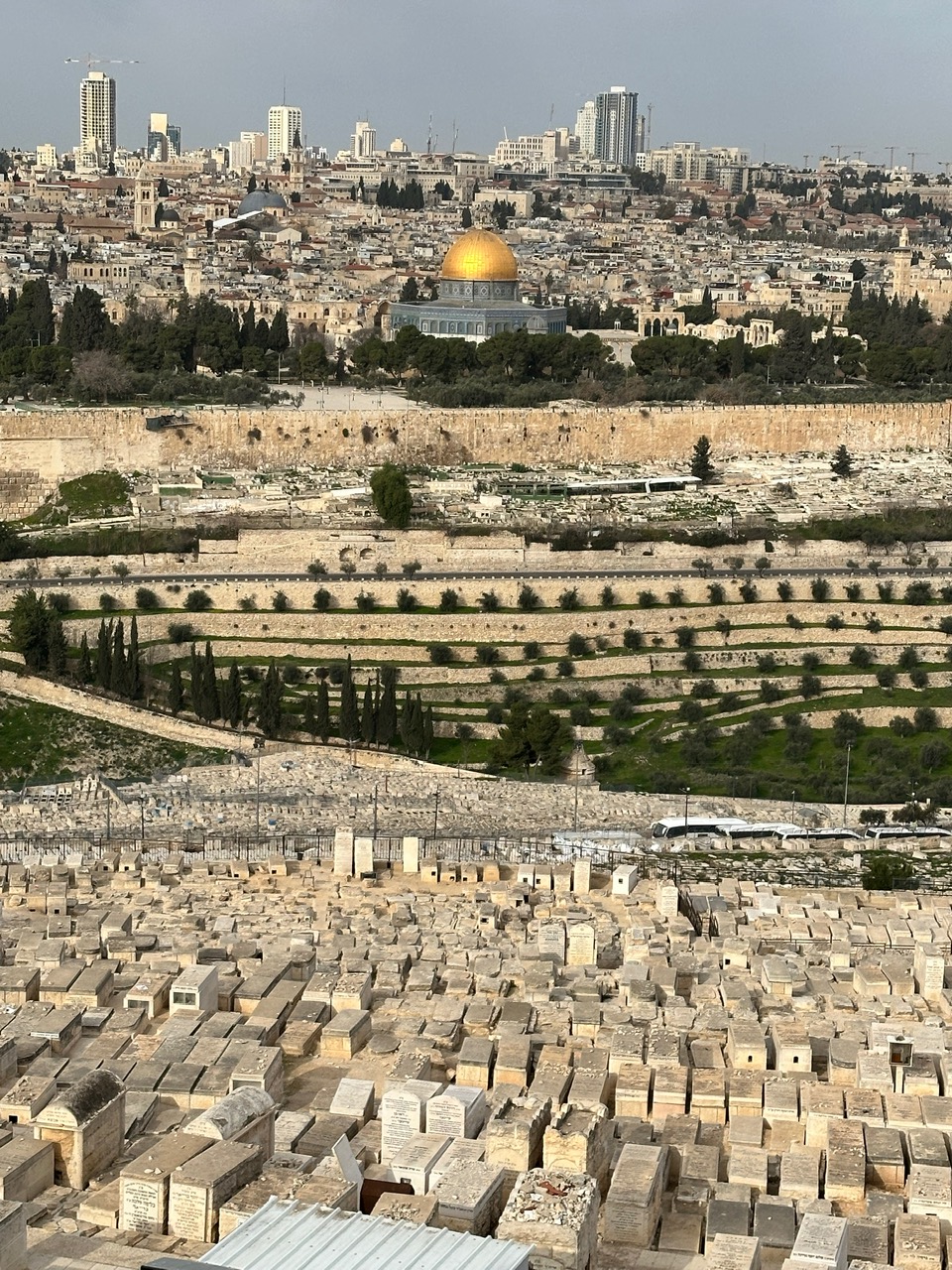
The cemetery in the foreground; Jerusalem’s wall in the middle ground.

Mount of Olives has been used as a Jewish cemetery for over 3000 years and has about 150,000 graves. According to the New Testament, Jesus visited the Mount  of Olives three times during the week before his crucifixion and it is also the place from which Jesus ascended into heaven. In 70AD the infamous 10th Legion (Legion X Fretensis) camped here during the bloody siege of Jerusalem. A few graves of note are Eliezer ben Yehuda, the Father of Modern Hebrew, S Y Agnon, Nobel Prize for literature, and Israeli Prime Minister Menahem Begin.

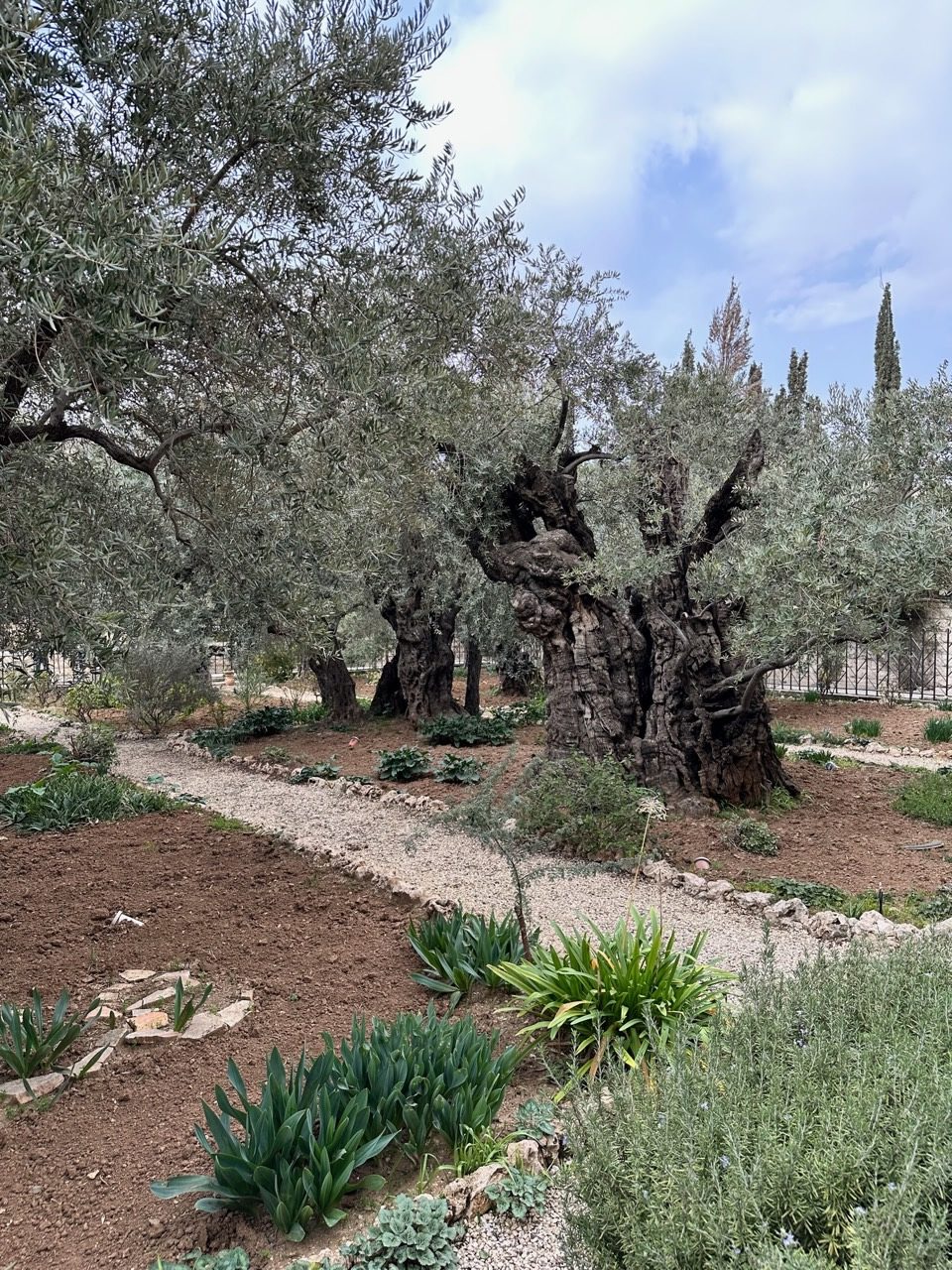
Olive trees in the garden of Gethsemane

After an orientation of some of the landmarks by Michal, our guide, we headed down the mountain to Gethsemane to see the church and garden, most famous as the place where Jesus prayed while his disciples slept the night before his crucifixion. Some of the trees in the garden have been carbon dated to the 12th century and some DNA tests have revealed that eight of them grew from cuttings of the same mother tree. The Church of All Nations, also known as the Basilica of the Agony, for the rock in the garden on which it is believed Christ prayed the night before he was arrested. A 4th century church here was destroyed in an earthquake in 747. Crusaders built a new one, aligned to cover three outcrops of rock, commemorating Christ’s three prayers during the night. It was consecrated in 1170 but fell into disuse after 1435. After excavations in the early 20th century, the present church was designed by Antonio Barluzzi and built in 1925 with funds from 12 nations, hence its name and the 12 domes bearing the national coats of arms. In the center of the nave ringed by a wrought iron crown of thorns is the rock of the Byzantine Church. The mosaic in the apse represents Christ’s agony, while others depict his arrest and Judas’ kiss.

Inside the Church of St Peter in Gallicantu

We proceeded through Kidron Valley – or Valley of Josephat, which runs between the Old City and the Mount of Olives – to Mount Zion to visit the Church of St Peter in Gallicantu. This church commemorates the traditional site of St Peter’s denial of Christ, fulfilling the prophecy “Before the cock crows twice, thou shalt deny me thrice.” Built in 1931, the church looks modern but in the crypt are ancient caves where Christ is said to have spent the night before being taken to Pontius Pilate. The caves cisterns are what remains of the High Priest Caiaphas house/estate. There is a golden Rooster on the sanctuary roof and we took notice of Byzantine era mosaics found during excavation. As we stood on the terrace and gazed across the valley to the Mount of Olives, we were startled by gunfire coming from the Silwan neighborhood below. News reports indicate that a 13 year old terrorist armed with a handgun hid between cars and waited for a group to walk by. He wounded a father and his 22 year old IDF son who, though suffering a chest wound, was able to wound the attacker.

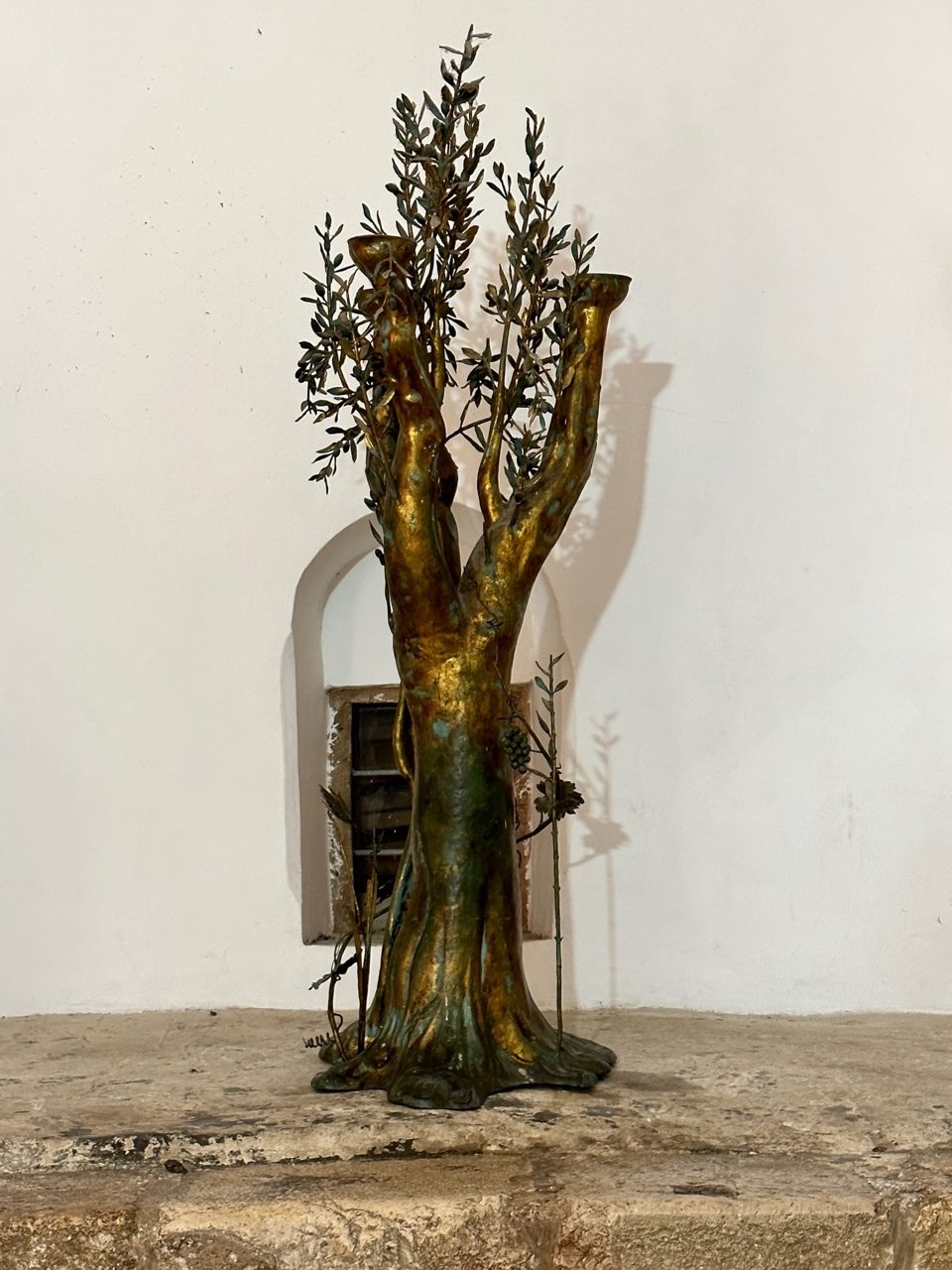
Sculpture of olive tree – Gift from the Italian people placed in the Hall of the Last Supper

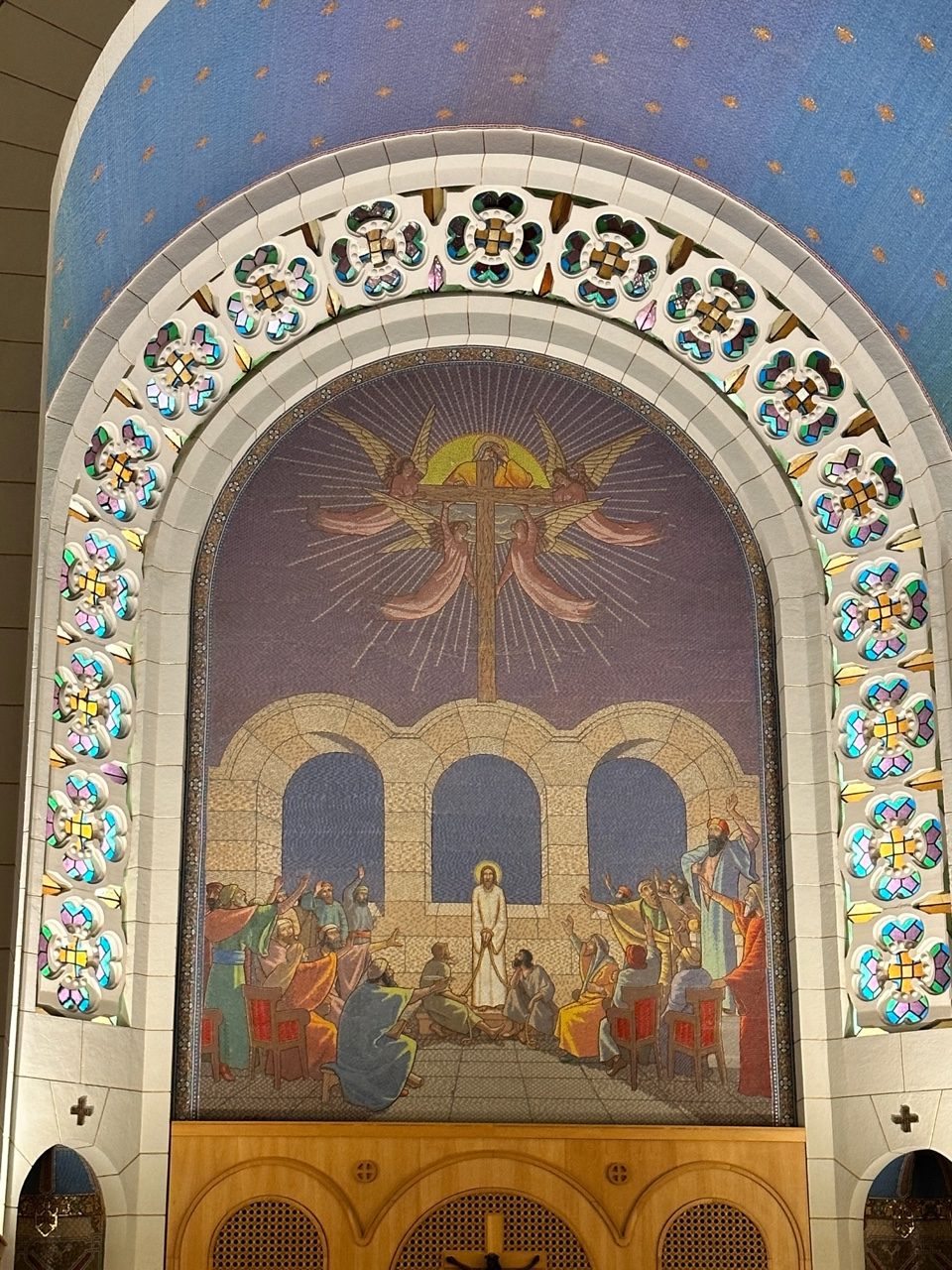
We visited the Cenacle, also known as the Upper Room, in David’s Tomb, traditionally held to be the site of the Last Supper. David’s Tomb is one of the most revered Jewish holy sites, but it was incorporated into a mosque by Muslims who consider David a true prophet. Today the entrance hall is still used as a synagogue, with separate seating for men and women. From the 4th to the 15th centuries, the tomb was associated with the Pentecost and the death of the Virgin Mary. According to tradition it was here that Christ washed the feet of his disciples after the Last supper.

We enjoyed lunch at a local restaurant located in a pilgrimage hotel/church complex called Notre Dame.  The buffet had assorted foods – a bit of something for everyone.  Afterwards, we returned to our hotel, the King David, with a free afternoon.  Dinner tonight is on our own!

We walked through Blumfield Garden, a park near the hotel.  We stumbled on Montefiore Windmill, a 19th century windmill that was one of the first structures outside the walls of the Old City.

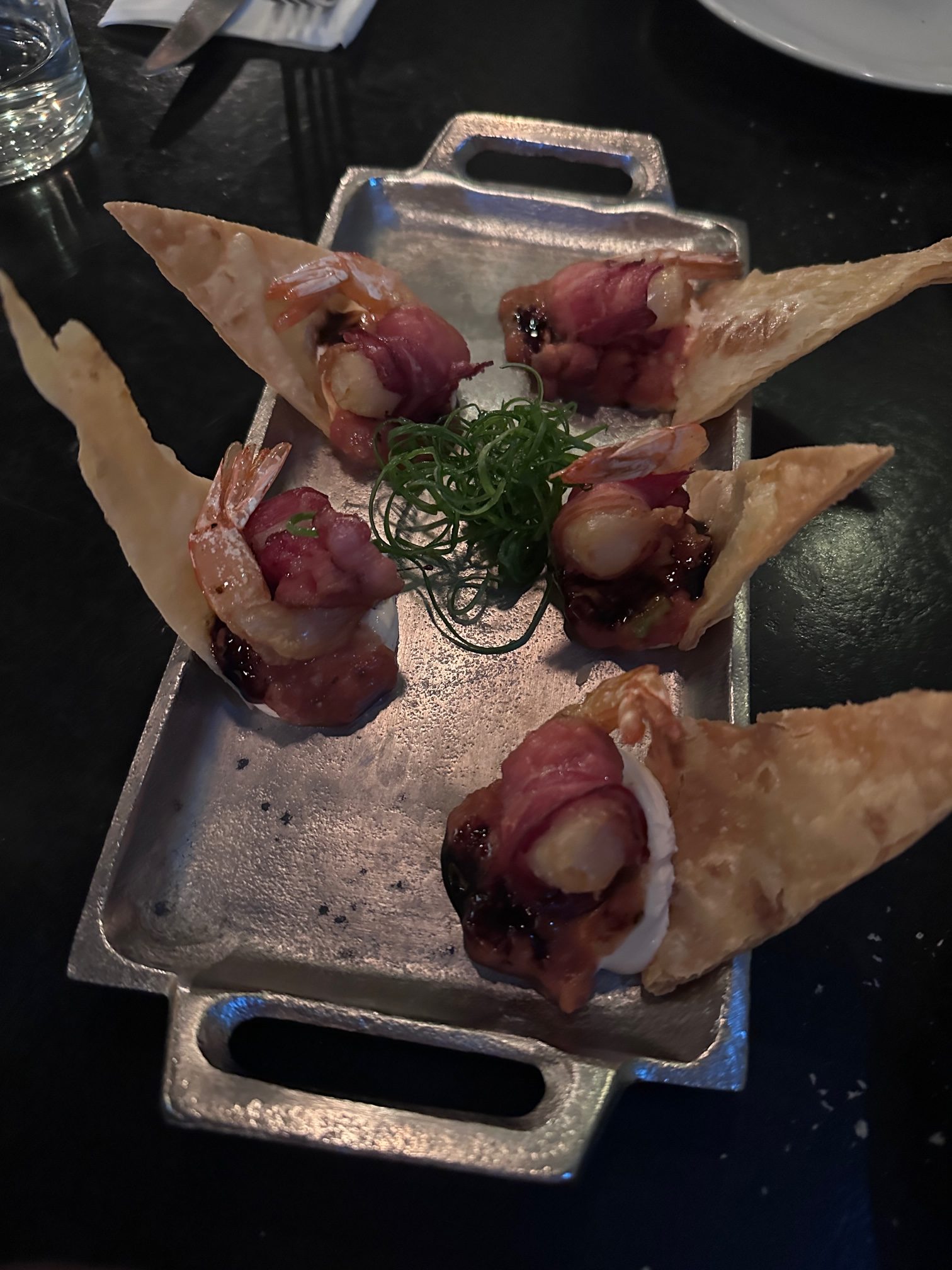
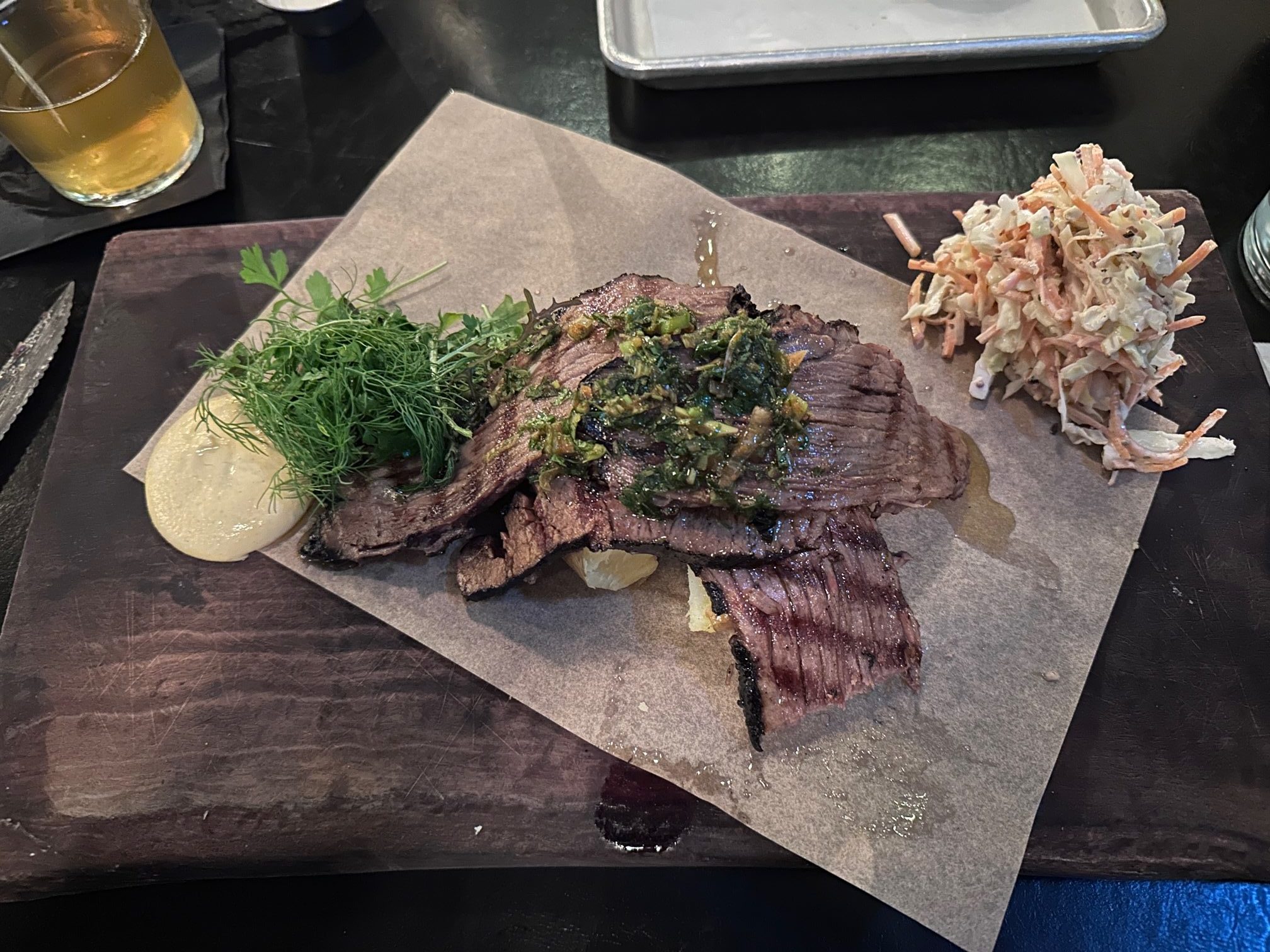
We strolled down to The First Station, a hodge podge conglomeration of fast food, eateries, shopping, bars, etc. set on the footprint of former train tracks and train shed, warehouses similar in design and structure to true industrial spaces. We found the Culinary Workshop, a meat lover’s dream.  We started off with bacon wrapped shrimp with sour cream and balsamic vinaigrette on toasted pita triangles – sort of like nachos.  Mike went for smoked brisket served on a cutting board with coleslaw.  I decided on a burger and couldn’t eat but half![print_gllr id=6166]


Posted in Jerusalem | Tagged , , , | Leave a comment

Day 2 – Jan 27, 2023 Israel

We woke up to breakfast, lemon ricotta pancakes with blueberry orange blossom syrup, served with fruit and yogurt.  Arrived at Ben Gurion International Airport and transferred by bus to our hotel  in Jerusalem, The King David. During our afternoon on our own, we took the time to revitalize ourselves after our journey by taking a quick shower and joining in on a 1 hour tour of the historic hotel.

King Size Bed

Bathroom with double sinks and huge vanity

Our room is lovely and spacious. Bathroom has both tub and separate shower. And is roomy enough for the two of us. Large windows with a small balcony overlooking the grounds provide a lot of natural light. The high coffered ceilings add drama and make the room feel more spacious. We have a wall of closets and shelves to store our clothing, far more than we need. We also have two comfortable lounge chairs in our room – and, if we were so inclined we have enough floor space to dance. Upon check-in, there was a bit of a hiccup – our keys didn’t work, but it was easy enough to get a new set.

The The Reading Roommanager gave up a tour of the King David Hotel which was built in 1931, and floors 5 and 6 were a

The YMCA in Jerusalem. I think Mathews YMCA is due a renovation!

dded in 1958. We visited the Jerusalem Suite where heads of state have stayed. It had great views of old Jerusalem, a conference room, an entire room for a treadmill, a living room, a bedroom, and a his and her bathrooms! It is protected by bullet proof glass. https://en.m.wikipedia.org/wiki/King_David_Hotel

We visited the Reading Room where the table is kept upon which the accord was signed. We climbed up to the roof to check out the old city walls and the scenery. After a short break, we met the other group members and walked to a nearby restaurant Deja Bu for dinner. It was good time to get acquainted and enjoy a meal.  On the way back to our hotel, I snapped a photo of Jerusalem’s YMCA.  The to bed, since tomorrow starts at 7 am!

King David Hotel Tour[print_gllr id=7632]


Posted in Jerusalem | Leave a comment