Croatia Day 6 Sunday September 26, 2021

We left our hotel at 8:30 am, heading south to Zadar, where we will board La Perla, late this afternoon. We passed through a lush countryside dotted with tiny villages and churches, and farms. Stefan briefed us on our schedule for the next few days. He recounted stories of some Croatian inventors; the pen, the torpedo, and the parachute are Croatian inventions. He acquainted us with some highly regarded Croatian sports figures in soccer, basketball, water polo, rowing, and tennis. Sports are not related or affiliated with universities here; they are generally a function of local or municipal sports clubs. 

Weddings here are big, often including 200 to 300 guests, including extended family. Usually, the event is planned in the groom’s village. On wedding day, the groom with his family goes to bride’s home, where the groom asks for the bride’s hand in marriage from the bride’s father. Then they all go to where the ceremony will be performed. In some areas Church is chosen as primary venue, but a civil ceremony is a must for the marriage to be recognized. The reception is usually held at a hotel, the only places large enough to accommodate a crowd of that size.  The groom’s family usually picks up the tab.  Gifts used to be given to the young couple, but now the gift is usually envelope with money.

As we approached the mountains called the St. Roc, or Wall, we passed by the little village of Smiljan, where Nikola Tesla was born in 1856. It is a small village, and they have erected a billboard along the high speed road with a photo of him and proclaiming that he was born here!

We went through a six kilometer tunnel through the mountains and burst out the other side onto the Dalmatian coast, where the landscape is pure limestone with bushes on top. The aura or north wind brings cold weather; the south wind brings warm but wet weather.

We lunched at Zadar Jadera in Zadar before our walking tour of Zadar. Lunch started with marinated sardines with shrimp, local tuna steak with polenta and tomato sauce, and for dessert cream cake! Of course, accompanied by local wine.

Our guide for our walking tour was Tamara, who pointed out the sites and history of the area. The area was fairly quiet since it was Sunday but the sun felt great! The remains of the Roman era forum served as the foundation of many of the buildings. The forum had been the center of public life in ancient times. Zadar suffered much damage during the bombing of WWII. And this area is hodgepodge of ruins.

Just off the old forum is the Church of St Donat, a cylindrical church built in the 9th century. It has not been used as a church for several centuries, having served as a warehouse and museum. It is now used for concerts with its remarkable acoustics.

The Bell Tower of the Cathedral of St Anastasia is nearby, the cathedral itself has a pink exterior. It was founded by the Byzantines in the 9th century and was rebuilt in Romanesque style in the 12th to 13th centuries.

There is a large column, called the pillar of shame, where thieves and other miscreants were tied and exposed to abuse by the people of Zadar. Along the seaboard, Zadar has a Sea Organ, a musical instrument controlled and operated by nature. Nikola Basic designed the Sea Organ, where the white steps quayside produce musical chords as the waves push air up through tubes. Variations in waves and wind produce variations in the tones that are emitted.

Nearby is the Greeting to the Sun, set on the seaside it consists of 300 solar collectors which absorb sunlight by day, then release light patterns at night in a multicolored display like a disco scene. There was also a sea organ, pipes are placed in the sea wall and air escapes from the promenade and create a musical sound.

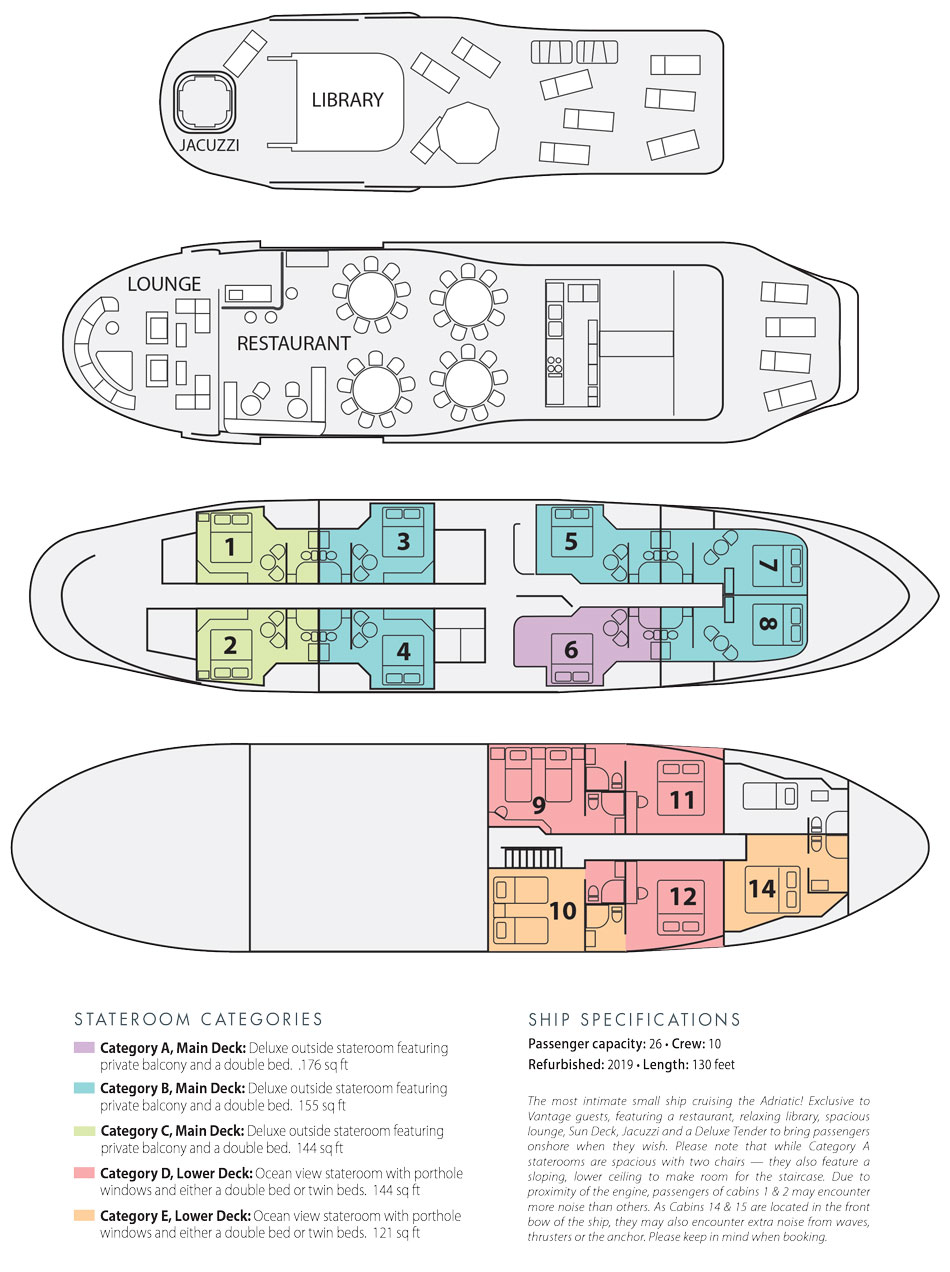
We met the group at 3:30 and boarded La Perla, our home for the next 7 nights. After we were escorted to our cabins, we endured a safety briefing and met the crew. Shortly, we left the harbor for our next destination. Under sail, at 7PM, we had dinner of Seafood Ceviche, Cauliflower Soup, Duck Breast or Sea Bass with Fondant Potato, Garden Peas Puree, and Butternut Espuma, Dessert was Chocolate Brownie with Chocolate Ice Cream.[print_gllr id=5388]
Posted in Zadar | Leave a comment

Croatia Day 5 September 25, 2021

Touring Roman Pula and the Istrian Peninsula

We explored one of the most beautiful regions of western Croatia on a full-day tour of the Istrian Peninsula. As we drove into the countryside, we drove through. Grey Istria, called that because of all the limestone, transitioned into green Istria with its oak trees and fertile hunting grounds for truffles, both black and white. Then we entered into red Istria with its characteristic red soil.

On the way,  Stefan entertained us with Yugo jokes. Yugos were produced in Yugoslavia during the 70’s and 80’s and had the reputation of being the worst automobile in the world – BUT they were cheap and spare parts were plentiful – even available in grocery stores. They never evolved or changed, stayed the same throughout its production. One of Stefan’s jokes was what is the most useful and important page in the Yugo user manual? Answer: The Bus Schedule!,  or whenever you go, it doesn’t!  How about what do you call a Yugo on top of the hill? Answer: A miracle! Why is the rear window in a Yugo heated? Answer, so you warm your hands when you push it. We even saw a red Yugo in a traffic circle on the way.

Discussion shifted to the latest technology under current development to the fastest car in the world. Developed by a young man here in Croatia, the electric concept model by Rimac is expected to cost about $2M. It is so trendsetting Bugatti and Porsche have invested in the company. Rimac will focus on development of new technologies in electric cars, batteries, etc.

Our tour also took us to the picturesque coastal town of Rovinj, which was part of Venice’s mercantile empire and has a distinctive Venetian aspect to it.  We met our guide, Nada, who walked us through the street market, and through the port. For the best views of the town and the harbor, she took us on a mile-and-a-quarter trek uphill to St. Eufemia church it was well worth the effort! St. Eufemia was brutally martyred for her faith. When the lions were released to finish her off, they calmly approached her and gently licked her feet. Her remains were placed in a stone sarcophagus to be sent to Venice, but the ship sank and the sarcophagus floated to shore. Because the sarcophagus was so heavy, the townspeople of Rovinj were unable to pull it up the hill. However, a young 14 year old boy with faith was able to single-handedly pull it up the hill. Or so the legend goes. The saint’s remains and the sarcophagus are kept in the apse.

Rovinj was originally an island port built by Romans. In 1763 it was joined to the coastline by filling in the channel. Initially ruled by Byzantines and Franks, it fell under Venetian control from 1283 To 1797. In fact, the tower of the St Eufemia Church, modeled after that of San Marco in Venice, was a communication avenue to Venice, sort of like “one if by land; two if by sea of Paul Revere fame.

After bit of free time exploring the town, we walked around the harbor, to Kantinon, a local restaurant, where started our lunch with a plate of cheese and meat with a fig chutney, accompanied by bread and olive oil, followed by Bugatti pasta (more like a dense dumpling) in a black truffle sauce with a local white wine. Dessert was cheesecake.

Then back on the bus to explore Pula Arena, Europe’s most complete Roman amphitheater. In Roman times, Pula was a colony known as Pietas Julia. In the 6th and 7th centuries, it became the main base for the Byzantine fleet. Over time, by the mid 17th century, the population declined to only 300 people. It was revitalized in 1856, when Austria based its fleet there. Today it is a bustling coastal city.

But our focus here in Pula was the amphiteatre, its most iconic landmark. It is the sixth largest surviving Roman arena and the only one to have all four side towers.  The towers had cisterns of scented water that was sprayed onto the stalls.  Spectators were shielded from the sun by awnings. Once the sandy floor absorbed the remains of bloody combat; today it is a music and film venue – and site for photo shoots as we found. Built by Claudius and enlarged by Vespasian in 79AD, it was intact until the 15th century when some of the stone was used in other buildings.  We descended the uneven stone stairs (a means of crowd control) beneath the arena floor to see the passageways and rooms where gladiators and their foes, including wild animals, awaited their turn in combat.  Artifacts from around the city are now stored in the passageways and the cages are gone. 

We arrived back at the hotel a little after 5 pm.  We strolled the longamore, the 7.5 mile seaside pathway to the seaside fishing village of Volosko, where we had dinner at Plavi podrum, a highly recommended seafood restaurant. We were told by several people that it would be a 20 or 30 minute walk; but it took us 50 minutes.

Plavi podrum (Blue Basement) is the only Croatian restaurant that was ncluded twice in the San Pellegrino list of the 100 best restaurants in the whole world. It is located in the harbor of Volosko, locally called the mandraÄ, next to the sea, which has influenced the menu, offering primarily fish dishes prepared in a unique way. Over 100 years old, this place surprises with a contemporary approach to gastronomy, inspired by traditional dishes and fresh ingredients of the region, primarily freshly caught fish and shrimps. Plavi podrum is also known for its exceptional wine list. Grilled Calamari was my choice along with a Croatian white wine. Our waiter treated us with a glass of mistletoe brandy as an after dinner digestive. [print_gllr id=5366]

Posted in Croatia | Leave a comment

Croatia Day 4 September 24, 2021

Discover the Opatija Riviera

After breakfast this morning, we traveled up the hill to Moscenice, a mountain top town which is one of the oldest settlements in the region.  Our guide here was Vensa, a local resident, who runs the museum here. She was easy to find – bright red hair! The village was enclosed by a stone wall, sheltering small stone houses and narrow streets, sitting about 170 meters above the Adriatic Sea. It has about 100 residents and everybody knows everybody – and their business! In the 17th century, the Jesuits took ownership of the city and they maintained control until the last half of the 18th century. After a brief stint as part of Napoleon’s provinces, it became part of the Austrian Empire until the end of WWI.

St Andrew’s Church is in the center of the town.  A small church was built there in the 8th century (only the tower and the wall under the choir with four columns remain today). The new church was added on between 1200 and 1300 AD. The central nave was heightened in 1640, and the two lateral aisles were added in 1785 and 1795. The central altar dates from the 18th century and its five marble statues were sculpted by Jacopo Contieri. One represents St. Ignatius of Loyola, who founded the Jesuits. The pulpit dates to 1791.

We left the church and spent time at the overlook taking in the view, before we visited the olive oil press that is part of the museum. Vensa treated us to a taste of lemon brandy (sort of a bitter limoncello) and honey brandy.  She explained the process of cold pressing extra virgin olive oil, and the subsequent pressings yielding lesser quality olive oil.

We were able to continue exploring the narrow, winding “streets” and staircases and even found the narrowest street in the world.  We said goodbye to Vensa and moved on back to Opatija, where Inez was waiting, in another lovely costume, to show us around her husband’s hometown.

Our walking tour enabled us to view Opatija’s stately villas, seaside promenade, and lovely gardens. We learned that Opatija was the vacation spot of choice for wealthy Viennese during the height of the Austro-Hungarian Empire, which resulted in the gorgeous villas, now either hotels or divided into apartments. We strolled through Park Angelina, next to Villa Angelina, built by a nobleman from Rijeka, Iginio Scarpa, in 1844. When Iginio entertained guests from around the world, he did not ask them to pay for lodging but asked them to bring plants or trees from around the world – ultimately forming the garden park today. The mild climate made this the leading winter health spa, patronized by the Austrian royal family and upper class from all over the Habsburg Empire.   The major attraction is the promenade extending some 7.5 miles along  the seaside.

We lunched at a seaside restaurant, squid and seafood soup accompanied by salads. Kimberly, Mike, and I wandered through town to a chocolate cafe where we purchased a few candies and enjoyed a chocolate coffee: Chocolate Heaven and Nutty Coconut. So sweet it almost hurt your teeth.

Back at the hotel this evening, we attended an insightful discussion about everyday life in Croatia by a local lecturer, Igor. He was delightful. and explained in detail the daily. Life in Croatia today: education, salaries, healthcare, GDP, deficit, and retirement.

The Klaps singers with music:


The Klaps singer a cappella:

Our Welcome Dinner with wine at the. hotel, with a performance of traditional klapa singing — part of UNESCO’s Intangible Cultural Heritage of Humanity list.Dinner. It was vegetable soup, sea bream with potatoes. and spinach, and cheesecake for dessert.

[print_gllr id=5245]


Posted in Croatia, Moscenice | Leave a comment

Croatia – Day 3 September 23, 2021

Travel overland to Opatija, with a Croatian farm experience

We traveled to to the seaside city of Opatija through the Croatian Highland . On the bus, we learned that Croatia will move to the euro as their currency in 2023.  Nikola Tesla, who was a Serbian-American inventor, electrical engineer, mechanical engineer, and futurist best known for his contributions to the design of the modern alternating current electricity supply system, was born in this area when it was Austria Hungry. He emigrated to the United States where he was awarded some 300 patents. Serbia and Croatia both claim rights to him, even though most of his work was completed in the US, and it is expected that Croatian euros will carry his likeness. A reporter once asked Albert Einstein “what is it like to be the most intelligent man in the world?” Supposedly, he responded I don’t know, you”ll have to ask Nikola Tesla. Elon Musk named his electric car, the Tesla, after him.

As we moved into the highlands, we moved definitely into the plains, flatter terrain, smaller rolling hills, tilled fields for agriculture – all dotted with small villages.

We stopped at the farm estate of the Kezele family along the way. We enjoyed a tour of the property, including the stables where livestock are kept, a small museum of vintage artifacts, and the wine cellar, where we savored a tasting of the family’s excellent vintages, including their Skrlet. We were  also be treated to a tasty lunch of farm-raised delicacies, made in the family’s traditional kotlovina style. The lunch was prepared in a huge pan with all the ingredients added at various times to cook to perfection.  Our lunch began with a serving of chicken soup and bread, followed by the buffet-style serving of two kinds of sausage (black and garlic), pork, and chicken, potatoes, and beans in a delicious sauce. Dessert was cheese pie. All enjoyed outdoors under a pergola of sorts.

Then it was on to a 3-½ hour ride to Opatija. This afternoon, we checked in at our deluxe hotel in the seaside resort city. Breathed in the salt deeply, listened to the water gently lapping the side of the boats, and we understood why visits here were widely considered therapeutic a century ago. Dinner was on our own, we opted for Ruzmarin (aks Rosemary) where we sat out on the terrace.

[print_gllr id=5219]


Posted in Croatia | Leave a comment

Croatia Day 2 September 22, 2021

Today we set off into the countryside to visit Kumrovec, a preserved open-air museum

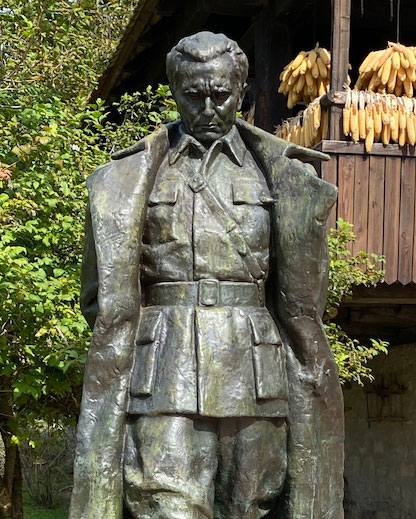
Field Marshall Tito

because it’s the birthplace of Josip Broz Tito  the Yugoslavian communist revolutionary (and later, dictator) who led the resistance to the Nazi and the fascist forces during World War II. We headed west of Zagreb through the countryside, and for a time drove along the border to Slovenia. So we were back in the mountains driving along narrow curvy roads.

During the ride to Kumrovec, Stefan relayed a little of the history of Yugoslavia and of Tito.  Over a century ago, excavation workers uncovered human remains near the town of Krapina in Northwest Croatia. Geologists, paleontologists, and archaeologists have dated them to be about 130,000 years old. The area that was to become Yugoslavia was settled by various tribes with their own cultures. In the 2nd century BC the Romans came to the area and stayed in control until around the 6th century AD.  Around that time, Slavs migrated south bringing their language and their culture, mixing with the Roman residents and became southern Slavs. Area was the center of Balkan trade routes, connecting east and west so they held some strategic importance. The two predominant religions were Roman Catholic and Greek Orthodox. Slavs in this region felt they had always been ruled by foreign influence and rulers and dreamed of more autonomy. In the 19th century, the Napoleon Wars resulted in Austrian rule of this area. In 1918, support for the creation of a country for Slavs without foreign rule took hold, creating the Kingdom of Serbs, Croats, and Slovenes. However Slavic groups began infighting to gain dominance. Initially Serbia, since they already had a king took lead. In 1929, it was renamed the Kingdom of Yugoslavia.

Tito was born in Austria,  fought as an Austrian soldier in WWI was in prison in Russia where he became indoctrinated in socialism. WWI had begun with the assassination of Archduke Ferdinand of Austria for which Serbia was blamed. During WWII Croatia joined Italy and Germany against the Allies. Tito proved to be an able military leader. Once the war was over, Tito promised unity, brotherhoods, and socialism as away to liberate Yugoslavia from Italy and German occupation. After WWII, the name changed again to the Federated Republic of Yugoslavia. Each of the six republics had some measure of autonomy and self-rule.  By the end of the 40’s, Tito refused to align with Stalin and they became enemies. In fact, Stalin sent 5 assassins to kill Tito but Tito discovered them. Tito was installed as President for life in 1963. Tito had a very dark side as a dictator, cruel prisons, forced labor, political opponents executed without trial, taking property for the “common good,” installing additional residents/families in homes, etc. Tito did become a middleman between the west and communist countries. He mixed up the original tribes by moving one group into an area occupied by another which increased familiarity. Religion became less important, not forbidden, but made uncomfortable by eliminating education and job opportunities fro those who openly practiced their faith. In 1979, Tito created the NonAligned Movement, which became the cornerstone of Yugoslavian foreign policy. Yugoslavian Products were exported to partner nations, creating a market for Yugoslavian goods.  Overall, perceptions of Tito and opinions of his impact depend on personal experience with his rule.  After his death in 1980 at 88 years old, Yugoslavia fell apart.

We visited the open air museum at Kumrovec of 19th century countryside homes and barns with exhibitions of daily life: blacksmith shop, barrel making shop, candle making, weaving, tiny kitchens, a typical wedding, typical family life and the home built by Tito’s grandfather for his family. His grandfather and grandmother lived on one side and Tito’s mother and her children lived on the other in very crowded conditions.  Our tour guide, Robert, was a preservationist who works at the museum and our visit was very informative.  We left to continue on to our lunch engagement.

We approached the Valley of Sin, termed that as a result of a 16th century legend of Frederick and Veronica. Frederick, a landlord’s son, rode through town and spied a beautiful young girl named Veronica. He immediately fell in love and they began a secret romance. But Frederick was already married to woman his father found for him. His father was very angry when he learned of the affair. He accused Veronica of being a witch and she was tried. But the judges would not find her a witch, which angered the father even more. The father sent Frederick away, had Veronica killed, and disposed of her body in the walls of his castle – never to be found.  Some years ago, during renovations of the castle, a female’s body was found in the wall.  So is the legend true?

Then, we had lunch at Grena Gorica, the first ever private family-owned estate to open in Croatia, serving only the most traditional of North Croatian specialties. After a long climb up a very steep hill, we were greeted by music and started off with a specially created Grena Gorica welcome drink of honey brandy with a morsel of cornbread

The very steep hill, up and down

dipped in salt. We took a quick tour of the vineyard, tasted the vineyard’s red or white wine and settled in under an open pavilion for lunch. We dined on a seasonal menu that included wine, of course, cold cuts like sausages and cheese, Beef salad, Pickled vegetables, Bread, Cheese or bacon spread, farmer’s cheese, a soup of beef broth & noodles, Salad of shredded lettuce leaves and tomatoes, Beans, Roast pork, Duck, Potatoes, Whole wheat noodles, and for dessert apple strudel and cheese strudel ( Zagorski trukli).

Naturally, there was a lot of napping on the 1 ½ hour ride back to the hotel.  After all that eating, we walked through the Botanical Gardens, until closing at 7 pm. No dinner tonight – still digesting lunch.

Please enjoy the gallery of photos from todays journey through the country side of Croatia

[print_gllr id=5145]


Posted in Croatia, Kumrovec | Tagged , , , , | Leave a comment

Croatia Day 1 September 21, 2021

Inez our Zagreb tour guide in her traditional costume

We met our expert local guide this morning for a tour of Zagreb to view the city’s impressive landmarks. Inez was dressed in traditional Croatian garb and carrying a traditional Croatian umbrella making her easy to pick out in a crowd. The earthquake in December 2020 resulted in significant damage to many of the historic buildings, which made them unsafe and unsuitable for visiting. Others, the CoVid pandemic has had an adverse impact and have not reopened or are now open limited hours.

Croatia’s population is about 4 million and almost 25% of the residents live in Zagreb making it the political, economic, and cultural center of the country. Modern Zagreb is the result of a merger between two Medieval communities sited on adjacent hilltops. The western settlement was inhabited by townspeople and merchants; the eastern was dominated by priests and religious orders. It was part of the Hapsburg Empire from the 16th century. Growth exploded in the 19th century when elegant public buildings gave the city center an Austrian appearance.

During our walking tour, we saw a vivacious open-air city with colorful markets, sidewalk cafes, and green parks with fountains. We saw the Croatian National Theater and Opera House, Croatian Parliament, Prime Minister’s office, St. Mark’s Square with its church roof of colorful tiles, the Old City, the Stone Gate (the last remaining gate of 5 that separated the two Medieval towns), and Zagreb Cathedral (Cathedral of the Assumption of the Blessed Virgin Mary, which was so severely damaged in the earthquake visitors are not permitted to enter – in fact the spire on top of the right tower is now on the ground).

Dolac Market set up under Croatian umbrellas

We visited the bustling Dolac Market the largest in the nation  where locals from the countryside come to sell locally-grown and produced fruits, vegetables, honey, oils, handicrafts, and more.

We learned that Croatia likes to take credit for the invention of ties (KRAVATA) during the Thirty Years War, when wives, sisters, girlfriends would tie a red scarf around the neck of soldiers heading off to war for good luck. Souvenir shops here sell all sorts of ties!

Picante Pizza

Croatian Beer

We broke from the group after the walking tour and strolled the flower market square, several streets with dining establishments and coffee shops. We picked Al Dente, for lunch and tried another local beer, Karlovacko.  Mike and I shared a picante pizza.

Mirogoj Cemetery Facade

After lunch, we took advantage of Stefan’s transportation tickets, rode the bus out to Mirogoj Cemetery, at the foot of Mount Medvednica. It was built in 1876 by Hermann Bolle, covers 7 acres.  The imposing facade contains the entrance to the Catholic and Orthodox chapels and an arcade where notable families are buried. The structure was off limits, damaged by the earthquake and somewhat unstable.  Portions of the stone cornice and exterior decorations were on the ground. Many of the monuments and tombstones were also damaged and are in the process of being replaced or repaired. We discovered that a lot of the stones were engraved with Obitelj and another name.  Our original thought was that all these folks were related, but then Kimberly Baker found out the word means FAMILY.

We hopped the bus back to town and then walked through the series of parks from town center to our hotel.

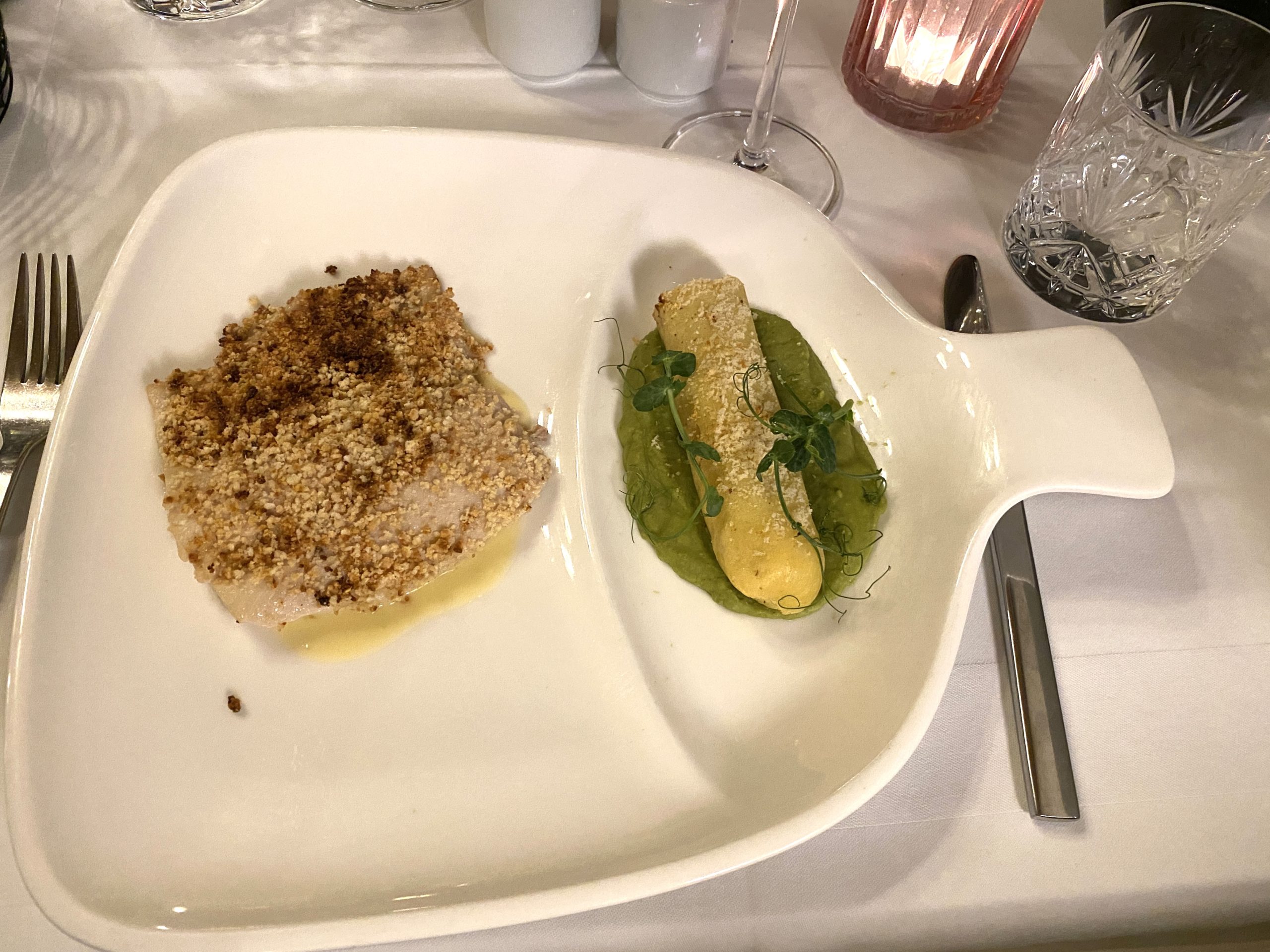
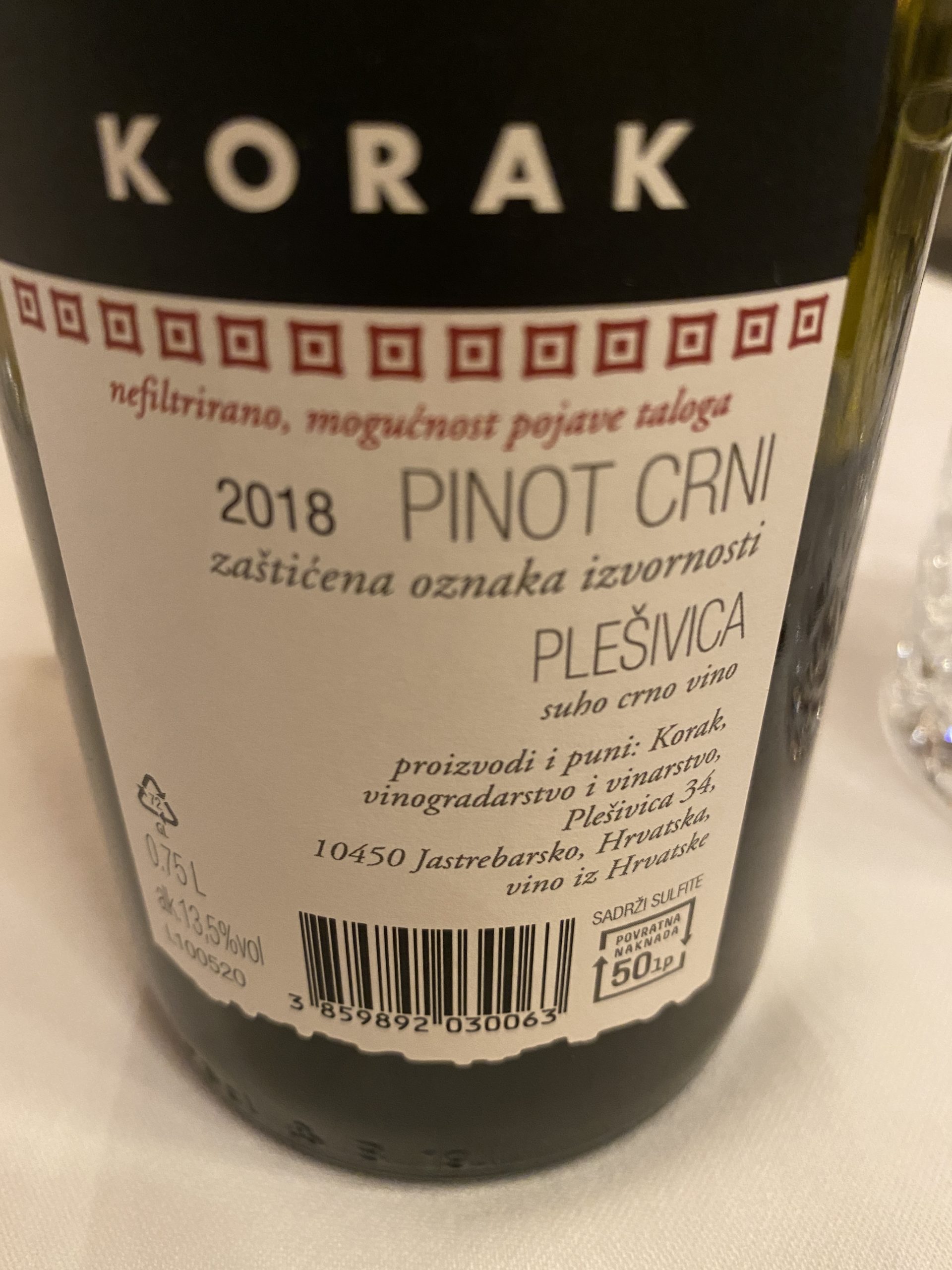
We ate dinner at Vinodol, noted for its traditional Croatian dishes. It was on Nikole Tesle Street! sound familiar? We started off with a bottle of local red wine; Kimberly  enjoyed  a bowl  of  corn chowder  topped  with jalapenoes.  Kimberly  and I had almond encrusted trout filets from the Gacka River in central Croatia accompanied by a potato roll on a green pea puree. Mike had lamb shank and Glenn had pork. The moon was shining brightly as we walked back to the hotel.

Lamb shank

Almond encrusted trout

our red wine


Bright moon on our walk back to hotel

it was a pinot


[print_gllr id=5105]

Posted in Croatia, Zagreb | Tagged , , , , , , , | Leave a comment

Slovenia Day 3 September 20, 2021

The peaks are socked in this morning!

We left Lake Bled after breakfast heading for the Slovenian capitol of Ljubljana. Lake Bled was socked in this morning and rain was predicted. We all resorted to rain gear and umbrellas, better prepared than last night. Sure enough, it started raining during our 40 minute ride to Ljubljana. In the center of the city, at Congress Park, we met up with our city guide, Chira. Under Congress Park is a large underground parking lot, even equipped with water closets! The trees in the park used to be chestnut trees but Plecnik thought they were inappropriate and messy for a city park so he purchased plane trees at his expense to encourage the city to plant them. He also specified willow trees for some locations to remind us of the connection Ljubljana to its water source – the river.

Chira, our tour guide for Ljubljana

Chira walked us around the old town, pointing out architectural features and filling us in on the history. Much of Ljubljana was destroyed by earthquakes.  In the 1920’s and 30’s, it was rebuilt under the direction of architect Joze Plecnik, a Ljubljana native who studied under Otto Wagnerand donated his services to the city. His impact on Ljubljana created a green city with an emphasis on pedestrian access, green spaces, sustainability. The river embankments and their development follow the spirit of his original vision. In fact, in an attempt to regulate traffic, he simply added pedestrian bridges to either side of a bridge originally constructed in 1842. Of course, the entire area is pedestrian only now! But the bridge is now known as the Triple Bridge. He planted white birches on the Trnovo Bridge which was near his home. His architectural style is a sort of art nouveau derivative.

After our tour in the rain, we had two hours of free time to wander the cobblestone streets, check out the city’s three bridges, eat and shop. We visited the daily market. (designed by Plecnik), somewhat reduced due to the rain but it had a wide selection fruits, vegetables,and flowers. The market is generally busier on Saturdays. A colonnade had been built on the River bank to house a permanent butcher market, a bakery, a fish market (downstairs to contain the smell), and a few small eateries.

Our lunch of leek soup, buckwheat spoon bread, sausage, and local beer

We picked Moji Struklji and enjoyed a bowl of leek soup, buckwheat spoon bread, and a local sausage with sauerkraut and mustard accompanied by another Slovenian beer brand, Union. Mike added a tarragon dumpling but it was just too much food! Sparrows hopped up onto our spare chair and stole a few snippets of dumpling! We think our lunch stop was a popular local spot, since while we were there 11 WOLT and 3 GOLOV bicycle food delivery folks stopped in to pick up orders to deliver. The central area is a pedestrian and bicycle area and to assist residents, the city operates small electric vehicles for free rides, especially for those carrying loads of groceries, etc. We were to assemble at 1:15 to head back to the bus and head across the border to Zagreb, Croatia. Half of our group misunderstood and thought they had until 2. But, as they say – better late than never! On our way back to the bus, we passed a series of trash and recycle receptacles. In order to use them, a local would have to swipe a card with their personal information to gain access, deposit their trash or sorted recyclables (paper, packaging, glass, plastics). Each morning the bins (stored underground) are emptied. Once a month, the users are billed for each time they use a bin.

During our ride, the landscape changed quickly from alpine to rolling hills and plains. We crossed the border into Croatia at 3:25 – a fairly smooth and easy process. To leave Slovenia, each person left the bus and one by one presented their passport and vaccination card to the Slovenian border police officer who stamped each passport. We reboarded the bus, drove 200 feet, and encountered a Croatian border agent. When he heard we were all Americans, he figured we’d been vaccinated and just let us through without checking passports or vaccination cards! The two border checks are as a result that Slovenia has not been accepted to the Schengen area of 26 European countries that have abolished all passport and border controls at their mutual borders. And, the sun came out to greet us.

Our bedroom

Our bathroom

We arrived at our hotel, the Hotel Esplanade in Zagreb, Croatia, a historic Art Deco hotel that used to serve the Orient Express and dates back to 1925. Our room is large, bright, and wonderfully appointed. Tonight we meet the rest of our tour group and dine in the hotel for our Welcome dinner. This afternoon we bid farewell to Juko, our guide throughout Slovenia,  and said hello to his younger brother Stefan who will be our guide through Croatia.

After a short meeting to globally define our next few days, we adjourned to the Zinfandel restaurant for dinner consisting of Green Pea and Mint Soup, Veal with Mushrooms and Creamy Potatoes,  and Vanilla Creme Brûlée, and, of course wine!.[print_gllr id=5023]


Posted in Croatia, Ljubljana, Zagreb | Tagged , , , , , | Leave a comment

La Perla

La Perla

Posted in Croatia | Leave a comment

Slovenia Day 2 September 19 2021

The day began with a buffet breakfasting the hotel. After, we are off to the Nordic Center at Plancia.   This is a year round training center for ski jumping or flying, cross country skiing, and features a zipline. In the warmer months, Slovenians and their visitors take advantage of the trails for hiking and biking. Folks are very fit here!

The Goldenhorn statue near Lake Jasna near Kranjska Gora

The drive was fairly short, past villages and an iron plant factory, to an area of Slovenia nestled between Austria and Italy. We were forced to take a detour since our preferred route was closed due to an accident. We passed by Lake Jasna, a lake created by a hydroelectric dam. As with the other lakes we saw, the water was clear and we could easily see the limestone bottom.

By the time we arrived at the Plancia Nordic Center, the upper mountains were covered in clouds. We watched as folks training for ski jumping, practiced on the slopes. The slopes were covered with artificial turf and were regularly sprinkled with water to make them

A jumper. in. training

usable without snow. There was a zipline from the top of the highest jump to the bottom parking lot that was in regular use.  We decided to forgo the zip line, especially since we would have had to climb to the top – there was no cable car or chair lift!  Inside we found snow and a gentleman practicing his cross country skiing. There was also an aerodynamic chamber where jumpers could practice their form and make themselves as aerodynamic as possible.  We watched a short film, tracing the history of ski jumping and the advancement of techniques used to garner longer and longer distancse. In the last World Cup, the record of 250 Ski Jump Video meters was set by a Slovenian at Plancia. During our entire visit here, that old Olympic scene kept rolling in my head: The agony of defeat – when the ski jumper toppled off the jump during competition.

Juko and our Lasko beer

We left the Nordic Sport Center and headed to Kranjska Gora, a traditional alpine village, for a walk-about. We stopped for another taste of Lasko beer and ran into several folks from our group, along with Juko, our guide.

We had about a five minute walk. to our restaurant, when the. skies opened up and we were caught in the deluge. Rain jackets in hand, but umbrellas were back in hotel. Before dinner, we were treated to a gingerbread making presentation! Dinner tonight was at Gostilna Lecta in Radovlijca, one of the oldest trattorias in Slovenia, serving regional Slovenian specialties, local wines, and traditional sweets, known as Lectar Hearts.

A drawer full of Lectar Hearts. Most are decorated by Joze’s daughter.

The gingerbread making demonstration was interesting but not what we expected. It turns out that. it takes 24 days to make gingerbread.  The recipe used by Joze’s family consists of flour, honey, and spices. It is very manual, even the sheeter to press the dough is manually operated.  Joze makes traditional heart shaped cookies, ranging in price from 10 euros to 150 euros, depending on size. Since they consist of no butter or eggs, they can last for many years. Some he had on display were framed and were 30 or 40 years old. Might be had as a brick!

We moved upstairs for dinner. We were greeted with Rakija, a fruit liquor similar to grappa. This one was made with pears.  Along with it, Joze served us a bread cube to dip in salt – a custom of Slovenian hospitality.  We were given a choice of red or white local wine.  First course was a mushroom soup, served in a bread bowl. Next, served family-style, was a platter of two different sausages, turnip sauerkraut, sauerkraut, potatoes, roast pork, horseradish served in a tomato, and a noodle kugel.  Dessert was a hollowed out apple, stuffed with ice cream!

The owner of Gostilna Lecta in Radovlijca,  Joe singing and playing guitar.


Bled Photo Gallery


[print_gllr id=4947]


Posted in Slovenia | Tagged , , , | Leave a comment

Slovenia Day 1 September 18, 2021

Lake Bled, Slovenia

First a bit about Slovenia. Slovenia was one of the six republics or areas that made up Yugoslavia back when we studied geography. In the early 90’s each became independent, with Slovenia ranking number 5 of the 6 in terms of area. Slovenia is located in the Julian Alps, featuring biking, hiking, skiing, and other outdoor adventures.  The national flag of Slovenia features the tallest three peaks. The island in Lake Bled pictured above originally was the site of a temple to a pagan goddess of fertility and love. Today it is the site of a Roman Catholic Church, accessible only by boat. The stairway in the photo, features 99 steps to reach the church. Folklore dictates that when a couple marries, the groom carries his bride up the 99 steps to strengthen their marriage and to grant them a lifetime together.  There is a Wishing Bell in the church, donated by a philanthropist, who wanted visitors to have the opportunity to ring the bell and be granted their wish. The boats in the photo are plenta powered by oarsmen, since Lake Bled does not permit powered boats. The boats are built by locals, the originals date back to the 1590’s.

Lake Bohinj: notice the clear water and the limestone “beach”

Today, despite cloudy, overcast conditions, we headed off to Bohinj Lake. Lake Bohinj is 4.2 km (2.6 mi) long and 1 km (0.62 mi) at its maximum width. It is a glacial lake dammed by a moraine (A moraine is any accumulation of unconsolidated debris (regolith and rock), sometimes referred to as glacial till, that occurs in both currently and formerly glaciated regions, and that has been previously carried along by a glacier or ice sheet). The largest of the streams that flow into the lake, the Savica (‘little Sava’), is fed from Erno jezero (Black Lake), the lowest-lying lake in the Triglav Lakes Valley. The outflow at the eastern end is the Jezernica creek which merges with the Mostnica to form the Sava Bohinjka, which in turn becomes the larger Sava River at the confluence with the Sava Dolinka. Belsazar Hacquet discovered in the 18th century, much more water leaves Lake Bohinj than enters it, which led to the discovery of subterranean sources of water. At its deepest the lake is 40 meters.The clear waters are the habitat of brown trout, burbot, European chub, common minnow and Arctic char, eight genera of molluscs, as well as of numerous algae species. It is a popular day trippers’ destination for swimming and other water sports. On the shore is a statue of the legendary Goldhorn (Zlatorog) chamois, whose story was immortalized by the poet Rudolf Baumbach. In Slovene folklore, Goldhorn or Goldenhorn (SloveneZlatorog) is a legendary white chamois buck, or alternatively, an Alpine ibex, that had his realm in the heights of Mount Triglav.

One of the alpine hay drying racks

We saw many alpine hay drying sheds along our trip.  They are protected as local heritage now and formerly used to hang hay to dry. Of course, today the farmers use modern technology to make hay bales.


We took a cable car up Vogel Mountain, but the spectacular views were hidden by cloud cover. At the restaurant at the top, we tasted a Zlatorog beer, named for the Goldenhorn. It was fairly hoppy but tasted pretty good.

Bled Castle overlooking Lake Bled

Then it was off to Bled Castle! Bled CastleÂ(Slovene: Blejski grad) is a medieval castle built on a precipice above the city of Bled in Slovenia, overlooking Lake Bled.  It is visible from our balcony at the hotel. It is the oldest Slovenian castle and is currently one of the most visited tourist attractions in Slovenia. Nowadays, the castle is essentially a historical museum with a collection that represents the lake’s history. The castle was first described in a 22 May 1011 deed granting The Bishops of Brixen ownership issued by Emperor Henry II and it was their residence for eight centuries. Then it passed to the Austrian House of Habsburg in 1278. The oldest part of the castle is the Romanesque tower. In the Middle Ages more towers were built and the fortifications were improved. Other buildings were constructed in the Renaissance style.  The buildings are arranged around two courtyards, which are connected with a staircase.

The Duke and Duchess inviting the wedding guests up to the upper courtyard for the wedding celebration

There is a chapel in the upper courtyard, which was built in the 16th century and renovated around 1700, when it was also painted with illusionist frescoes. The castle also has a drawbridge over a moat. While we were there, they were setting up for a wedding. As we were leaving the guests arrived, and were greeted by the Duke and Duchess (enactors in costume) who invited them to climb the staircase to the upper courtyard to witness the wedding.

We returned to the hotel, took a meandering stroll to the lake and relished in the afternoon sunshine.

Dinner was a buffet served at the hotel. It did feature some regional specialties, but like all buffets it was fairly ordinary.   It is very difficult to prepare food and have it sit in a warmer for a while, before it is consumed, and have it taste fresh.


[print_gllr id=4896 ]
Posted in Bled, Lake Bled, Slovenia | Tagged , , , , , , , , | Leave a comment